• Home
  • About

julia chews the fat

julia chews the fat

Category Archives: Vegetarian

Existentialist Salad (with Avocado)

29 Thursday May 2014

Posted by julia chews the fat in Cooking For Your Peeps, Lunch & Dinner, Vegetarian

≈ 6 Comments

This is officially my fifth attempt at writing this post. One of those included a few scribbles in a notepad on a shaky bus ride to work and another on a 7-hour train ride from Toronto. On my way to Toronto, I happened to be sitting next to stranger who took the opportunity to regale me with stories of her physical ailments and the personal details of her extended family, all while four babies (yes, I counted) under the age of one melted into a vortex of ear-splitting cries.

It was far from the ideal environment to write anything, save a desperate prayer or a haiku of swear words. But on the way back from Toronto, I had no excuse – there were no talkative strangers, or babies to contend with. Just me and a large train window from which to gaze at grassy fields, cows and a slow-burning sunset. You’d think this would’ve been the perfect setting to spill words onto a page. And yet. And yet.

I brought a pen and a notepad, with the specific intention of writing this post. But both sat undisturbed on my lap for the entire ride. Somehow the farm animals and dewy hillsides invited a stream of thoughts – BIG thoughts – about authenticity, purpose, love, change, the absurdity of things. The usual existential merry-go-round. At some point in time, I’m sure you’ve had (or will have!) the pleasure of whirling around on that ride too. As you can imagine, none of this led to me wanting to write about food. It did, somehow, make me want to eat an entire bag of Party Mix from the refreshment trolley somewhere between Brockville and Cornwall. Which I did. Because I’m not Gwyneth Paltrow.

Truthfully, there’s been a lot on my mind lately, and by 9pm on most nights, I feel like my skull is bathing in molasses. Before I turn off the computer and shuffle toward the bedroom door, there’s a little something I’d like to leave you with, involving some black rice and a technicolor dreamcoat of vegetables. There’s no particular story behind it. No rhyme or reason for why it was made or for whom. It was last-minute, unplanned and delicious. It may actually one of the best things I’ve made in the last little while, which is why I’m here sharing it with you. Times like these, it feels nice to put a little food-love out there. I hope you’ll catch it with both hands.

xx

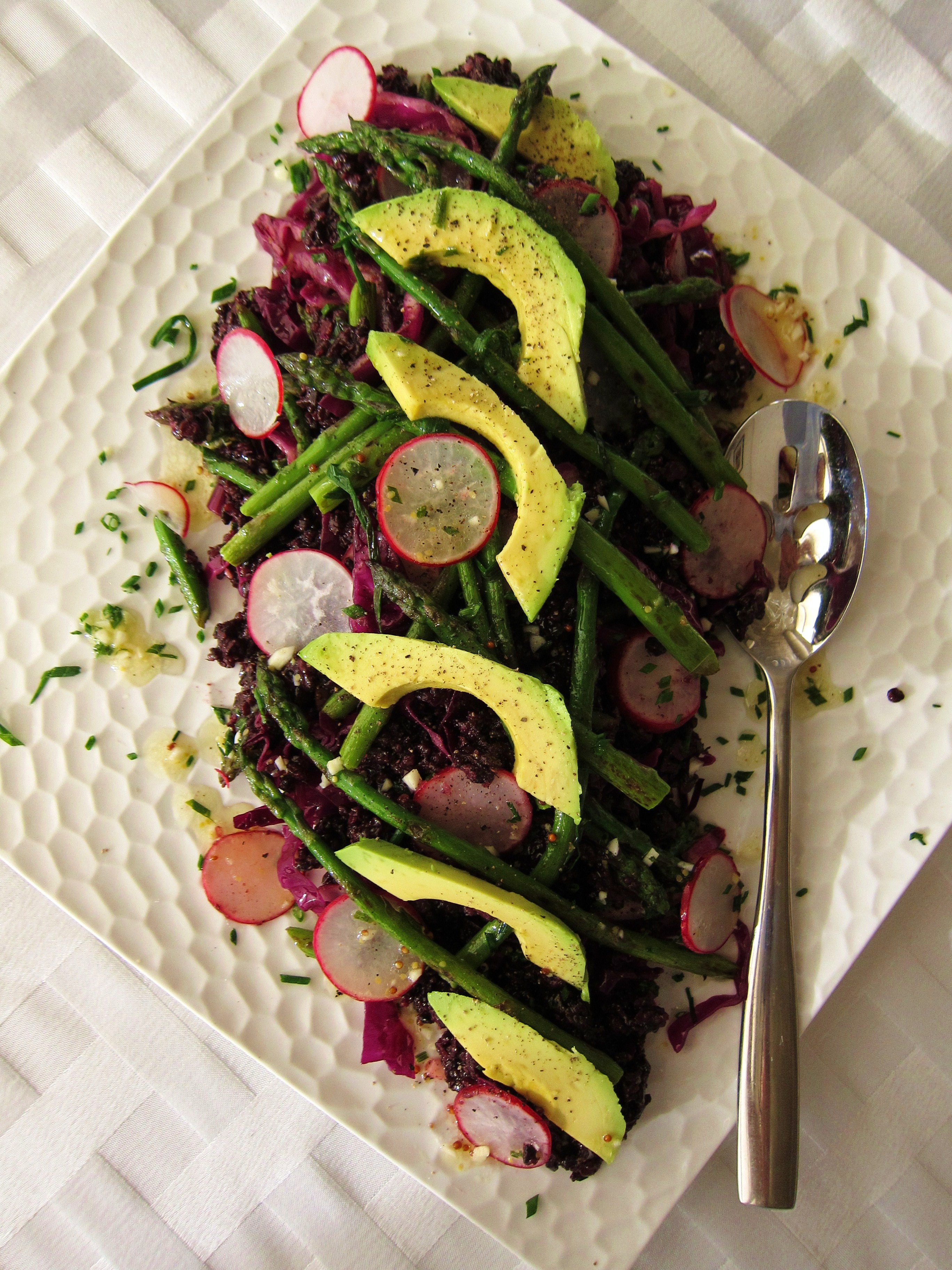
(Existentialist) Black Rice Salad with Avocado and Spring Vegetables – adapted from Heartbeet Kitchen

Ingredients

Serves 5-6 as a side

1 cup dry black rice (about 3 cups of cooked rice)
3 1/2 cups of water
½ teaspoon kosher salt
1 heaping cup of asparagus, cup on the diagonal
1 cup thinly sliced purple cabbage
¾ cup radishes, thinly slices
1 large avocado, sliced

Dressing:
1 1/2 tablespoons white wine (or white balsamic) vinegar
1 tablespoon honey
1 teaspoon Dijon mustard
1 clove garlic, minced
a few chives, minced
1/2 teaspoon salt
1/3 cup extra virgin olive oil

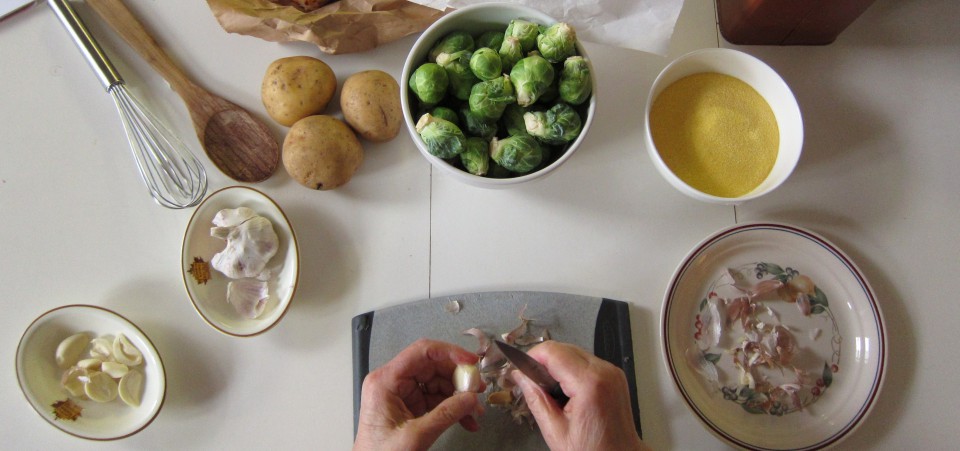
Ingredients - detail

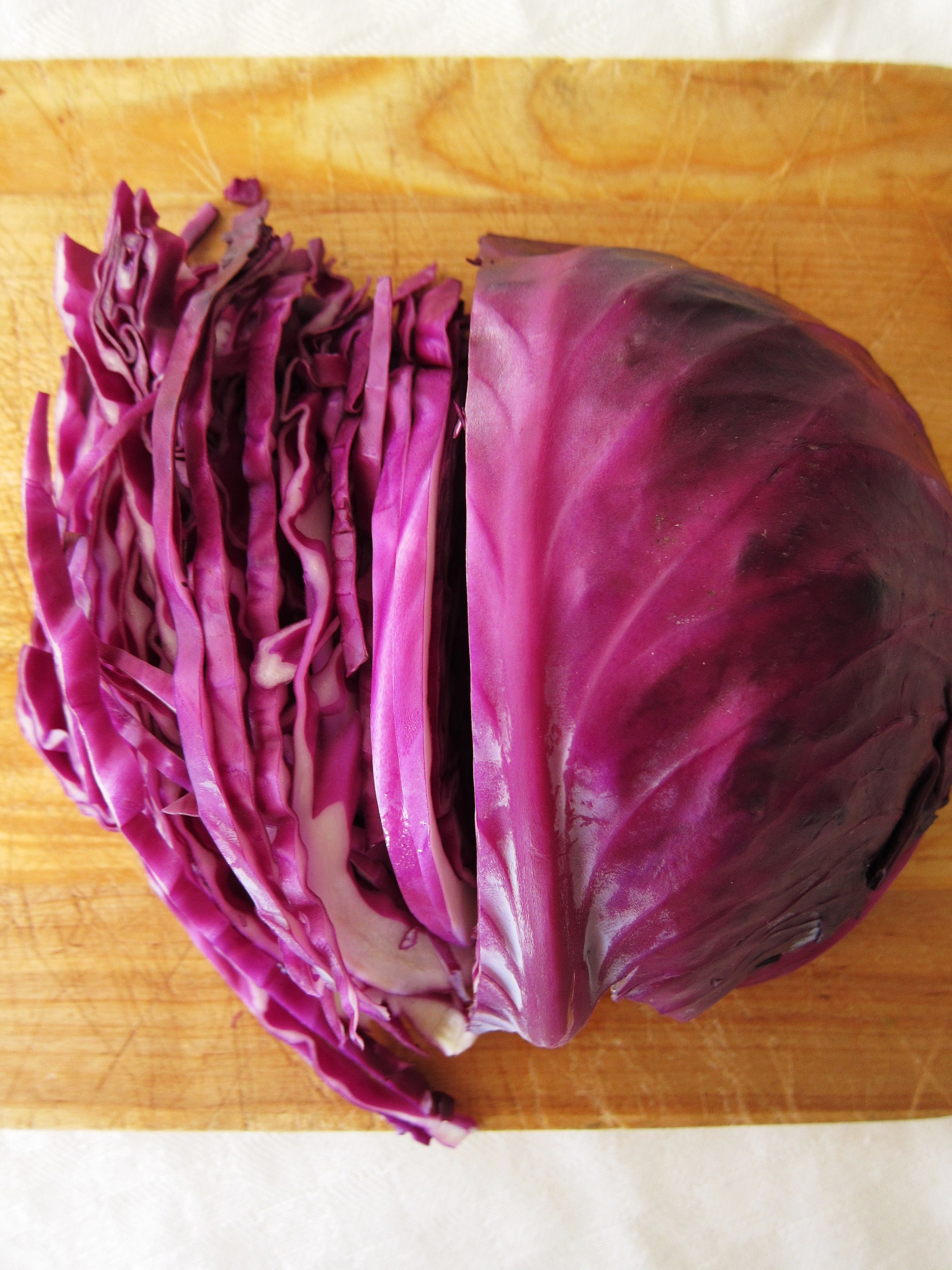
radishcabbage

chivesTo make the dressing: whisk together all of the ingredients in a small bowl (alternately, put all the ingredients in a jar and shake until emulsified). Set aside.

To make the rice: bring water to a boil in a medium sized pot. Rinse rice thoroughly, then empty into boiling water with ½ teaspoon of salt. Turn heat down to a simmer, cover pot, and cook for about 30 minutes, stirring occasionally until grains are al dente.

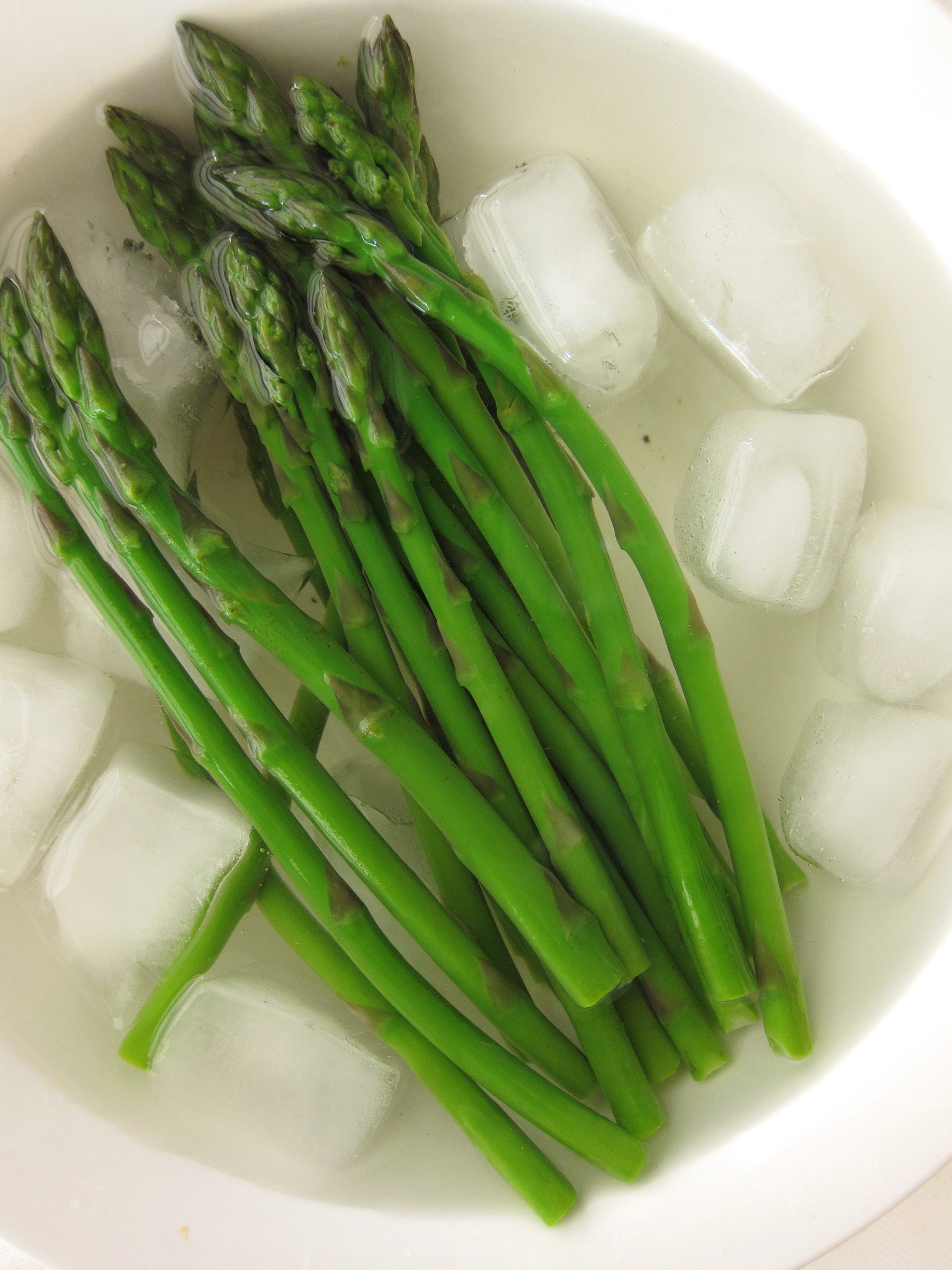
To prep the asparagus: prepare an ice bath – fill a medium-sized bowl with cold water and several ice cubes. Set aside. Fill a pan with a bit of water (about an inch). Bring to a boil and toss in the asparagus. Allow to blanch for about 1 minute, remove the asparagus from the water and place them to cool in the ice bath.

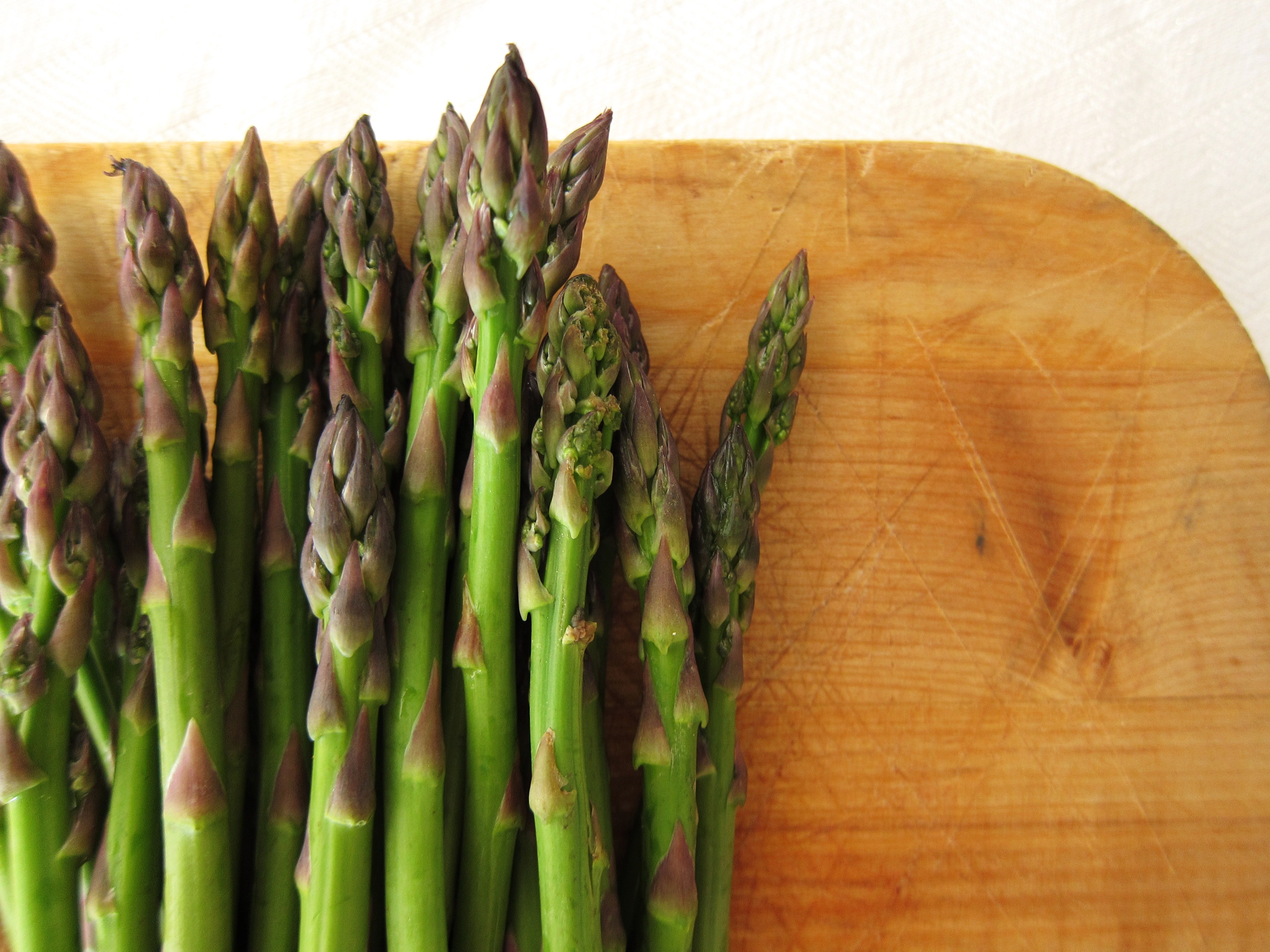
asparagus - detail

chilling asparagusPlace the rice, cabbage, radish and asparagus in a large bowl. Stir in the dressing to coat. Spoon out onto a serving platter and top with avocado slices and a sprinkle of salt flakes and freshly ground black pepper.

salad

salad - detail

Share this:

  • Tweet
  • Share on Tumblr
Like Loading...

Spring Cleaning

30 Wednesday Apr 2014

Posted by julia chews the fat in Lunch & Dinner, Vegetarian

≈ Leave a comment

The first few clusters of crocus flowers have appeared. The geese are back. So are the overly-eager short-wearers. Which, by default, means that it’s officially spring around here. Eschewing the cautionary proverb, “En avril ne te découvre pas d’un fil“, the population of this town have started to appear in droves on outdoor terrasses – drinking beer, eating brunch, or whatever else they can get their hands on, so long as it’s outside, tabarnak. Some wear tank tops, others wear jackets. At this time of year, it’s a bit of a free-for-all. Vestimentary choices are varied and incongruous, providing a reliable source of entertainment for onlookers. I might still have the heat on in my apartment, but there was a girl at the bus stop this morning in booty shorts.

Oui, un vrai free-for-all.

As annual tradition dictates, we might be a bit early in peeling off the layers, but having been deprived of heat and daylight for an infernally long winter, we’ve gotten antsy. Pants-on-fire antsy. Everyone wants to lay claim to spring (it’s mine, it’s mine…and you can’t take it awaaaay!) and for some of us, that means wearing booty shorts the first day the mercury hits the double digits. For others, it means kicking back on a patio, despite frosty extremities. And for the rest of us boring people, it means that it’s time for some serious spring cleaning – that kind of no-turning-back deep clean that requires gloves, scrub brushes, elbow grease and dogged commitment.

It might not sound like fun to you, but I’m actually really into spring cleaning. It gives me a chance to start from scratch and shed the winter cocoon. Of specific interest to me is (surprise, surprise) the kitchen, where I’m liable to tear apart the fridge, freezer and pantry in one fell swoop. It’s a full-day endeavour that I usually tackle in the (ultra-sexy) uniform of baggy leggings and an old t-shirt, with some Harry Belafonte playing in the background. The part I most look forward to – aside from the Belafonte – is going through my pantry: cleaning it out, doing the triage, making a list of new things to buy, and re-stocking it. I’ve always been a sucker for a well-stocked pantry, which is why I relish opportunities like these. Spending a breezy Sunday drinking coffee, listening to some tunes, all while excavating and reorganizing the contents of my cupboard like a game of dried-goods Tetris? Sign me up.

It’s amazing (er, terrifying?) how much this seemingly mundane activity brings me so much joy. In rediscovering the items I have stowed away (I have tamarind paste??) and in anticipating the new things I’ll soon acquire (miso! buckwheat flour! Valrhona chocolate!), I get really, really, stupidly excited. (For this – and, other reasons – I’m fairly certain I have an octogenarian living inside me. But that’s ok, because at least we both like marmalade. And I’ve usually got a jar hanging out at the back of the pantry.)

When it’s all said and done, I think the most important offshoot of re-stocking the pantry is that it renews my interest in cooking. This is especially true when things seem to have fallen in a slump (a failed attempt at a “healthy” banana bread and a tasteless celeriac soup are two of the latest hapless items to come out of my kitchen. Just be glad you weren’t around for those). Refreshing the spice rack is a central part of the pantry renaissance, as most dried herbs and spices tend to lose their potency within 6 months of purchase, if not before. If you’re into cooking, it’s crucial to keep things moving in your spice rack by switching out the old for the new every few months. Because, let’s be honest, the last thing you want is to spend all that time prepping an elaborate curry, only to discover that tastes like sawdust.

I’m partial to buying spices in bulk, rather than the stuff in the little bags or jars at the supermarket, because a) the spices are usually fresher; b) they’re usually cheaper; c) it allows me to buy the quantity I want, which in turn means I can buy in small quantities, often; and d) I get to peruse the Middle-Eastern shop around the corner and talk to my Iraqi spice guy, who is a total pro when it comes to this kind of stuff.

Below you’ll find two recipes made with a recently acquired batch of spices – cumin, coriander, turmeric, cinnamon, paprika, cayenne and ground ginger. They might seem like wintery recipes, but given that I’m less optimistic about the weather than my fellow booty-shorts-wearing commuter, I’m banking on a few more cool, rainy days ahead. Days for when sweet potato soup and cumin-spiced salad might just fit the bill.

Happy spring to you all.
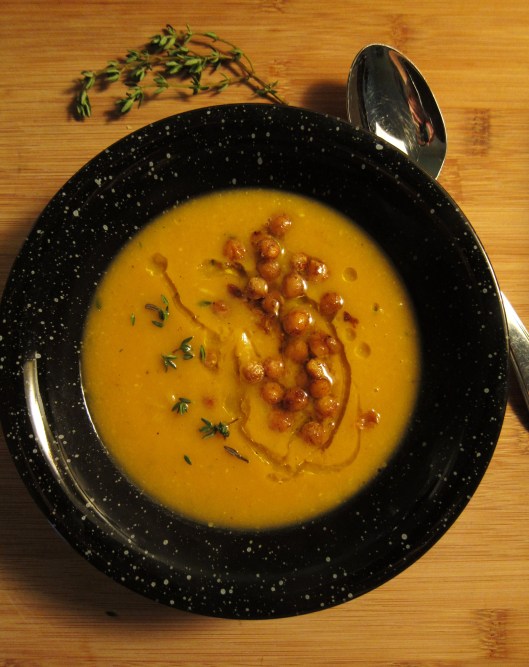
Sweet Potato Soup

Sweet Potato Soup with Curried Chickpeas (4-5 servings) – inspired from My New Roots

For the soup:

  • 2 large sweet potatoes
  • 1 large yellow onion
  • 8 cloves garlic
  • 2 tsp. coconut oil, plus olive oil for garnish
  • 1 tsp. both sea salt and cracked black pepper
  • 3-4 cups vegetable broth
  • 2 tsp. ground turmeric
  • leaves of a couple sprigs of thyme, chopped

1) Preheat oven to 400°F.

2) Peel and cube the sweet potatoes and place on a baking sheet. Peel and cut onions into quarters, add to baking sheet. Peel whole cloves of garlic and add to baking sheet. Drizzle with melted coconut oil and toss well to coat. Sprinkle with sea salt and freshly ground black pepper. Place in oven and roast for approximately 30 minutes until the sweet potato is tender and the garlic is golden.

3) Put the roasted vegetables in a large soup pot. Add the vegetable broth, turmeric and add the finely chopped thyme. Carefully add the roasted vegetables and blend on high until completely smooth (let blender run for a minute or so). If the soup is too thick, add more broth to thin to desired consistency. Season to taste.

4) Pour soup into bowls and serve with a sprinkling of chickpea croutons and a drizzle of olive oil. If necessary, pour into a large pot to reheat if necessary. Keeps for 3 days in the fridge. Freezes well.

For the Chickpeas:

  • 3 cups (2 cans) cooked chickpeas – drained and rinsed
  • 3 Tbsp. coconut oil
  • 1 tsp. coarse sea salt
  • 1 tsp. freshly ground black pepper
  • 2 tsp. ground cumin
  • 2 tsp. smoked paprika

1) Preheat oven to 400°F

2) Spread chickpeas out on a clean tea towel and rub them dry, discarding any loose skins. Place the chickpeas in a medium bowl and toss with coconut oil, seasoning and spices until coated.

3) Spread the chickpeas on a large rimmed baking sheet lined with parchment paper and roast, stirring occasionally, until golden and crisp. This takes about 25-35 minutes. Please note that the chickpeas will crisp up outside of the oven quite a bit, so if they are still a little soft when you take them out of the oven, that is okay.

4) Remove from the oven. Let cool, and serve at room temperature. Store in an airtight glass container for up to one week.

Sweet potato soup - detail

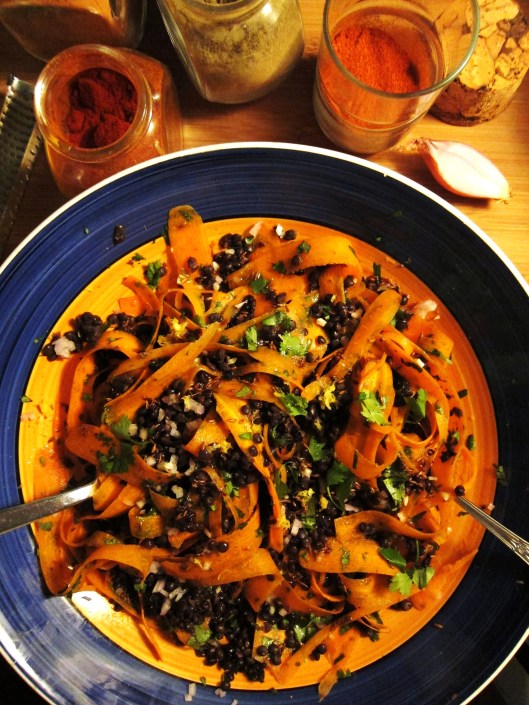
Cumin-Spiced Carrot Salad with Black Beluga Lentils (serves 4) – adapted from Sarah Britton on Whole Living

Ingredients:

  • 1 cup black (beluga) lentils
  • 2-3 large carrots
  • 1 shallot, minced
  • 6 prunes, chopped
  • ½ cup cilantro, chopped

Dressing:

  • 1 Tbsp. cumin seeds
  • ¼ tsp. cinnamon
  • ¼ tsp. ground ginger
  • ¼ tsp. smoked paprika
  • ¼ tsp. ground coriander
  • pinch of cayenne or chili flakes
  • 1 Tbsp. freshly-squeezed lemon juice
  • 1 tsp. honey
  • 3 Tbsp olive oil
  • pinch of sea salt

Carrot Marinade:

  • 1 Tbsp. freshly squeezed lemon juice
  • 2 Tbsp. freshly squeezed orange juice
  • pinch of salt
  • bay leaf (optional)
  • smashed clove of garlic

Carrot Salad

Directions:

1) Whisk the carrot marinade together in large bowl.  Wash the carrots and using a peeler, peel long strips and place in the bowl with the marinade. Set aside and allow to marinate while preparing the other ingredients for the salad.

2) Since lentils don’t require soaking, you can cook them straight away. First, rinse the lentils in a colander, swishing them around with your fingers, then put them in a pot and cover with 2 cups of water (you may want to add more water, just check in from time to time as they cook). Add the bay leaf and garlic. Add a pinch of salt (this will slow the cooking process, but they’ll be more flavourful).

3) Cover the lentils and bring them to a simmer. Continue to cook them over low heat, stirring occasionally just until al dente (about 20 minutes). Drain and lightly rinse.

4) While the lentils are cooking, make the dressing: toast the cumin seeds in a dry skillet over medium-high heat until fragrant. Remove from heat and using a mortar and pestle, give the seeds a rough grind. Add all remaining dressing ingredients and whisk together.

5) Add the warm lentils and marinated carrots, including any leftover marinade.  Add the sliced prunes, shallot and cilantro. Season to taste and serve.
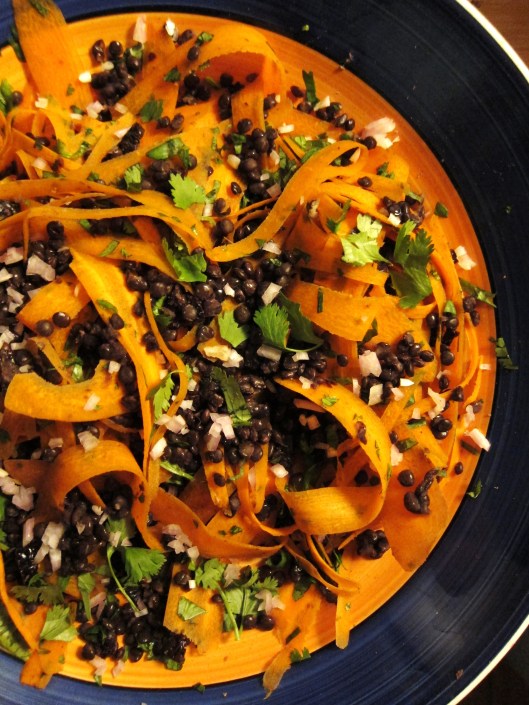
Carrot Salad - detail

Share this:

  • Tweet
  • Share on Tumblr
Like Loading...

Settling the unsettled

31 Monday Mar 2014

Posted by julia chews the fat in Lunch & Dinner, The Basics, Vegetarian

≈ Leave a comment

A solitary shoe in the middle of the street. An unexpected letter from the revenue agency. A ticking clock. A night bus that’s nowhere in sight. THIS.

These are all things that, to varying degrees, I find pretty unsettling. But none of them match the unsettled feeling that creeps through me when I begin apartment hunting. I’ve moved so often, you’d think I’d be a professional by now. A cool, calm, collected professional. And yet, it’s up there with the most unnerving, frustrating, disappointing, desperate experiences I’ve been through. The idea of uprooting yourself (again), competing with other searchers, and relying on some vague faith that you’ll find something better than what you’ve already got – for a price that won’t force you subsist on beans – can be quite the emotional roller-coaster. The worst part is that through the sweating and waiting and trekking to appointments, you can’t really complain – because it was your idea in the first place.

Bah.

Though it’s barely just begun, this most recent search is already starting to make me feel weary, disillusioned, mildly petrified…weepy. When you’re hoofing to different parts of the city, visiting crappy places, in this, it’s only a matter of time before you start to lose your marbles.

As with other moments in life when I’ve wanted to climb into a hovel and never come out, I turn to food to bring me back to earth and help me confront the not-so-fun bits of life. I’m not talking about eating fistfuls of Doritos for dinner or gorging on tubs of ice cream (though, that wouldn’t be so bad). No, I’m talking about food I can rely on – something that’s grounding and provides comfort, sustenance and just the right amount of chew. Luckily, I recently discovered a recipe that is pretty much a hug in a bowl. Not soup. Not mac & cheese. But PERSIAN SPICED RICE. Yes. I found my savior in a bowl of toasted rice, warm spices, chewy dried fruit and a healthy knob of butter – a gentle reminder that the nasty bits never last forever.

Rice prep

Persian Spiced Rice (serves 6-8 as a side) – adapted from the New York Times

  • 2 cups best-quality Basmati rice
  • salt
  • 6 tablespoons unsalted butter
  • 1 large onion, diced small
  • 1/4 teaspoon saffron threads, crumbled and soaked in 1/4 cup hot water
  • Large pinch ground cinnamon
  • Large pinch ground cardamom
  • Large pinch ground allspice
  • Large pinch ground black pepper
  • Large pinch ground cumin
  • 1/3 cup chopped dried apricots
  • 1/3 cup golden raisins
  • 1/3 cup Thomson raisins (or currants)
  • 1/3 cup blanched slivered almonds (optional)

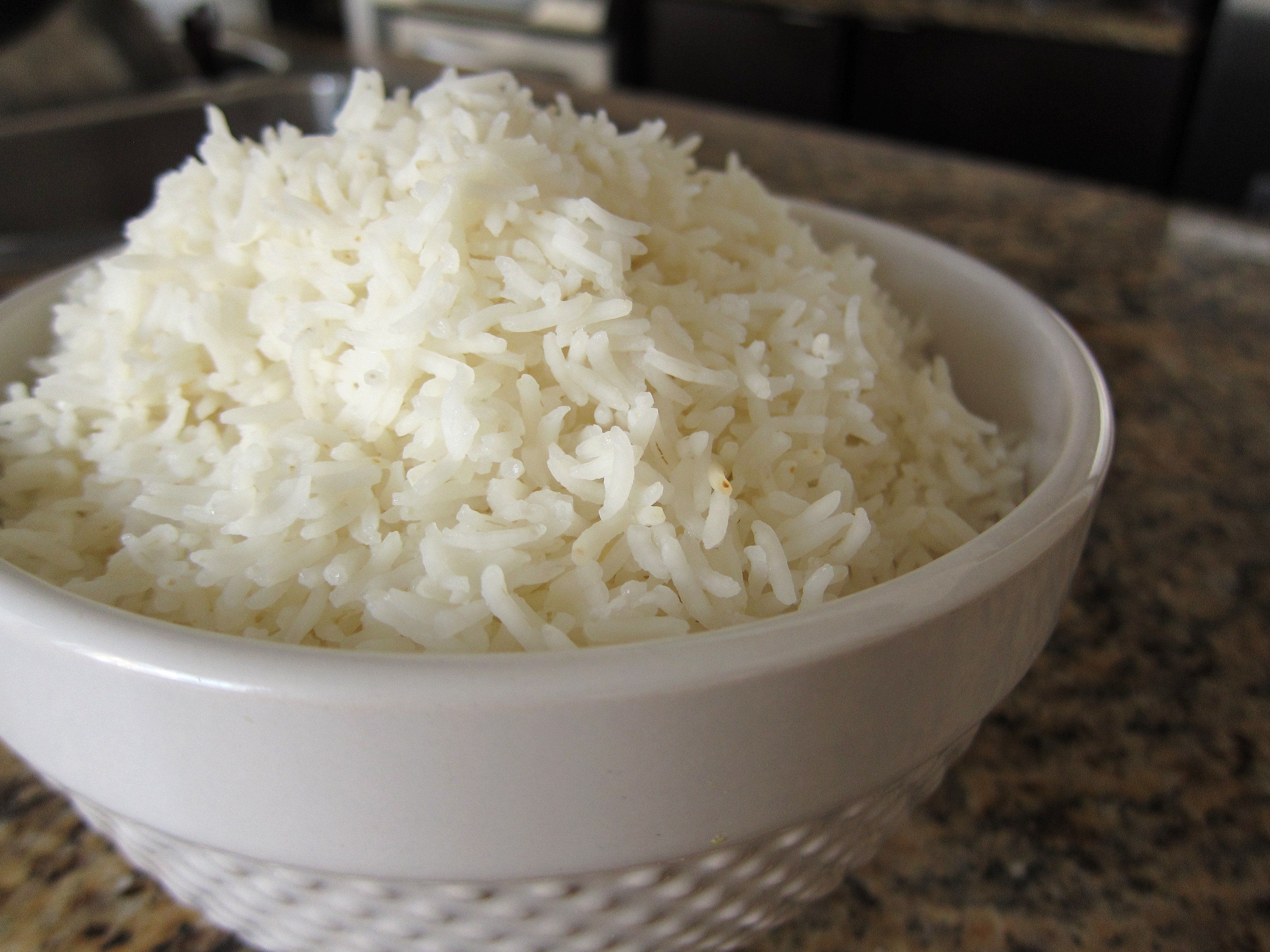
1) Rinse the rice several times in cold water until the water runs clear. Drain. Bring a large pot of water to a boil with 2 tablespoons kosher salt. Add the rice and boil, stirring occasionally, for 5 minutes. Drain well.

cooked rice

2) Heat 1 tablespoon butter in a small skillet over medium heat. Add the onion, season lightly with salt and cook until softened and lightly colored, 4 to 5 minutes. Moisten with 1 Tbsp of the saffron water and stir in the cinnamon, cardamom, allspice, black pepper and cumin. Cook for 1 minute more. Stir in the apricots and raisins (or currants).

3) Melt 4 tablespoons butter in a heavy-bottomed enamel or nonstick Dutch oven over medium heat. Spread half the par-cooked rice over the bottom of the pot. Spoon over the onion-fruit mixture, then the remaining rice. Leave the pot on the flame, uncovered, for 5 to 8 minutes to gently brown the rice. (Do not stir or move the rice. Trust that it’s doing the right thing).

4) Drizzle the remaining saffron water over the rice and put on the lid. Adjust the heat to very low and leave undisturbed for 30 minutes. Turn off the heat and let rest at least 10 minutes.

5) Heat the remaining 1 tablespoon butter in a small skillet over medium-low heat and gently toast the almonds for a minute or so, taking care not to get them too brown. Set aside for garnish.

6) To serve, spoon the rice into a wide bowl or platter. With a spatula, carefully lift the bottom crust, placing the crisp side up. Sprinkle with the toasted nuts.

Persian rice

Share this:

  • Tweet
  • Share on Tumblr
Like Loading...

Revisiting fennel & citrus

06 Thursday Mar 2014

Posted by julia chews the fat in Breakfast & Brunch, Cooking For Your Peeps, Lunch & Dinner, Vegetarian

≈ Leave a comment

I know what you’re thinking. Really? A fennel-orange salad? Yawn. Next.

But I’m here to tell you that this one, this salad deserves acknowledgement. It’s the perfect example of how something we treated as ubiquitously blah can be re-invented, re-appropriated and newly appreciated. Like vintage fashion (no, not those high-waisted acid-wash jeans from grade eight, but more like that stunning large-brimmed sun hat your great aunt used to wear, poolside. Or your grandmother’s satin peep-toe slippers. In other words, the elegant retro fashion of a stone-cold fox).

This salad is like a great vintage piece you want to wear over and over again. There’s nothing ground-breaking or earth-shattering about it. Nothing hardcore. But it’s a good salad. A simple, and dare I say, classy salad. And one definitely worth your attention. Most of the fennel-citrus salads I’ve had in my life have been forgettable at best – in large part because either a) the whole thing wilts under the weight of a creamy dressing, or b) the fennel slices looks like they were hacked to pieces with a dull machete, or c) there is a disproportionate amount of fennel, leading you to ask, “Will this salad never END?”.

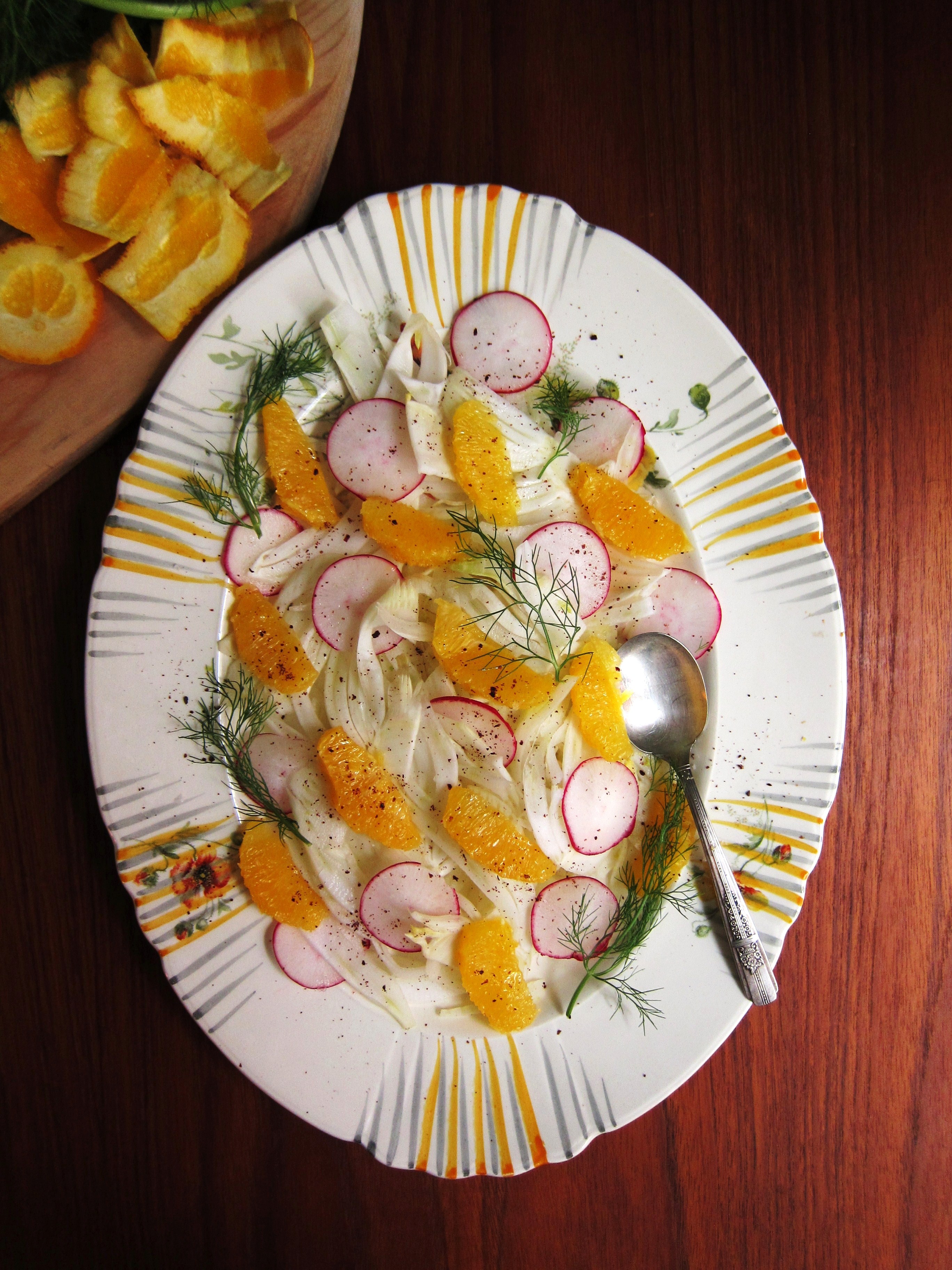
The recipe below, happily, avoids all these pitfalls. Equal parts crunchy, juicy and sweet, it’s got lemony tones from the sumac dressing, plus a peppery wink from the radish. This salad has got it going on. And if you needed another reason to make it, just look at how gosh-darn pretty it is! 

A stone-cold fox of a salad, if you ask me.

Fennel Orange Salad

Fennel-Citrus Salad with Sumac Dressing – serves 4 as a starter

3 tablespoons extra-virgin olive oil
1 tablespoon fresh lemon juice
2 teaspoons white balsamic vinegar
1 teaspoon sumac
1/2 teaspoon finely grated orange zest
Coarse salt
Freshly ground black pepper
2 medium fennel bulbs
4 radishes, trimmed
2 oranges

Important note: I fully endorse the use of a mandoline to get paper-thin fennel and radish slices. It might be masochistic of me (8 times out of 10 I will nick the end of my finger on the second-to-last slice), but I continue to use it for recipes like this, as it yields the best results.

Whisk together the olive oil, lemon juice, vinegar, and sumac, and orange zest and season with salt and pepper. Set aside.

Cut off and discard the stalks from the fennel bulbs, reserving some of the fronds for garnish. Halve the fennel bulbs lengthwise and cut out and discard the cores. Thinly slice the fennel bulbs using a mandoline (or sharp knife). Transfer to a large serving platter. Thinly slice the radishes using a mandoline (or sharp knife). Add to the fennel. Peel and cut the orange into slices, arrange on top of the fennel and radish (for an extra pretty salad, trim the orange into suprêmes. Nifty video here).

Whisk the dressing and drizzle it over the salad. Toss gently to coat.

Fennel Orange Salad - detail

Share this:

  • Tweet
  • Share on Tumblr
Like Loading...

Fire Cider, Humble Healer

19 Wednesday Feb 2014

Posted by julia chews the fat in Condiments, The Basics, Vegetarian

≈ 3 Comments

The other day, when the weatherman said it’d be -25°C with the wind chill and that we’d be graced with (more!) snow, I felt my lips curve into a child-like pout, uttering a defeated, “But, nooo…” as I stared into my closet, shivering in my nightgown, trying to decide which sweater was still up for the task.

Welcome to winter in Quebec.

If the snow and sleet and wind packed up and left tomorrow, I’m sure we would all let out a communal sigh of relief. In getting through the last vestiges of winter, we are are bagged, fed up, cranky and infirm. Almost everyone I know right now is hosting some wonderful microbial visitor – this season alone, my personal tally has included two sinus-colds, one big chest-cold, one bout of laryngitis, one digestive-related ailment, one 36-hour flu, and two sprained necks.

Sexiest winter EVER.

For one reason or another, my system’s been under siege since December. Right around when one thing would end, another would begin. After making my way through dozens of lemon-ginger infusions, spoonfuls of honey and doses of Buckley’s syrup (not to mention a few lacklustre dates with Mr.Neti Pot and Mr.Humidifier), it seemed a different tactic was in order. Then I remembered hearing about a traditional folk elixir by the name of Fire Cider – a potent, pungent concoction used by herbalists to ward off the evil spirits of winter (rhinovirus, norovirus, bronchiolitis, and all their friends).

Essentially, it’s a witches’ brew of sweet and savoury elements all jammed into one jar. At once peppery, astringent, funky and sweet, the first taste will be intense and astonishing, but once you’ve got a spoonful racing down your throat, you’ll feel recharged and pumped and ready to get back on the bandwagon.

(or at least ready to slip on that sweater and brace the cold again)

Fire Cider – adapted from herbalist Rosemary Gladstar’s recipe (check out the cute video here!)

Makes about 1 pint
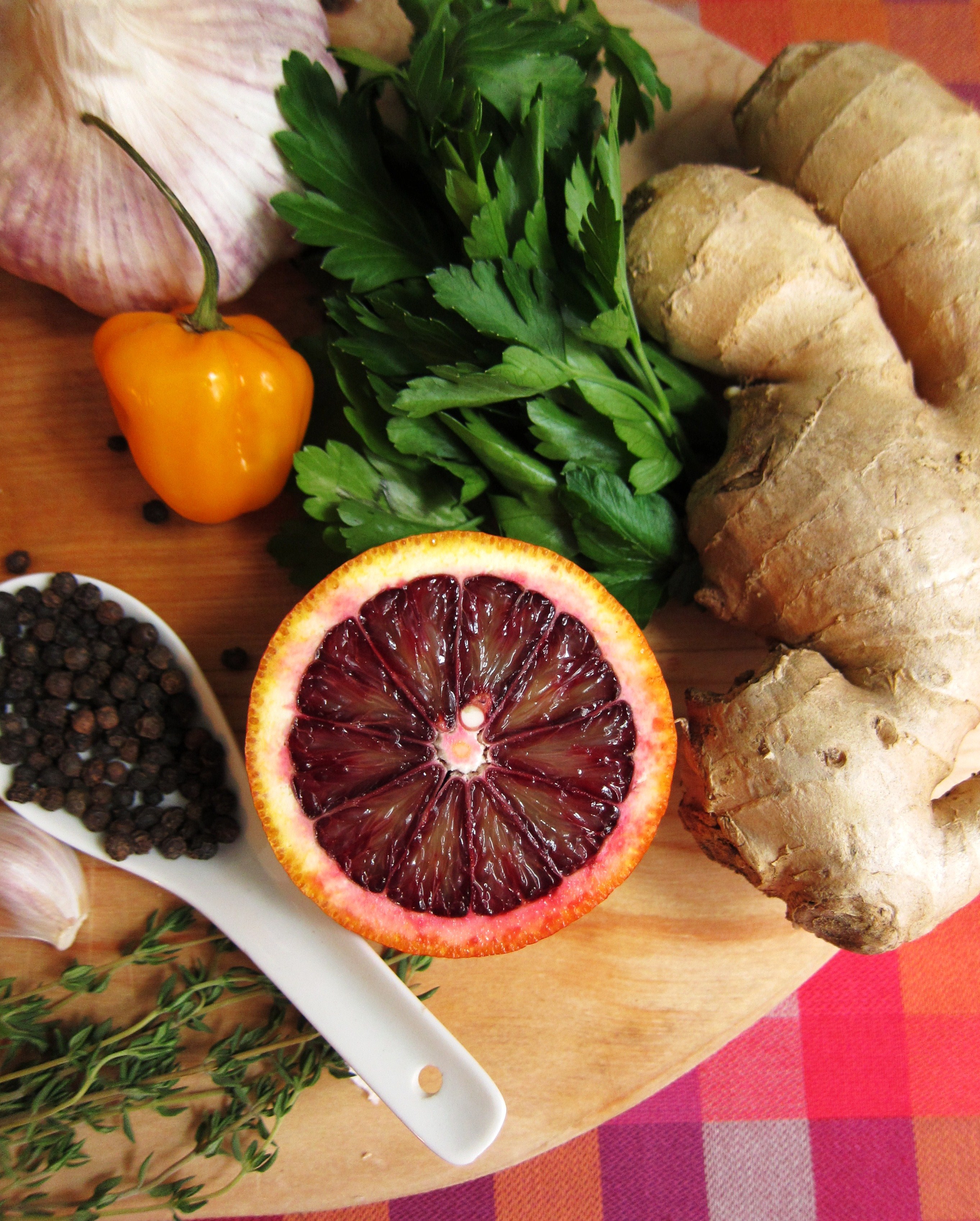
Fire Cider ingredients

  • 1/2 cup peeled and diced garlic
  • 1/2 cup peeled and diced onion
  • 1/4 cup peeled and diced ginger
  • 1/4 cup peeled and diced turmeric
  • 1 habanero chile, split in half
  • 1 orange (or blood orange), quartered and thinly sliced crosswise
  • 1/2 lemon, quartered and thinly sliced crosswise
  • 1/2 cup chopped parsley
  • 2 tablespoons chopped rosemary
  • 2 tablespoons chopped thyme
  • 1 teaspoon black peppercorns
  • 2 to 3 cups apple cider vinegar (at least 5% acidity)
  • 1/4 cup honey, or more to taste

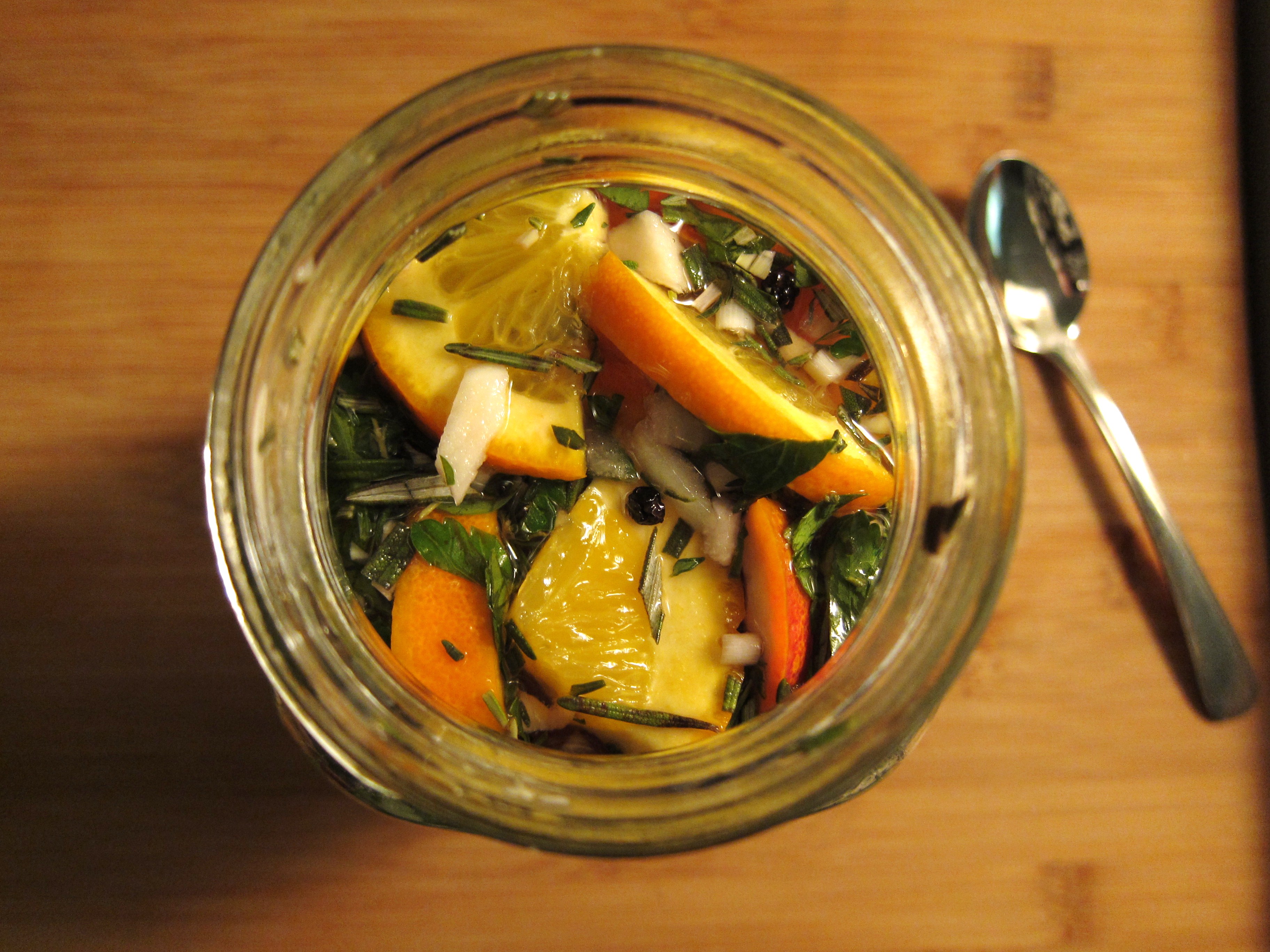
Place all of the vegetables, fruits, herbs, and spices in a clean 1-quart jar. Fill the jar with vinegar, covering all the ingredients and making sure there are no air bubbles. Cap the jar. If using a metal lid, place a piece of parchment or wax paper between the jar and the lid to prevent corrosion from the vinegar. Shake well.

Let the jar sit for 3 weeks, shaking daily.

Strain the vinegar into a clean jar. Add more honey to taste. Refrigerate and use within 6 months.

Fire Cider

*Note: if you have a bold palate, you can take the cider straight up (1-2 tablespoons at the first sign of a cold, repeating every 3-4 hours until symptoms subside; alternately, some take it throughout the winter season as a preventative). If it turns out that this elixir is too intense for you to knock back straight, here are some nifty ways you can incorporate it into your edibles.

  • Use in place of vinegar in salad dressings, condiments and marinades
  • Drizzle on steamed vegetables or sautéed greens
  • Add to soups and chilis
  • Add a couple dashes in your next Bloody Mary

Share this:

  • Tweet
  • Share on Tumblr
Like Loading...

Red Velvet Valentine

11 Tuesday Feb 2014

Posted by julia chews the fat in Cooking For Your Peeps, Holidays, Sweet Tooth, Vegetarian

≈ 2 Comments

Valentine’s is those days on the calendar when it’s socially acceptable to be a loopy, romantic nutbar; the one day of the year when you can crank up the cheeseball dial and no one will fault you for it. You can send love notes, litter your desk with bowls of cinnamon-candy hearts and promise your office mates bright red, fluffy cupcakes with hand-whipped frosting…

…or so you thought.

I was so excited to make these cupcakes. Excited about trying the old technique of using beets make the batter electric pink. Excited about using a pastry bag to add an artful slick of cream cheese frosting on top. Excited about the beautiful Swedish paper cups that I’d found months prior and that I’d purposely saved for this day (yes, yes I did). But most of all, I was excited about finally redeeming myself since the last Valentine’s cupcake failure.

Expectations were high, people. Valentine-in-a-bow-tie high.

Despite my well-laid plan (I was rested! I had plenty of time! I had prepped all the ingredients!), lady fortune had a different one in store – one involving me forgetting to add the butter, then having to scrape the batter out of the pretty paper cups and back into the bowl…only to remove from the oven, 18 minutes later, twelve flat, dense cylinders in greasy-bottomed paper cups. The icing flipped me the bird too, as it initially resisted its extrusion from the pastry bag, then shifted in consistency to seep out in a nondescript, gooey mass.

While the icing improved after a bit of chilling in the fridge, there was no saving the cake. Dense, chewy, beety (undercooked?), they hovered somewhere between expired vegan health cake and a 4th grade science experiment. These were not lovely, fluffy, cherubs-singing-from-the-heavens cupcakes. These were fists-shaking-at-the-heavens cupcakes. These were “I hate you” cupcakes.

As it so happens, this was also the day my friend Matthew was showing me how to use a DSLR. And thank GOD for that, because without him, I’m not sure I could’ve made these things look half as edible. With his keen eye, he managed to help me make these cupcakes look delicious and elegant and lovely – everything they most definitely were not.

Here’s to faking it! Happy Valentine’s xx

4 cupcakes

cupcake with bite

cupcake with bite - detail

(IF YOU DARE, HERE’S THE RECIPE)

All Natural Red Velvet Cupcakes (makes approx 12) – adapted from this recipe

3/4 cup beet purée (directions follow)
1 tablespoon freshly squeezed lemon juice
1 1/2 teaspoons rice vinegar
1 cup sugar
1 stick butter (8 tablespoons), at room temperature
3/4 teaspoon pure vanilla extract
3/4 teaspoon kosher salt
3/4 teaspoon baking powder
1 1/4 cups unbleached all-purpose flour (not bleached flour)
2 eggs
1/2 cup buttermilk
1 tablespoon natural cocoa powder (not Dutch Process, or dark cocoa powder)

Beet purée: 2 medium beets, or 1 large beet, scrubbed and rinsed

Fill a saucepan with water, add the beets and bring to a boil. Allow the beets to cook until very tender (approx. 30 mins).

When beets are cooled completely, peel, and cut into large chunks. Place in a food processor fitted with the steel blade. Process for 2 minutes, or until extremely smooth. Empty the food processor of the beet purée. Measure out 3/4 cup and set aside (save any extra purée for another use).

Preheat oven to 350ºF. In a large bowl, sift the dry ingredients. In a separate bowl, cream the butter and sugar, then add the eggs, vanilla, buttermilk, vinegar and lemon juice. Beat or whisk until combined. Add the beet purée. Mix some more until the mixture is uniform.

Line a standard muffin tin with paper cupcake liners. Scoop mixture evenly into cupcake liners.

Bake for 18 minutes, or until the cupcakes in the center spring back up when touched. Remove cupcakes from the pan and place on a wire rack to cool completely.

Cream Cheese Frosting

1 8oz package cream cheese, at room temperature
1 stick (8 tablespoons) unsalted butter, at room temperature
2 cups confectioner’s (powdered) sugar
1-2 tablespoons heavy cream
1/2 teaspoon pure vanilla extract

Beat all ingredients together with an electric mixer until smooth and fluffy. Frost cooled cupcakes.

Share this:

  • Tweet
  • Share on Tumblr
Like Loading...

Feed a cold, starve a fever

24 Friday Jan 2014

Posted by julia chews the fat in Lunch & Dinner, The Basics, Vegetarian

≈ 2 Comments

There’s nothing quite like a 24-hour stomach virus to annihilate your interest in food in one fell swoop. Even a day or so after the last few nauseous waves have passed through your body, you’re still sensitive to words like “pizza” and “stew”, which make your squirm uncomfortably as the mental images of oozy cheese and braised meat wade in your head.

Once that phase passes, you enter the “I’m feeling back on track holy geez I’m starving feed me now” phase of recovery, causing you to make the premature decision to eat real food again, at which point your body promptly reminds you that getting cocky le gastro will get you nowhere. It’s taken up residence in your body and, no matter how short its stay, it owns you. After a short and regretful holiday with Mr. Grilled Cheese, you begrudgingly return to your sobering diet of soda crackers and water.

You’re only truly out of the woods when food becomes appealing, enjoyable and friendly to your body again. That said, you still need to ease your way back in, with things that are light and nutritive. Nothing with too much pizazz. Nothing with jazz hands.

I found this recipe by searching “immunity food” on the Interweb. Nourishing, gingery and easy on the eyes, this soup hit all the right buttons, becoming the magical cure that made me feel human again.

Eat it hot, straight from the pot and watch as all the bad melts away…

Get-Well Soup (makes approx. 4 servings) – adapted from 101 Cookbooks

Healing Soup

  • 1 medium onion, quartered and thinly sliced
  • 3 celery stalks, thinly sliced
  • 1 medium carrot, thinly sliced
  • 8 medium garlic cloves, very thinly sliced
  • 2 tablespoons grated ginger, peeled
  • 3/4 teaspoon finely ground white pepper, plus more to taste
  • 1 1/2 cups mushrooms, trimmed (shitake or brown)
  • 8 ounces firm tofu, sliced into thin slabs
  • 2 1/2 teaspoons sea salt
  • olive oil for sautéing
  • chopped green onions, sliced radish, daikon and sprouts for serving

Heat the oil in a large soup pot over medium heat, and stir in the onion, celery, garlic, and ginger; gently sauté just until soft. Stir in the white pepper, salt and 10 cups of water. Turn up the heat and simmer for 15 minutes. Meanwhile, heat a bit more oil in a pan. Once hot, add the sliced mushrooms and brown until crispy. Remove and set aside. If the pan is dry, add a splash more oil, heat it up and add the tofu slices, cooking them about 2 minutes each side. Ladle the soup into shallow soup bowls and top with lots of green onions, pea shoots, radish and carrots slices, along with some fried mushroom and tofu.
Healing Soup

Share this:

  • Tweet
  • Share on Tumblr
Like Loading...

A Better Kind of Fruitcake

31 Tuesday Dec 2013

Posted by julia chews the fat in Breakfast & Brunch, Cooking For Your Peeps, Holidays, Sweet Tooth, The Basics, Vegetarian

≈ 4 Comments

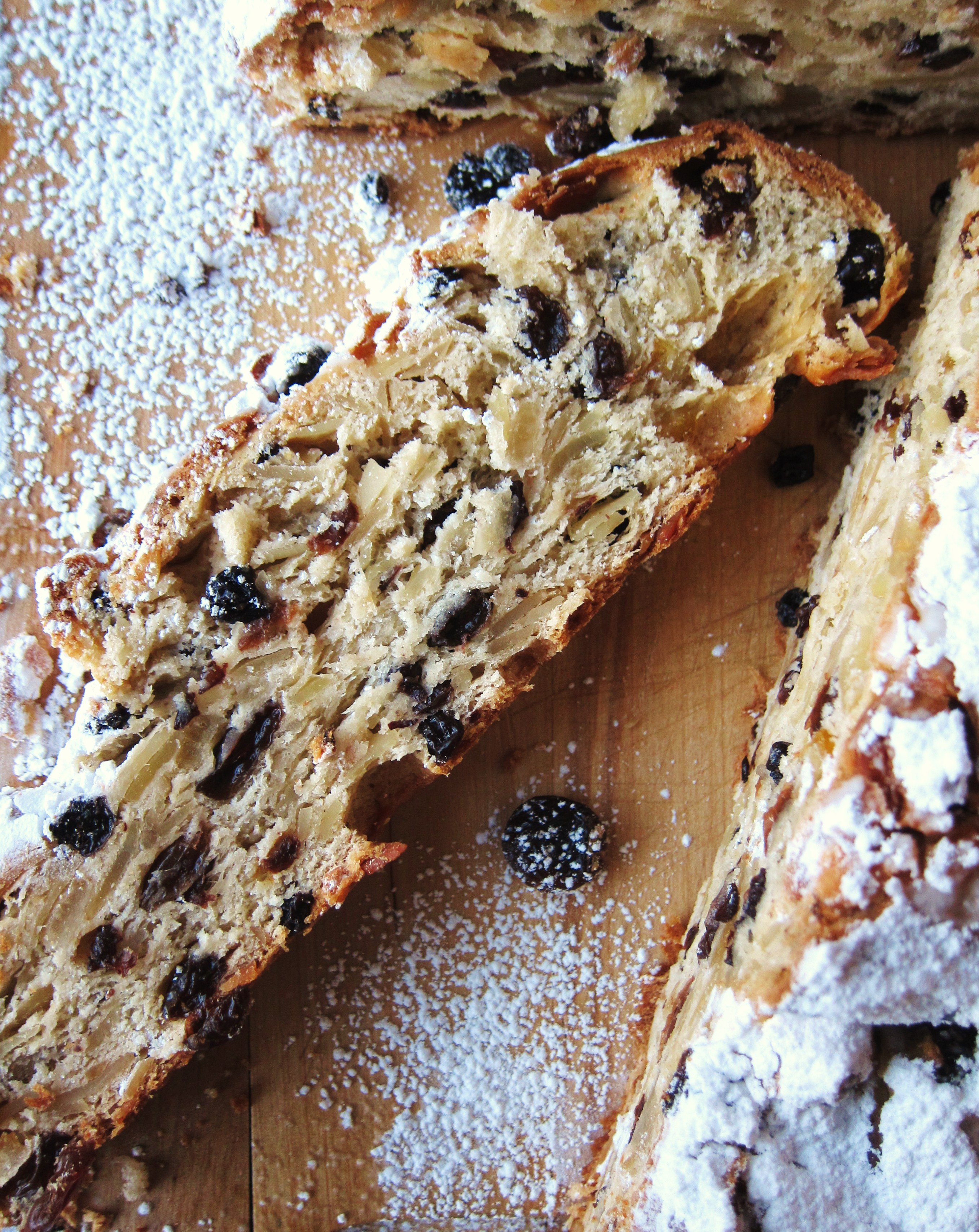
Almost twenty years ago, at Christmastime, my dad bought a loaf of stollen for the first time. He brought it home, cut it up and plated it. We were eager to try something so foreign and – for kids growing up in the burbs in the 90s – so exotic-sounding. But, one bite in, our excitement quickly unravelled, being replaced with the uneasy feeling of being duped. Not unlike a lot of the holiday fruitcakes I’ve reluctantly tasted over the years, this store-bought stollen was dry and lacklustre – a pasty-coloured loaf studded with nondescript dried fruit that rolled out off the sides with each bite.

It was miserable.

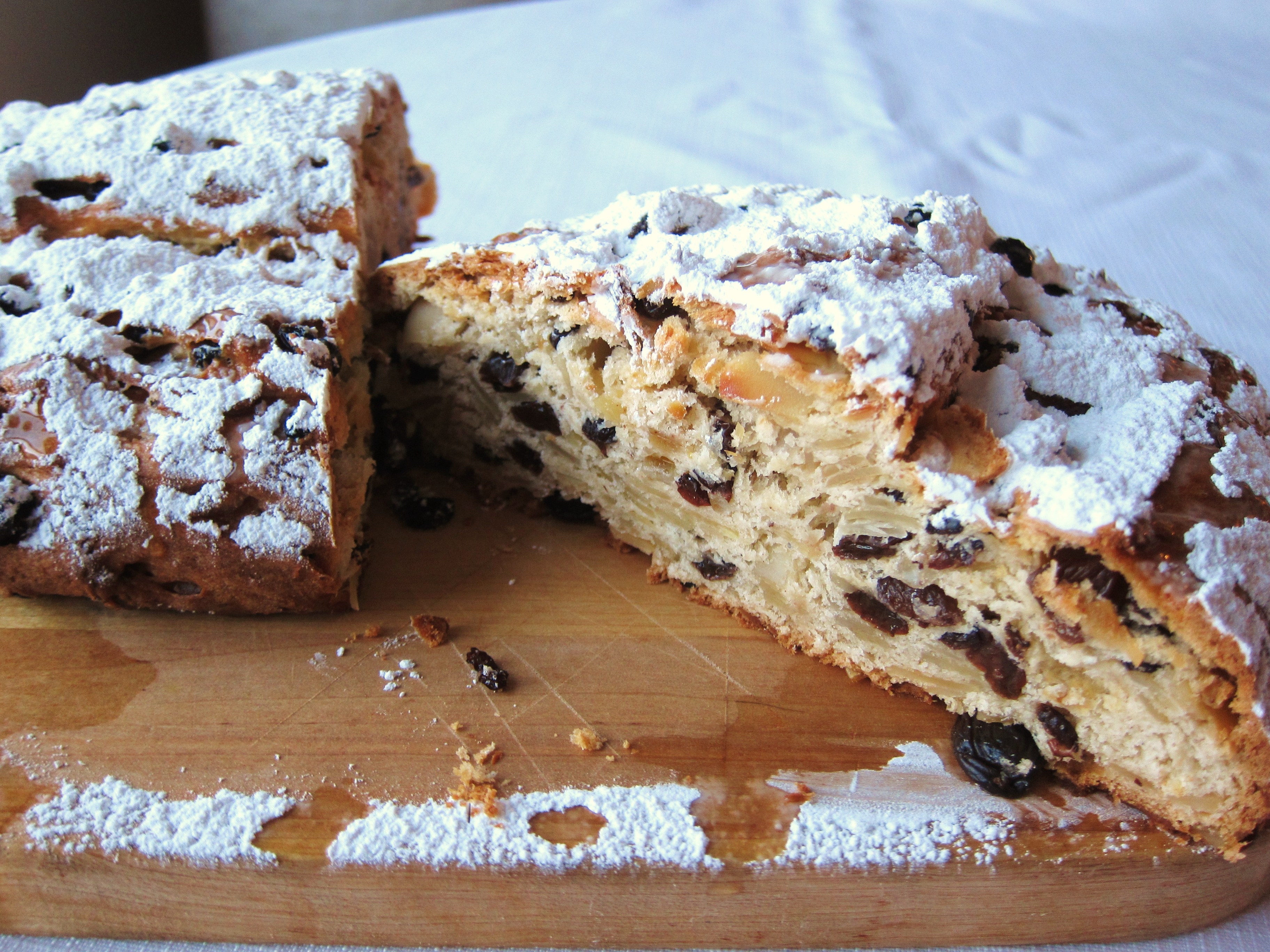
Unlike the rest of us, my dad saw the potential of this German-style fruitcake and shortly thereafter, set out to make his own. He sourced different recipes, even quizzing our German neighbour, Mrs. Nack, for secret stollen-making tips. And then, nearly every year since, he’s gone into full stollen-production mode – drenching the fruit several days ahead, making the dough, cutting the loaves, baking them, dusting them with sugar and wrapping them attentively. For someone who doesn’t bake (or have a Teutonic bone in his body), dad’s got this German sweet bread down to an art. The final result is a beautifully dense, yeasty bread, brimming with sliced almonds and a boozy mixture of currants, raisins and citrus peel. The longer it sits, the better it gets, as the brandy further permeates the crumb and the almonds slowly transform into marzipan. There isn’t a trace of neon-coloured maraschino or stale walnut in this fruitcake. Not if dad has anything to do with it. And that’s the way we like it.

Wishing a very happy birthday to my dad ♥ and a Happy New Year to all of you, dear readers! Looking forward to sharing more tasty edibles with you in 2014.

Dresden Stollen – makes 4 medium loaves or 6 small ones stollen 21

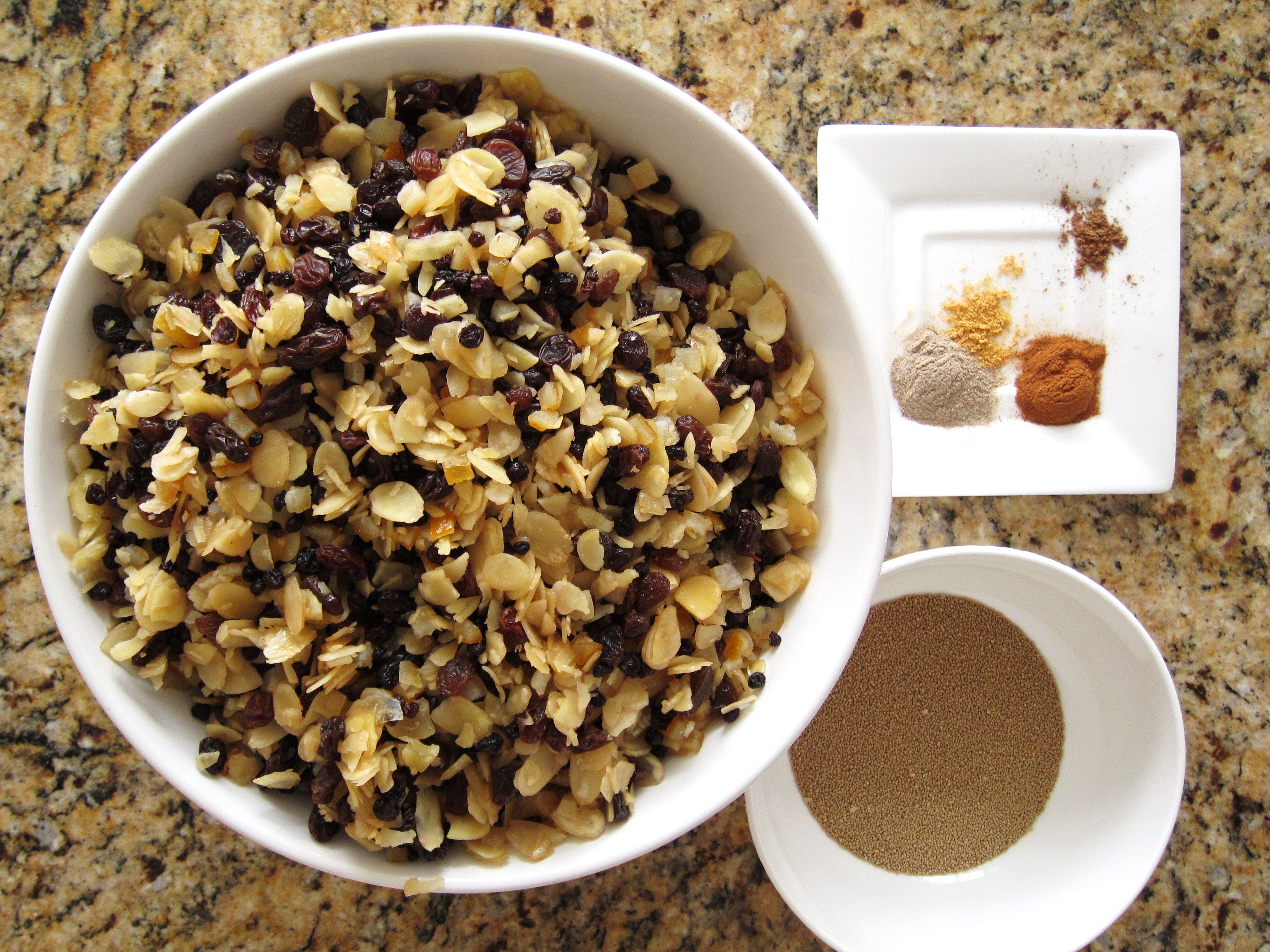
  • 1⅓ cups currants
  • 1 cup orange zest
  • 1 cup lemon zest
  • 3 cups raisins (Thompson or sultanas)
  • 4 ⅓ cups sliced, blanched almonds
  • 6½ cups (1 kilo) sifted flour
  • 6 packets yeast (8 gr each)
  • 2 cups icing sugar
  • ½ tsp ground cardamom
  • tsp cinnamon
  • 2 pinches mace
  • 2 pinches allspice
  • ½ tsp salt
  • 1 cup brandy
  • 2 cups lukewarm milk (reserve 1 cup for proofing the yeast)
  • 1⅓ lbs butter, room-temperature

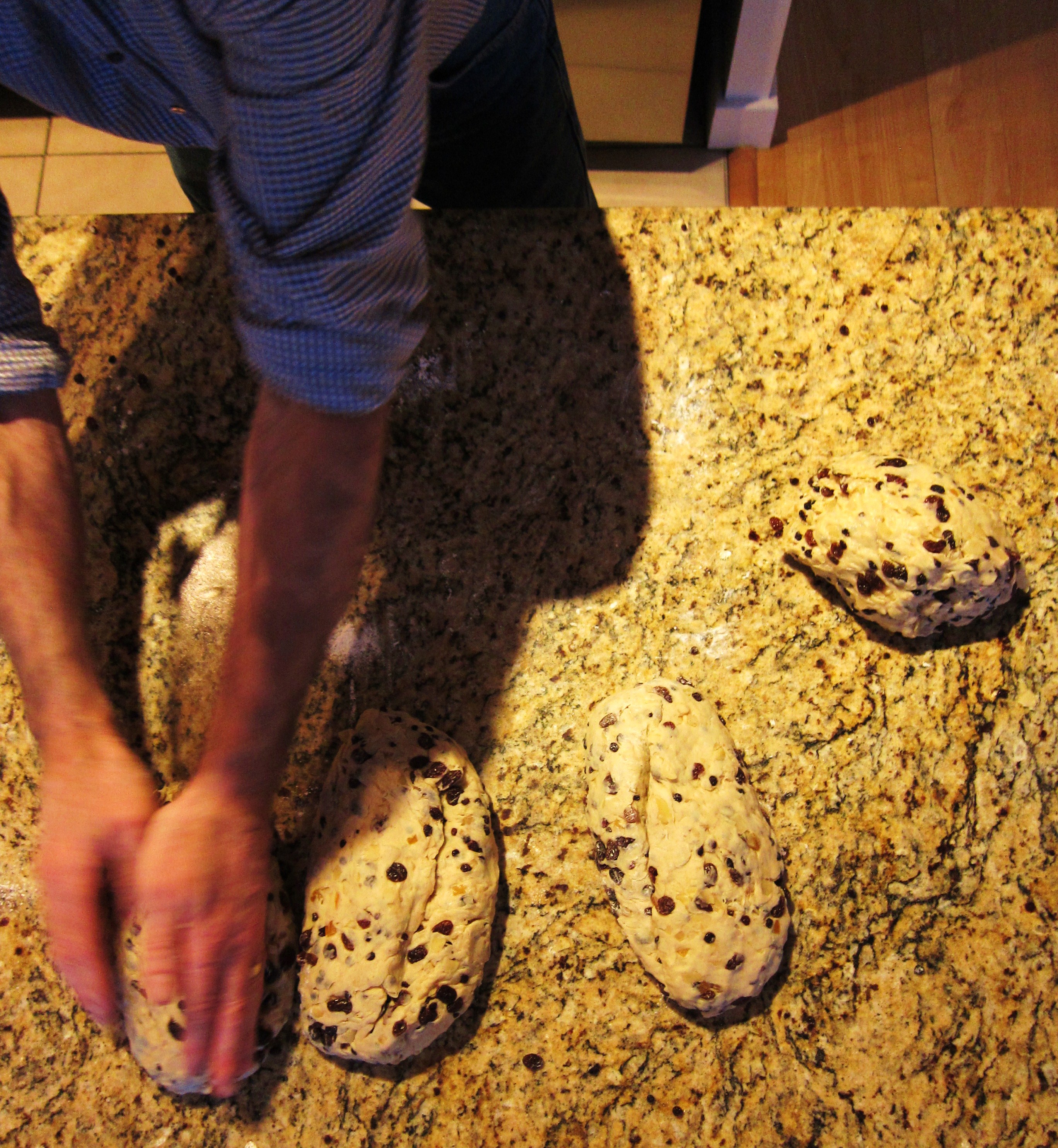
Pour the brandy over the mixture of currants, raisins, almonds & citrus zest. Mix and cover, allowing to soak overnight (or over several days). stollen 2 Proof the yeast by sprinkling it over 1 cup of the lukewarm milk (about 100ºF) to which has been added a tablespoon of sugar. Set aside in a warm place for about 10 minutes. The yeast is active if it forms a creamy foam on top of the milk. Sift the flour into a large mixing bowl. Add the room-temp butter, icing sugar, the remainder of lukewarm milk, spices and the proofed yeast mixture and mix. Transfer to a slightly floured work surface and knead thoroughly. stollen 3 stollen 4 stollen 5 Cover the dough and allow to rise for approx. 30 minutes in a warm place. Add the prepared fruit mixture. Knead the fruit mixture thoroughly into the dough. The dough should be smooth and elastic. stollen 12 Roll the dough into a long thick cylinder shape and cut into 4-6 pieces. Form into loaves. stollen 15 Transfer to a greased and floured baking tray, cover with a clean dish towel and leave to rise for 20-30 minutes in a warm, draft-free place. Preheat the oven to 350º F and bake for 50 minutes. stollen 17 stollen 18While the stollen is still warm, brush with melted butter and dust with icing sugar. Drizzle a little brandy over-top. Wrap well in muslin cloth or aluminium foil and store in a cool place. stollen 19 stollen 20 stollen 22 Note: Dad likes to douse his stollen every couple of days with brandy to keep it moist (and, let’s be honest, make it more delicious and boozy). Just re-dust the whole loaf with a bit of powdered sugar before serving.
Share this:

  • Tweet
  • Share on Tumblr
Like Loading...

Holiday Eating

27 Friday Dec 2013

Posted by julia chews the fat in Cooking For Your Peeps, Holidays, Sweet Tooth, Vegetarian

≈ 5 Comments

“I’ve decided. I’m having stuffing for breakfast.” – Mom (Boxing Day, 10:34am)

These are the kinds of assertions that make Christmas the beautiful thing that it is. A nip of bourbon in your morning coffee; shortbread cookies for breakfast. It’s unrestricted, backwards-eating at it’s best. Because really, who’s going to say that you can’t? There’s a unspoken understanding that from December 24th to January 6th, it’s the Wild West of eating and imbibing – there are no rules, and each is left to their own devices with the cornucopia of leftovers in the fridge. (And, yes, your head’s always in the fridge, because you’re constantly hungry. Even though you just ate.) For some reason, you also find yourself wanting to drink filtered coffee all day…or at least before you hit the mimosas, cocktails, red wine and hot toddies (usually in that order, but not always).

Christmas cookies are an important part of the no-rules, bacchanal feasting that goes on in our house at this time of year. Highly versatile, they can be eaten as an pre-breakfast “appetite-opener”, a “light” dessert after a holiday meal, or as a post-nap snack. They are glad to be whatever you want them to be, whenever you want them.

Like every year, I began amassing Christmas cookie recipes in mid-November, with the unrealistic hope that I’d be able to make all two dozen of them. Then, by the time December 23rd rolled around, I had widdled the list down to a more reasonable five or six, in addition to the “untouchables” (i.e. the ones firmly cemented in the italo-anglo traditions of my family, and which we do not mess with – anise pizzelle, fennel-seed doughnuts, chocolate chichinotti, shortbread cut-outs and ginger snaps).

This year, I locked down three new favourites, one with molasses, one with chocolate and one dusted with powdered sugar. They are each very different, but all equally addictive. Dunk them in a hot cup of coffee after a long walk in the snow. Or while sipping champagne in the bathtub. Whichever scenario suits you best.

Warmest of holidays to you and yours ♥

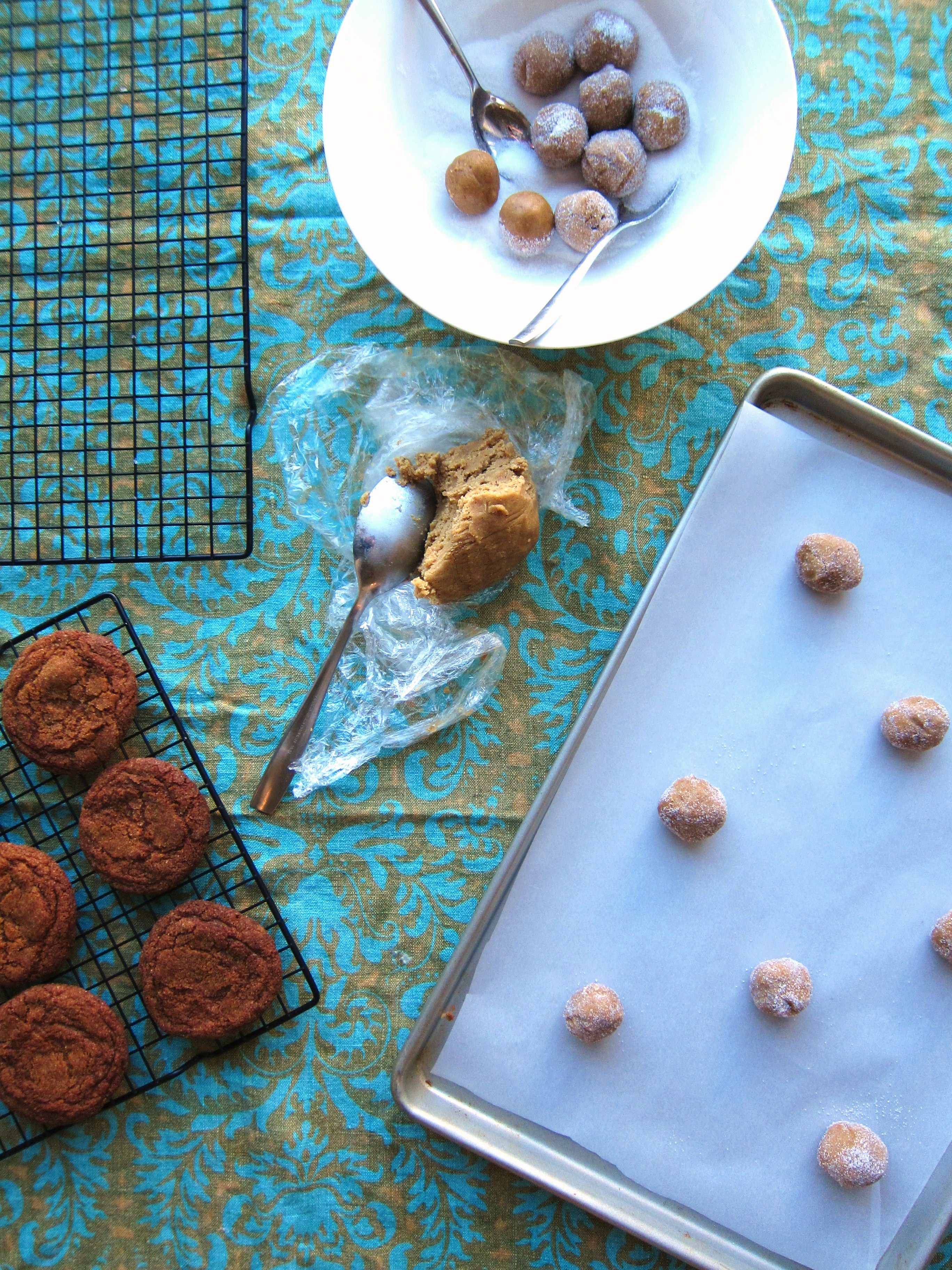
ginger-molasses cookies

Smoky Ginger-Molasses Cookies – from Reclaiming Provincial
(makes around 2 dozen cookies)

  • 5 black cardamom pods
  • 1 cup of sugar + 1/2 cup of sugar, divided
  • 3/4 cup of unsalted butter (12 tbsp / 1.5 sticks)
  • 1/4 cup molasses
  • 1 egg
  • 1 cup of bread flour
  • 1 cup of all-purpose flour
  • 2 tsp baking soda
  • 1/2 tsp salt
  • 1 tsp cinnamon
  • 1/2 tsp ginger
  • 1/2 tsp nutmeg
  • 1/2 tsp ground cloves
  • 1/8 tsp black pepper

3 days in advance:
Combine whole cardamom pods and 1/2 cup of sugar in a jar. Cover and let sit.

ginger-molasses cookies

To make the cookies:
Remove cardamom pods from the rolling sugar. Crack open pods, remove seeds and crush them with a mortar and pestle. Set aside.

Melt butter in a saucepan over medium-low heat. Add the cardamom pods and let simmer until the butter begins to foam. Remove from heat and let rest for 15 minutes, then remove pods and discard. Let butter cool to room temperature.

Sift together flour, baking soda, salt, spices, crushed cardamom seeds, and pepper.

In another bowl, cream together butter and the cup of sugar. Beat in molasses, then the egg. Gradually beat in dry ingredients until just combined. Cover and chill in the fridge for at least 2 hours, or up to 2 days.

Preheat the oven to 375°F and line a baking sheet with parchment or a Silpat.

Form heaping tablespoons of batter into balls; roll in the 1/2 cup of infused sugar. Place on a baking sheet two inches apart.

Bake cookies for 8–10 minutes. Let cool on the baking sheet for 2 minutes, then transfer to a cooling rack.

ginger-molasses cookies

—–

Almond Crescents
(makes about 2 dozen)

almond crescents

  • 1/2 lb unsalted butter
  • 3/4 cup powdered sugar
  • 2 egg yolks, well beaten
  • 1 cup ground almonds (blanched)
  • 1 tsp vanilla extract
  • 2 cups flour

Beat the egg yolks at high speed until light in colour.

Cream butter in a bowl; add sugar and beat with electric beaters for 1 minute. Add egg yolks, beating to blend. Add almonds and vanilla, then mix with a wooden spoon. Fold in flour a little at a time with the wooden spoon until just blended.

Refrigerate dough for 30 minutes (and up to 2 days)

Divide dough into 4 potions and roll out each portion on a floured work surface into a log shape. Cut segments (about the length of your index finger)and shape them into crescents.

almond crescents

Preheat the oven to 400°F. Bake on a parchment-lined baking sheet for 7-10 minutes. Allow to cool for a few minutes, then roll in powdered sugar while warm.

almond crescents

—–

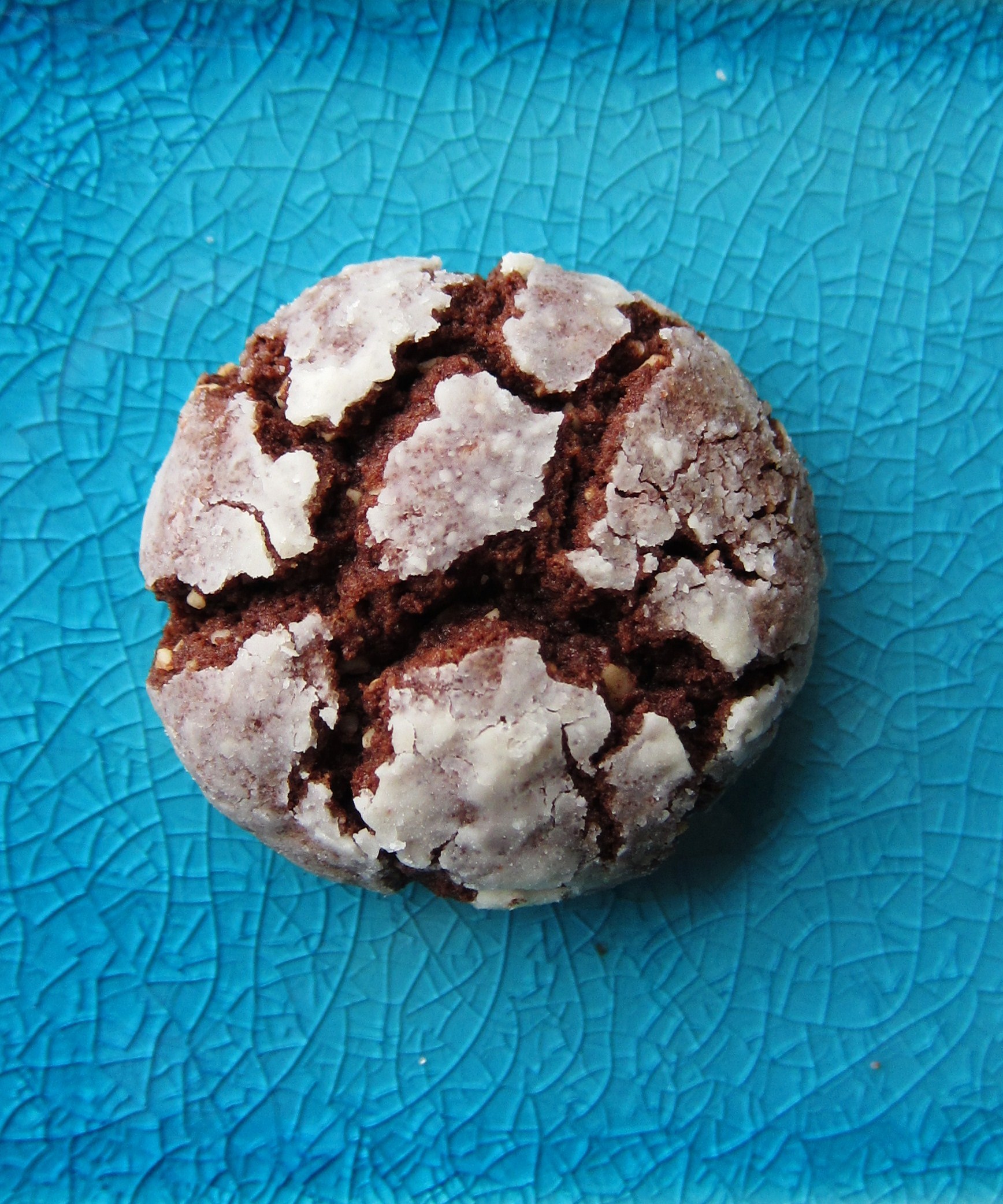
Chocolate Crackle Cookies – from Martha Stewart

Chocolate Crackle

(makes about 3 dozen)

  • 8 ounces dark chocolate (such as 70 percent cacao), finely chopped
  • 1 cup blanched almonds, toasted
  • 1/2 cup all-purpose flour
  • 1 teaspoon baking powder
  • 1/2 tsp salt
  • 1 stick unsalted butter, room temperature
  • 1 cup packed light-brown sugar
  • 2 large eggs
  • 1 teaspoon pure vanilla extract
  • 1 cup granulated sugar
  • 1 cup confectioners’ (powdered) sugar

Melt chocolate in a double boiler or a heatproof bowl set over a pan of simmering water, stirring. Let cool. Pulse almonds in a food processor until very finely chopped. Transfer to a medium bowl, and stir in flour, baking powder, and 1/2 teaspoon salt.

Beat butter and brown sugar with a mixer on medium-high speed until fluffy, 2 to 3 minutes. Mix in eggs and vanilla. Mix in chocolate. Reduce speed to low, and mix in almond-flour mixture. Refrigerate dough until firm, about 1 hour (note: the batter will not seem like a regular cookie dough, but more like a cross between cake batter and ganache to make truffles. It’s ok – roll with it. After some time in the fridge, it’ll firm up and you’ll be able to scoop it out).

Preheat oven to 350°F. Form dough into 1-inch balls. Roll in granulated sugar to coat, then in confectioners’ sugar to coat. Arrange on parchment-lined baking sheets, spacing about 1 inch apart. Bake, rotating sheets halfway through, until surfaces crack, about 14 minutes. Transfer sheets to wire racks; let cool.

Chocolate Crackle

Share this:

  • Tweet
  • Share on Tumblr
Like Loading...

Taking Back Cheese

20 Friday Dec 2013

Posted by julia chews the fat in Breakfast & Brunch, Lunch & Dinner, Snacking, The Basics, Vegetarian

≈ Leave a comment

For some time now, I’ve been buying ricotta under-the-radar from someone who makes it in their converted garage. You wouldn’t guess it, but this stuff is gorgeous – it’s creamy but unbelievably light and mild in flavour, almost sweet. It’s unlike any of the preservative-heavy schlock that’s often on offer in grocery stores. It comes in a beautifully moulded shape, ready to eat on its own, spread onto toast, sprinkled over salads, or baked in the oven on top of pasta (Nonna and I have a soft spot for this dish).

However, getting fresh cheese like this on a regular basis is a tad tricky. You need to be organised. You need to submit your order in advance and get yourself to the location. While it’s always worth it, it’s definitely not convenience food.

Then it came to my attention that ricotta could quite feasibly be made at home, without any special equipment or expertise. After all, it only involved 4 ingredients and some cheesecloth. But this idea cracked open a Pandora’s box of cheese-related questions: What type of ingredients work best? Should I be using rennet? Where do I get rennet? Do I need to boil the milk? How do I ensure I don’t poison anyone with my home-made concoctions?

I didn’t want to plunge knuckle-deep into whey before knowing a few ground rules. At the same time, I was weary of the vortex of conflictual information hanging out on the Internet and, ideally, I wanted to learn these skills first-hand with someone whose experience far surpassed mine.

Enter David Asher Rotsztain. 

David is an organic farmer, goatherd and cheesemaker based in Mayne Island, B.C. Through community outreach workshops, he teaches natural cheese-making methods that can easily adopted by the home cook. In other words, this is guerilla-cheese-making – taking back something that in modern times has been (rather counter-intuitively) entrusted with people and entities that are alien to us and our day-to-day.

By sheer luck, a local non-profit was offering workshops with David right around the time I was thinking about making ricotta. In the workshop, he spoke about different types of cheese, their idiosyncrasies, their benefits, their beauty. We talked about raw milk versus pasteurized, whole milk versus low-fat, the use of lemon juice compared to rennet, and the wonders of edible mold. It was an eye-opening experience that broke down the process into manageable pieces and made cheese-making more approachable than I could have imagined. As I quickly learned, good cheese involves only a handful of ingredients, some time, and a bit of know-how.

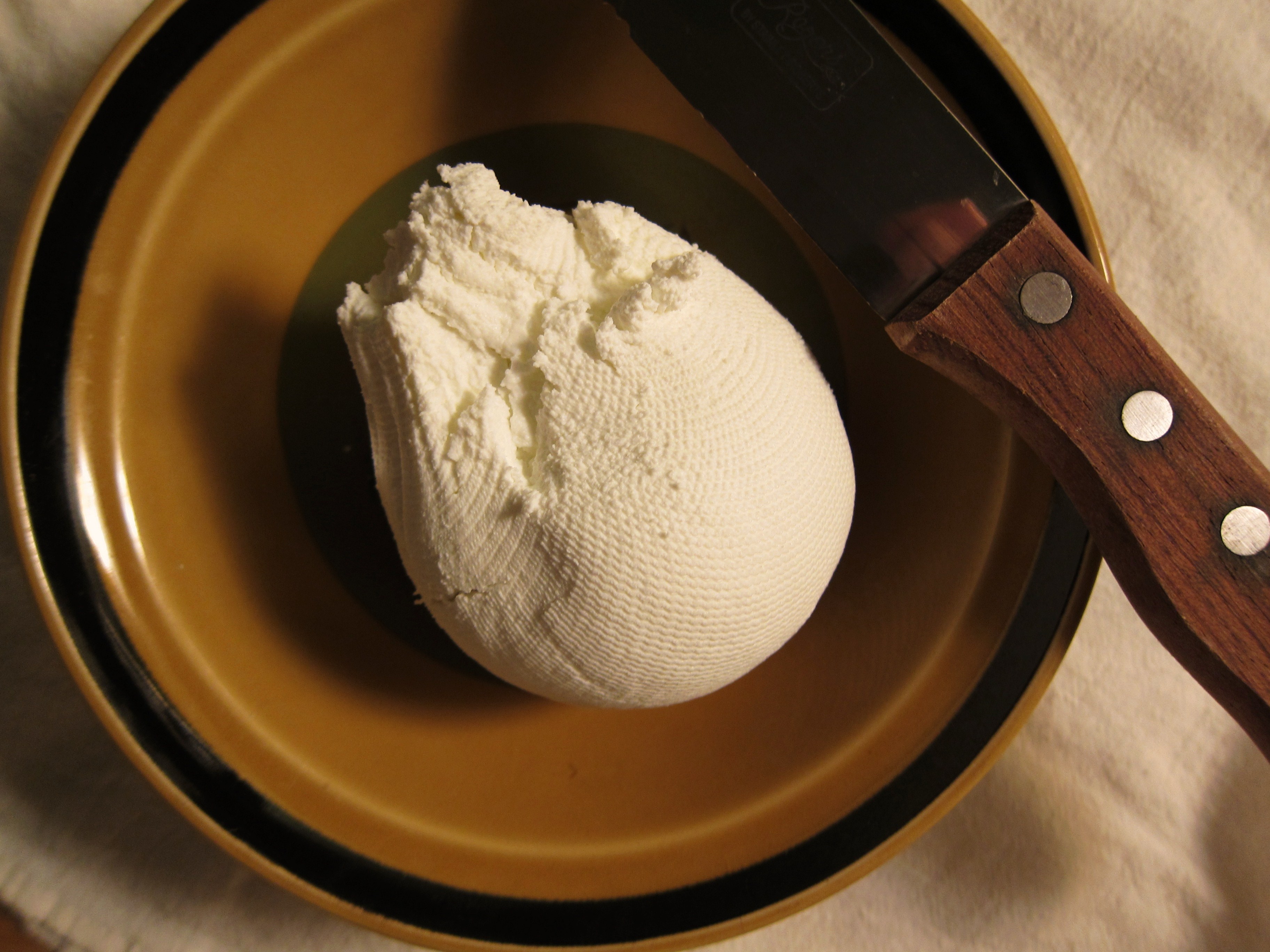
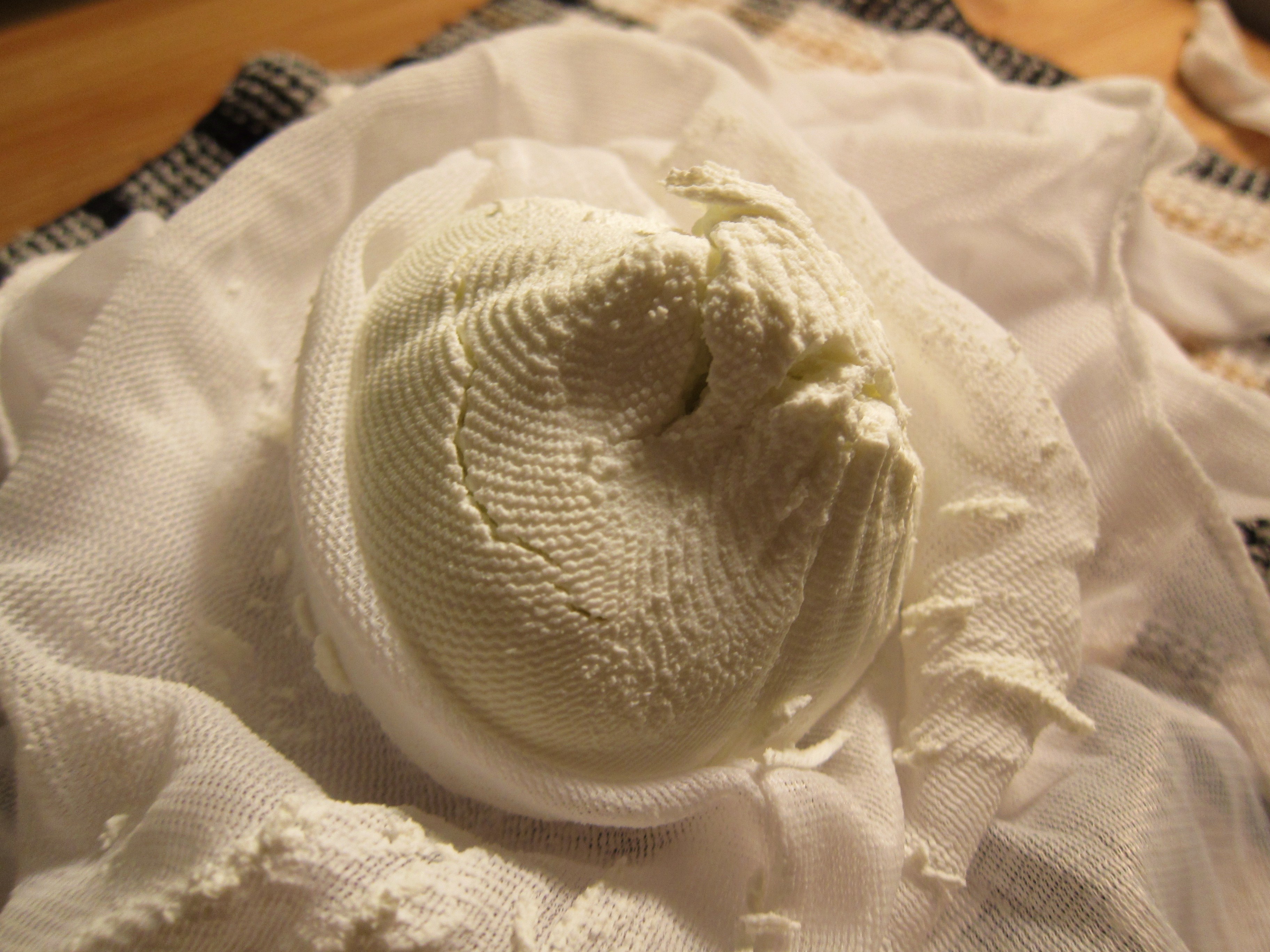
Until I get around to making ricotta, I’m going to leave you with the step-by-step process for making your own fromage frais, which is essentially yoghurt strained at room temperature for 24-28 hours. It’s ridiculously simple, and though it takes a bit of time, your patience will be rewarded with a lovely, creamy round of fresh cheese, ready to serve with bread for breakfast or alongside crackers on a (hm holiday?) cheese platter.

Enjoy ♥

Homemade Fromage Frais – makes about 250g

8 - finished fromage frais


You will need:

– 1 container good-quality yoghurt, without any emulsifiers, stabilizers or gelatin (for this recipe, I used a full-fat buffalo yoghurt I found here)

1 - yogurt
– about 1 tsp salt
– a big stockpot or very deep bowl
– a wooden spoon (or something similar) that will sit solidly across the bowl
– some cheesecloth (this can include unbleached muslin or nylon cloth, but David recommends a Du-Rag. Yep, that’s right – a Du-Rag. Its shape and tight meshing make it perfect for straining this cheese. And it’s a breeze to wash for future use)

2- cheese cloth
1) Wash your cheesecloth and allow to air-dry.
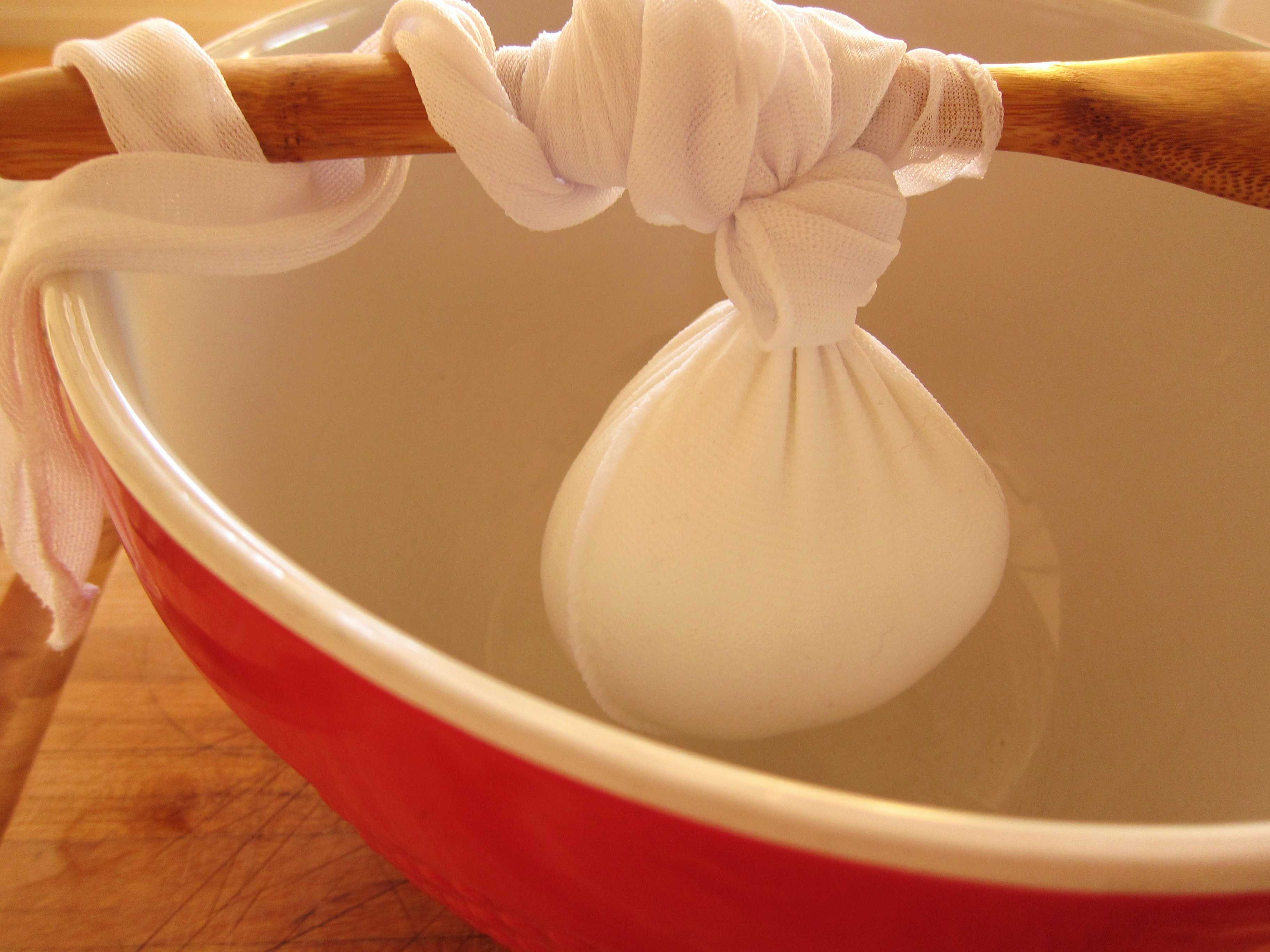
2) Drape the cheesecloth atop a bowl and pour the yoghurt into its centre. Pull together the four corners of the cloth around the yoghurt; twist and secure with a knot.

3- yogurt in cheese cloth

5 - squeezing & tying

3) Tie to the wooden spoon (or similar implement) and hang over stockpot or deep bowl. The cheese should be able to hang freely, not touching the bottom.

6 - hanging

4) Leave it to hang overnight at room temperature. As they whey* drips into the pot, the yoghurt will slowly become cheese.
(*do not discard whey by pouring it down the drain, as it is toxic to aquatic life. Instead, keep it to make ricotta or feed your plants, dogs or compost with it.)

5) After 24 hours, this cheese will have dripped dry. To improve flavour, and to help preserve it longer, salt the cheese by opening up the cheesecloth and sprinkling a teaspoon of salt over the surface of the cheese. Close the bag, and hang it again for another 4 hours.

7 - opening & salting

9 - cheese & toast

10 - cheese & toast - detail

Titbits from David:
*don’t squeeze the cheese to force out whey (it’s sooo tempting, but resisting will avoid any mishaps…)
*make this cheese with goat’s yoghurt, and you get chèvre.
*make this cheese with extra high fat yoghurt, and you get cream cheese.

And if you still need some cheese-making inspiration, watch this video (disclaimer: it may make you want to pack your bags, move to France, and become a shepherd).

Share this:

  • Tweet
  • Share on Tumblr
Like Loading...
← Older posts
Newer posts →

Facebook

Facebook

Instagram

No Instagram images were found.

Recent Posts

  • Layers and Rows
  • Finding Buoyancy
  • February
  • Wednesday
  • Cross My Heart, Miso

Archives

  • May 2017
  • April 2017
  • February 2017
  • December 2016
  • November 2016
  • September 2016
  • August 2016
  • July 2016
  • June 2016
  • May 2016
  • April 2016
  • March 2016
  • February 2016
  • January 2016
  • December 2015
  • November 2015
  • October 2015
  • September 2015
  • August 2015
  • July 2015
  • June 2015
  • May 2015
  • April 2015
  • March 2015
  • February 2015
  • January 2015
  • December 2014
  • November 2014
  • October 2014
  • September 2014
  • August 2014
  • July 2014
  • June 2014
  • May 2014
  • April 2014
  • March 2014
  • February 2014
  • January 2014
  • December 2013
  • October 2013
  • September 2013
  • August 2013
  • July 2013
  • June 2013
  • May 2013
  • April 2013
  • March 2013
  • February 2013
  • January 2013
  • December 2012
  • November 2012
  • October 2012
  • September 2012
  • August 2012
  • July 2012
  • June 2012
  • May 2012
  • April 2012
  • March 2012
  • February 2012

Categories

  • Beverage
  • Breakfast & Brunch
  • Condiments
  • Cooking For Your Peeps
  • Cooking Solo
  • Cooking with Nonna
  • Food Away From Home
  • Food Writing
  • Holidays
  • Intro
  • Lunch & Dinner
  • Snacking
  • Soups
  • Sweet Tooth
  • The Basics
  • Vegetarian

Enter your email address to follow this blog and receive notifications of new posts by email.

Join 82 other subscribers

Blog at WordPress.com.

  • Subscribe Subscribed
    • julia chews the fat
    • Join 82 other subscribers
    • Already have a WordPress.com account? Log in now.
    • julia chews the fat
    • Subscribe Subscribed
    • Sign up
    • Log in
    • Report this content
    • View site in Reader
    • Manage subscriptions
    • Collapse this bar
 

Loading Comments...
 

    %d