• Home
  • About

julia chews the fat

julia chews the fat

Category Archives: The Basics

Sick-day omelette

10 Sunday Feb 2013

Posted by julia chews the fat in Breakfast & Brunch, Cooking Solo, The Basics, Vegetarian

≈ 4 Comments

Hi there.

I’m three days into a head cold, so this one’s going to be quickie. If there are spelling mistakes, or incoherencies, I apologize in advance. Trying to write with NeoCitran coursing through your veins feels like being at the steering wheel with one arm.

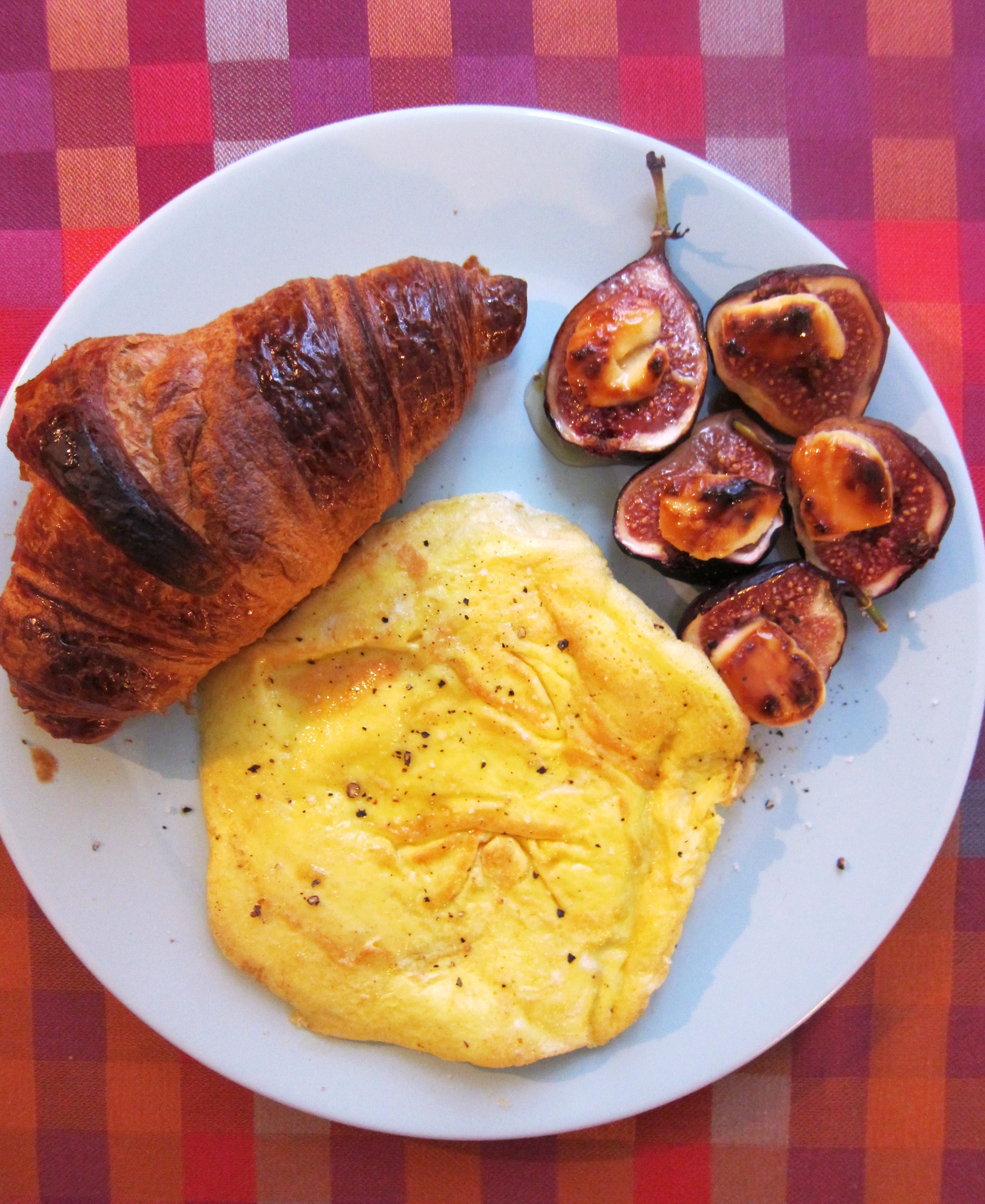
So I will be economical with my words, and just say this: MAKE THIS OMELETTE. It might just be the best one you’ve ever had. It’s filled with clusters of air bubbles that crackle and melt in your mouth – the kind of food that makes you involuntarily close your eyes between bites. Like women do in yogurt commercials.

Oh and the figs? They will sucker punch you into a euphoric haze. So, yeah, make those too.

Well. It was nice checking in with you – but if you don’t mind, I’m going to go back to drinking lemon tea and watching Timothy Olyphant in a cowboy hat.

Souffléed Omelette with Honeyed Figs (serves 1) – inspired by Luisa Weiss’ My Berlin Kitchen

omelette with honeyed figs

  • 3 eggs divided
  • 1 tbsp. cold butter 
  • Salt and freshly ground pepper

1) Divide eggs, putting whites into a medium bowl and yolks into a small bowl. Season egg yolks to taste with salt and freshly ground pepper, mix together with a fork, and set aside.

fig omelette 001

2) Beat egg whites with a whisk until soft peaks form. Fold egg whites gently into egg-yolk mixture until combined and set aside.

whipped egg whites

3) Melt butter in a cast-iron pan on medium heat. When the butter starts to bubble, pour egg mixture into skillet and spread evenly in pan. Cook omelette, gently shaking skillet over heat occasionally, until bottom is golden, 2-3 minutes. Loosen omelette and flip it onto the other side. Cook covered for an additional 2 minutes or until center in just set. Serve straight away.

(Note: another option is to fold the omelette into a half-moon after the first 2 minutes of cooking, then pop it into a 350°F oven to finish. You can also add grated cheese, chives, etc to the beaten egg yolks if you wish.)

For the Honeyed Figs:

  • 2- 3 fresh figs
  • 1 Tbsp honey
  • about 2 Tsbp goat’s cheese

Set the oven to 400°F. Wash and halve the figs. Lay in a roasting pan, cut-side up and drizzle with the honey. Add a dollop of goat’s cheese onto each fig. Place into preheated oven and bake for 6-8 minutes. Set the oven to broil and bake the figs for an additional 30 seconds or until the cheese is bubbling and golden.

Share this:

  • Tweet
  • Share on Tumblr
Like Loading...

The Deep Freeze

27 Sunday Jan 2013

Posted by julia chews the fat in Breakfast & Brunch, Snacking, Sweet Tooth, The Basics

≈ 5 Comments

I fully acknowledge that talking about the weather is best left for encounters at the water cooler, in the elevator, on the sidewalk with that neighbor you only see twice a year – situations where there’s a mutual understanding that you’re both just filling conversational space with a topic that, while effortless to discuss, can be pretty dull.

But.

It has been one billion degrees below zero this week, and that kind of cold does all sorts of crazy to you. In times like these, talking about the weather becomes an integral part of social interaction, more along the lines of communal therapy than mundane chit chat.

Yes, it’s January. In Canada. In QUEBEC – land of the winter Carnaval and Igloofest. We weirdos have a tradition of celebrating the cold. We even have a formally appointed mascot. But this cold snap has tested our resilience. With temperatures at –40 C, cars seized, eyelashes froze, pipes burst. News reports reminded us, quite aggressively, that exposed skin would freeze in 10 minutes and that neglecting to reduce our energy consumption would cause blackouts.

It’s been brutal.

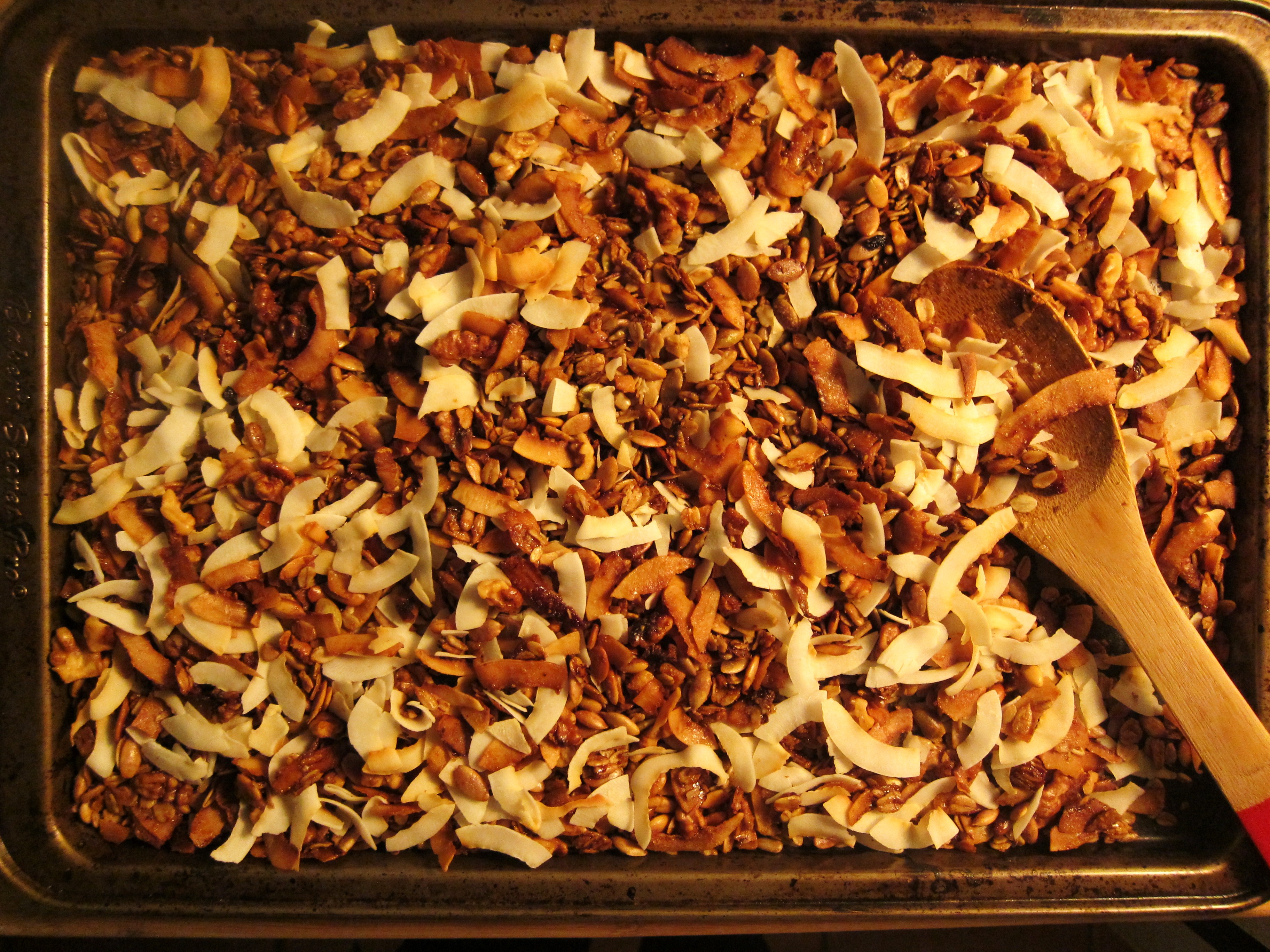
There is one thing, though, that comforts me – and that is knowing that there is a hefty batch of granola on the middle rack of the oven, slowly toasting itself into golden oblivion. Not just any granola. This granola:

Baked granola

I’m not a cereal person by nature, but this granola has completely bewitched me. I forgot about the cold, the snow, the icy side-walks and harsh winds. With the hot scent of brown sugar, pumpkin seeds and toasted coconut emanating from the oven, it could’ve been the zombie apocalypse out there and I wouldn’t have noticed.

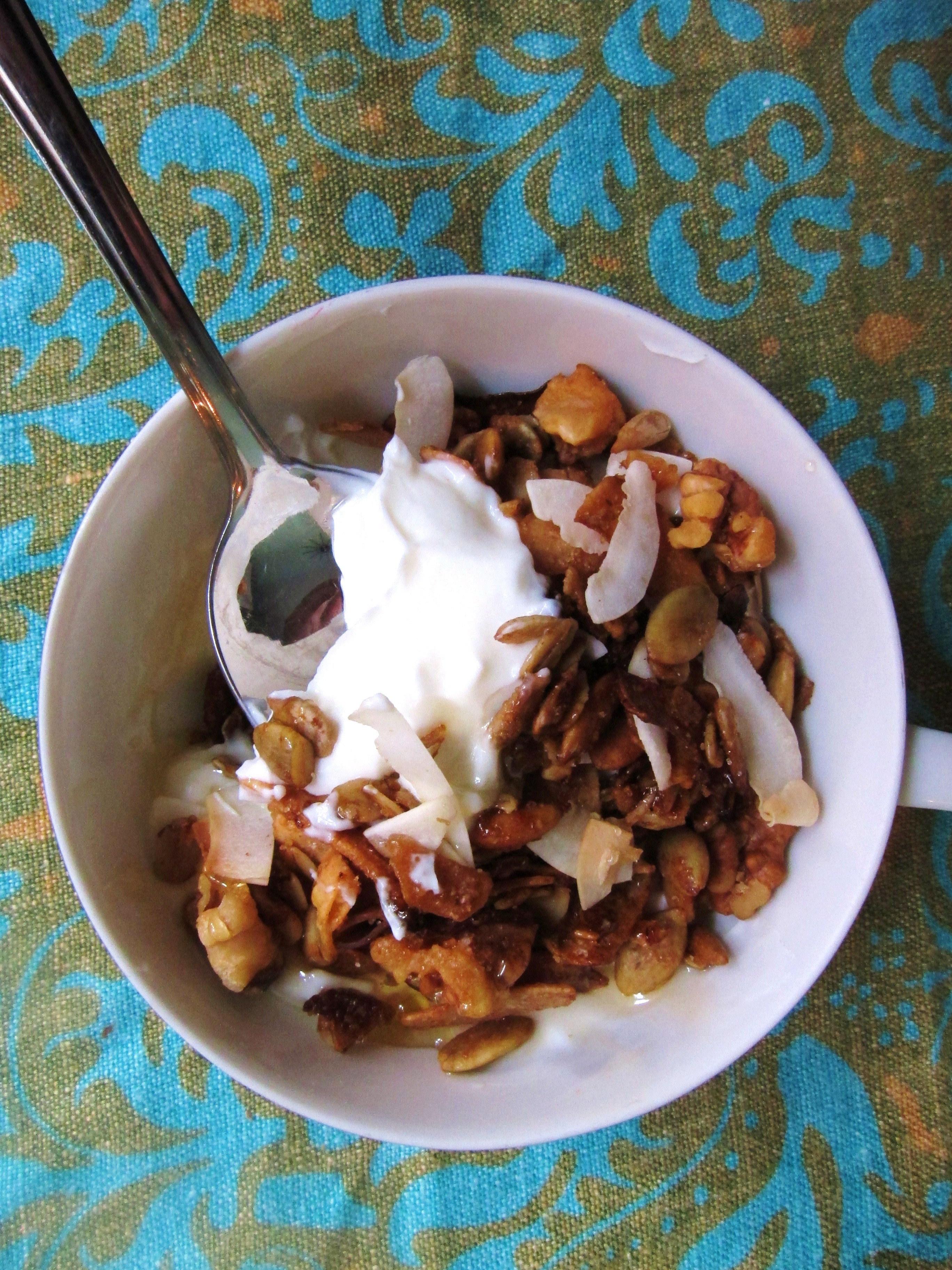
Granola & yogurt

Toasted Olive Oil and Maple Granola (makes about 4.5 cups) – adapted from Nekisia Davis’ recipe featured on Food 52

  • 1 1/2 cups old-fashioned rolled oats
  • 1/2 cup raw pumpkin seeds, hulled
  • 1/2 cup raw sunflower seeds, hulled
  • 1/2 cup unsweetened coconut chips
  • 1/2 cup raw walnuts, coarsely chopped (or pecans, almonds)
  • 1/4 cup pure maple syrup
  • 1/4 cup extra-virgin olive oil
  • 1/4 cup packed light-brown sugar
  • 1 tsp coarse salt

Heat oven to 300° F degrees.

Put oats, pumpkin seeds, sunflower seeds, coconut, walnuts, syrup, olive oil, sugar, and 1 teaspoon salt in a large bowl and mix until well combined. Spread granola mixture in an even layer on a rimmed baking sheet. Transfer to oven and bake, stirring every 10 minutes, until granola is toasted (about 25-30 minutes).

Remove granola from oven. Let cool completely before serving or storing. Can be stored in an airtight container for up to 1 month.

Note: I added a few more coconut flakes for the last 5 minutes of baking to lighten up the colour.

Granola & yogurt

Share this:

  • Tweet
  • Share on Tumblr
Like Loading...

Phobias, exposure therapy, and cream puffs

09 Sunday Dec 2012

Posted by julia chews the fat in Cooking For Your Peeps, Sweet Tooth, The Basics

≈ 5 Comments

Not too long ago, flipping through an old issue of Scientific American, I came across one of the most dismal terms in the medicalisation of fear – MAGEIROCOPHOBIA. The sheer idea of it floored me. Not because I don’t believe it exists – the kitchen can be a scary place for a lot of people – but because I couldn’t imagine it as a bona fide psychological condition for which someone might seek cognitive behavior therapy, or treatment in the form of serotonin reuptake inhibitors.

Pretty heavy stuff.

Like other phobias, it seems to have varying degrees of severity. And since “the fear of cooking” is rather large in scope, mageirocophobia encompasses a wide range of anxiety triggers: it can be the fear of cooking for a large crowd, or the fear of injuring oneself while cooking, or it can be the fear of complex recipes. While each of us has particular aversions in the kitchen, I find it compelling that we’ve come to dread something that has, at least traditionally, been an integral part of our social exchanges as families and communities, not to mention our basic survival. How did we come to be so apprehensive of the one thing that provides us sustenance? Is it because we’ve gotten used to having other people do it for us? Is it because frozen pizza and powdered sauces have become our steady kitchen companions?

Thinking about this phenomenon made me curious to find out what the people around me were afraid of in the kitchen. Over the course of a week, I asked friends and colleagues to submit ideas of “food that scares them”: meals or recipes they’ve wanted to make, but have avoided for fear that they are too complicated or intimidating or too time-consuming. After collecting about 30 submissions – ranging from Beef Wellington to macarons – I put them in a hat and selected one at random. I gave myself the task of making whichever recipe came out.

The winner was my friend, Kate, who submitted “cream puffs”. Kate is a very good cook and baker – and a brave one at that (the first time I made home-made ice cream was thanks to Kate’s initiative) – but cream puffs seemed arduous to her: “I hear they’re easy but I haven’t tried because it just feels like work.”

Like Kate, I thought cream puffs would be a pain to make. It turns out that they’re really no sweat – the dough comes together in few minutes, in a pot on the stove (so no finnicky kneading, chilling, rolling) and is then piped out onto baking sheets; the cream filling is fairly simple too – a handful of ingredients that come together on the stove with the help of some warm milk and a whisk. C’est tout, les amis.

You might decide to make these cream puffs, or not.  Either way, I’m hoping this post will entice you to face your cooking demons, however they manifest themselves. I’m also hoping it will be somewhat therapeutic; think of it along the lines of remedial exposure therapy, where the more you do the things that scare you, the less afraid you’ll be of them.

Happy cooking, everyone x

—–

Cream Puffs = choux pastry + custard or cream filling

Pâte à choux– makes about 24 small buns – adapted from the Encyclopedia of French Cooking, 1982

136

  • 1 1/4 cups water
  • 1/2 cup butter
  • 3/4 tsp salt
  • 1 1/4 cups all-purpose flour
  • 4 large eggs

Preheat the oven to 400° F.

Heat the water in a large pan with the butter and salt. When the butter has melted, bring the liquid to the boil and remove from the heat.
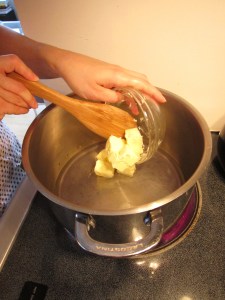
Butter, water, & salt

Immediately add the flour all at once, then beat vigorously with a wooden spoon. Return the pan to a low heat and continue beating until the mixture draws together and leaves the side of the pan. Do not overbeat – the dough should be smooth and shiny, but not oily.

115

Remove the pan from the heat, then add the eggs one at a time, beating vigorously after each addition and making sure the egg is fully incorporated before adding the next. Add the last egg a little at a time, beating to make a shiny dough that just falls from the spoon – if the dough will not absorb the last egg, then do not add it.
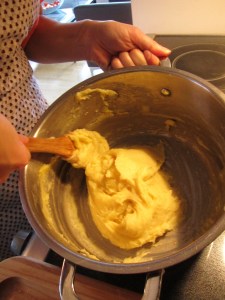
118

Fill a pastry bag fitted with a large plain tip with the warm choux mixture and pipe small (about 1-inch) dots onto a parchment-lined baking sheet. Wet your finger with cool tap water and lightly tap any peaks on the batter.

125

Bake in preheated oven for 10 minutes, then reduce the heat to 375° F and bake for another 10 minutes. Allow the pastries to cool before filling.

Crème pâtissière (vanilla custard) – makes about 2 cups – from the Encyclopedia of French Cooking, 1982

Prepped ingredients

  • 2 cups milk
  • 1 vanilla bean, sliced down the center lengthwise
  • 4 large egg yolks
  • 1/2 cup of sugar
  • 1/2 cup of all-purpose flour
  • knob of butter, to finish

Bring the milk to just below boiling point with the vanilla pod, then cover and leave to infuse for 15 minutes. Strain, then bring to the boiling point again.

Infused milk

Put the egg yolks in a medium bowl with the sugar and whisk together until pale and thick. Add the flour and whisk again until thoroughly incorporated, then gradually whisk in the boiling milk (do this in a slow, steady stream to avoid scrambling your eggs).

Milk in egg mixture

Pour the custard into a heavy-based pan and whisk over medium heat until boiling. The mixture may be lumpy, in which case, remove from the heat and whisk until smooth. Return to the heat and bring to the boil again, the simmer for 1 to 2 minutes to cook the flour, whisking constantly.

099

Remove custard from the heat, then rub the surface with a knob of butter to prevent a skin from forming. Once cool, either fill the dough puffs by spreading a layer of custard between two halves, or alternately, fill a pastry bag with the custard and gently insert into the dough puffs, filling them until you feel a bit of resistance.

Cream puffs

Note: as there is no sugar in the dough, these work equally well (sans custard) along savoury dishes or on a cheese plate with other breads.
Share this:

  • Tweet
  • Share on Tumblr
Like Loading...

Chicken broth, the magical elixir

03 Saturday Nov 2012

Posted by julia chews the fat in Soups, The Basics

≈ 10 Comments

A couple of weeks back, I babysat my friend’s kids. This request comes up from time to time and when it does, I’m quick to accept because, well, her daughters are two lovely little people that I like spending time with.

I mean, would you say “no” to these magnificent creatures?

That said, if you have kids, or know people who do, you are well-aware that children between the ages of two and five spend most of their waking hours at school or daycare sticking their fingers in other kids’ mouths, thus becoming spectacularly efficient germ incubators. The night I came over to babysit, the sick one (who will remain nameless) happened to sneeze in my face – not on my cheek, or my forehead. No. Instead, directly into my mouth. There was something rather unsettling about the perfect timing between that sneeze and that yawn. Something vaguely Darwinian and cruel. The germ incubator, for her part, thought it was quite hilarious.

That, dear friends, marked the beginning of a fourteen-day chest cold. And by the fourteenth day, everything began to feel dramatic: having to replace a burnt-out light bulb on the ceiling fixture. Taking public transit. Taking out the trash.

Expletives abounded.

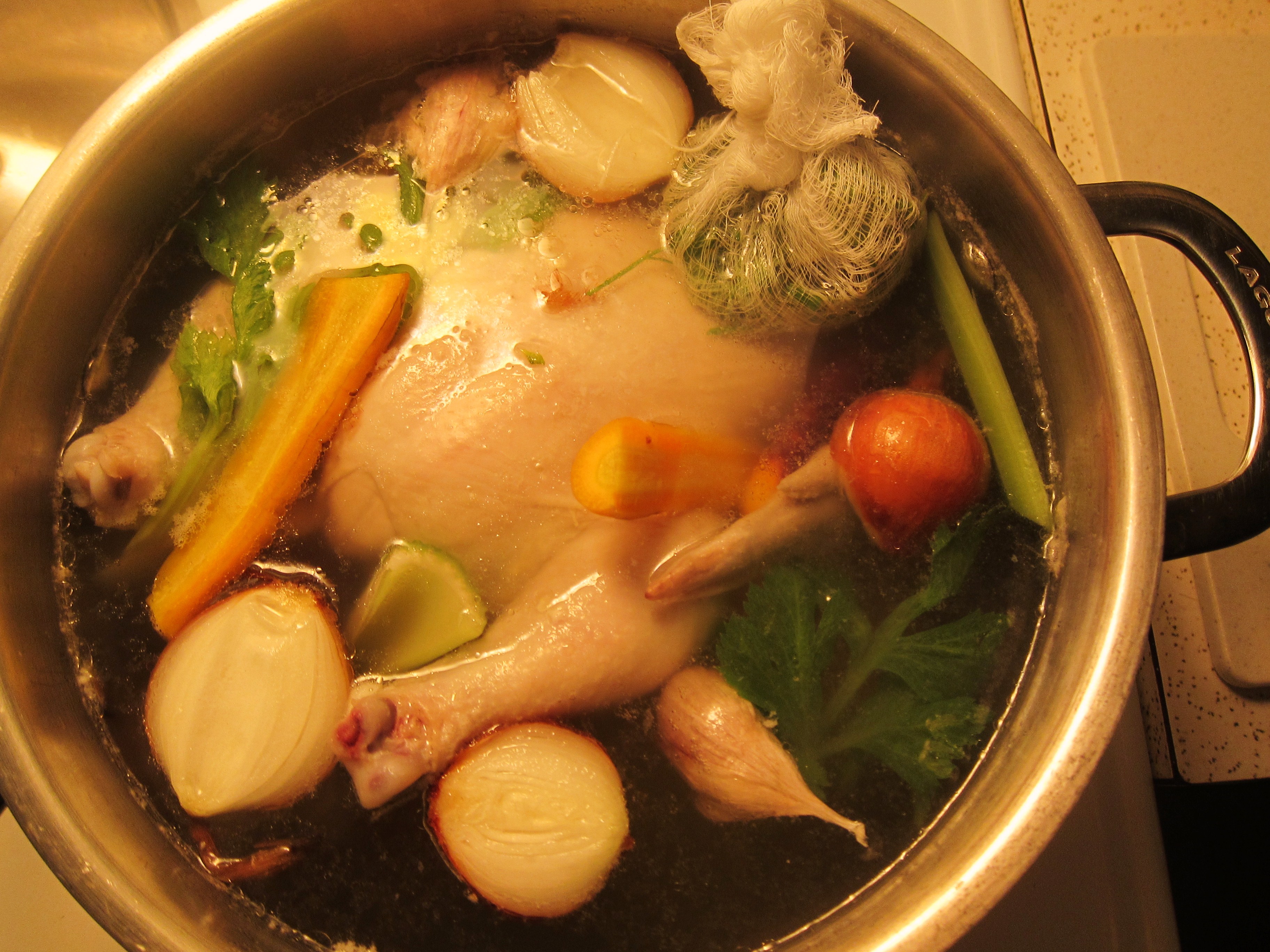
To curb any further cold-induced swearing, I took on the standard routine of sleeping, drinking tea, gargling salt water, and consuming vast quantities of soup – ones made with heady, home-made chicken broth. More specifically, mom’s chicken broth – a simple elixir of chicken, root vegetables and herbs that simmers slowly on the stove top. It’s your reward for making your way through an entire box of tissues.

Next time you feel like the contents of a trash bag, make this broth (or even better, ask someone to make it for you), pour some in a bowl and sip it slowly – no spoon required.

Cold-curmudgeon pacified, guaranteed.

Mom’s Chicken Broth – makes about 2 litres

  • one whole chicken (organic, if possible)
  • 1 onion, halved (if you want a darker broth, keep the peel on)
  • 1 large carrot, roughly chopped
  • 1 celery stalk (leaves on, if possible), roughly chopped
  • a few springs of fresh thyme
  • a few springs of fresh parsley
  • 1 bay leaf
  • salt
  • cheesecloth
  • kitchen twine

(*I add one whole garlic clove, smashed – but don’t tell mom)

Place chicken in a large Dutch oven (i.e. a heavy-bottomed, two handle soup pot) and cover with cold water. Set the pot on medium-high heat.

While the water heats up, prepare the onion, garlic, carrot and celery; set aside. Make a bouquet garni by filling a piece of cheesecloth with the thyme, parsley and bay leaf and tying it with a piece of twine.

Bring water to a boil and periodically skim off the frothy bits with a wooden or slotted spoon – this will ensure that you get a clear broth.

When the frothing has subsided, reduce heat to medium-low, add some salt, the vegetables and the bouquet garni. Simmer for about 1 – 1½ hours, (the cooking time will obviously vary depending on the size of your chicken) until chicken is cooked. Remove it from the pot and reserve. Strain the broth into a large bowl through a fine sieve (or a fine sieve with some cheesecloth). If you choose, you can reserve the vegetables for another use.

Share this:

  • Tweet
  • Share on Tumblr
Like Loading...

Eggplant Stacks with Tomato Sauce

08 Monday Oct 2012

Posted by julia chews the fat in Lunch & Dinner, The Basics, Vegetarian

≈ 2 Comments

Normally around this time of year, I would be telling you about tomato canning. Normally, I would relish in describing the whole process, it’s laborious nature and the well-worth-it results. I would tell you that you MUST MUST MUST preserve tomatoes. Normally, I’d have photos to show you and anecdotes to tell. Normally.

But this year, due to a series of unforeseen circumstances, I missed out on our family’s tomato canning festivities. The weekends got consumed with other things, and eventually we were nearing the end of September and locally-grown tomatoes had become scarce at the markets. And then it got colder and suddenly it was October.

It makes me a bit sad to know that the annual ritual had slipped by me this year. To compensate, I spent much of September/early October fitting in as many tomato recipes as humanly possible. A ludicrous amount of tomatoes have found their way into my kitchen in the last several weeks – Roma from my little garden with Rob & James, San Marzano from Nonna’s backyard, Cherry from Sophie’s place and a lovely, yet-to-be-identified variety from the small vines that grow in my apartment’s shared courtyard. Yes – it’s been fortuitous times in the tomato department. Which means that my cookbooks are littered with sticky-notes on every page with the word tomato, pomodoro, tomate. I’ve definitely put my time in. Any day now I might morph into a giant red Beefsteak and dutifully rolled away by a gang of Oompa Loompas.

Toxic tomato love.

Below is a nifty little recipe that will help you get through that last batch of tomatoes. It’s a quicker and lighter take on eggplant parmigiana and is nice layered on top of a bed of spinach or a ladleful of polenta.

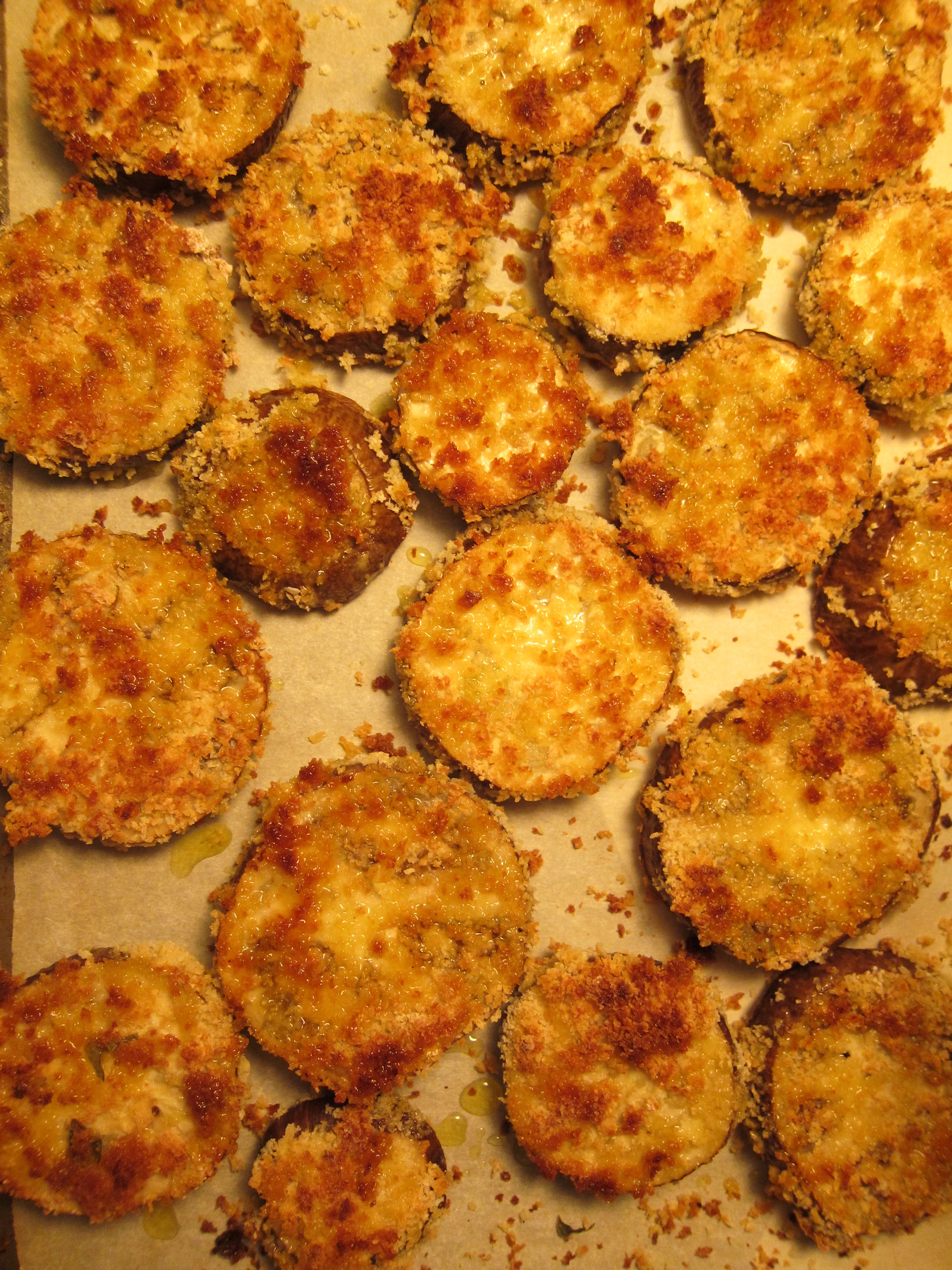
Breaded Eggplant Stacks with Tomato Sauce (serves 3-4) 

Fast tomato sauce (enough for this recipe + leftovers)

  • 6-8 medium tomatoes, chopped (or one jar of Nonna’s tomatoes)
  • 2 cloves of garlic, minced
  • 1 small onion or leek, chopped
  • 1 Tbsp tomato paste
  • olive oil
  • knob of butter

Heat up a large saucepan on medium-high heat. Add a glug of olive oil and the knob of butter. Once the fats are hot, add the onion and reduce the heat to medium. Sweat the onion for about a minute or so, then add the minced garlic. Stir. Allow the onion and garlic to cook and turn golden, but do not allow to brown. Add the chopped tomatoes. Stir and reduce the heat to medium-low. Allow the sauce to simmer for at least 20 minutes*, stirring occasionally.

*Note: my nonno used to start his sauce in the morning and let it simmer for a few hours before serving it at lunch. The taste of a well-simmered sauce is unparalleled.  If you have the time, I recommend simmering your sauce on low heat for a couple of hours.

Breaded eggplant

  • 2 eggs, beaten
  • 2-3 small eggplants
  • 1/2 cup flour (flavoured with fresh or dried oregano, salt and pepper)
  • 1/2 cup panko breadcrumbs
  • olive oil
  • 1/2 cup parmesan, grated

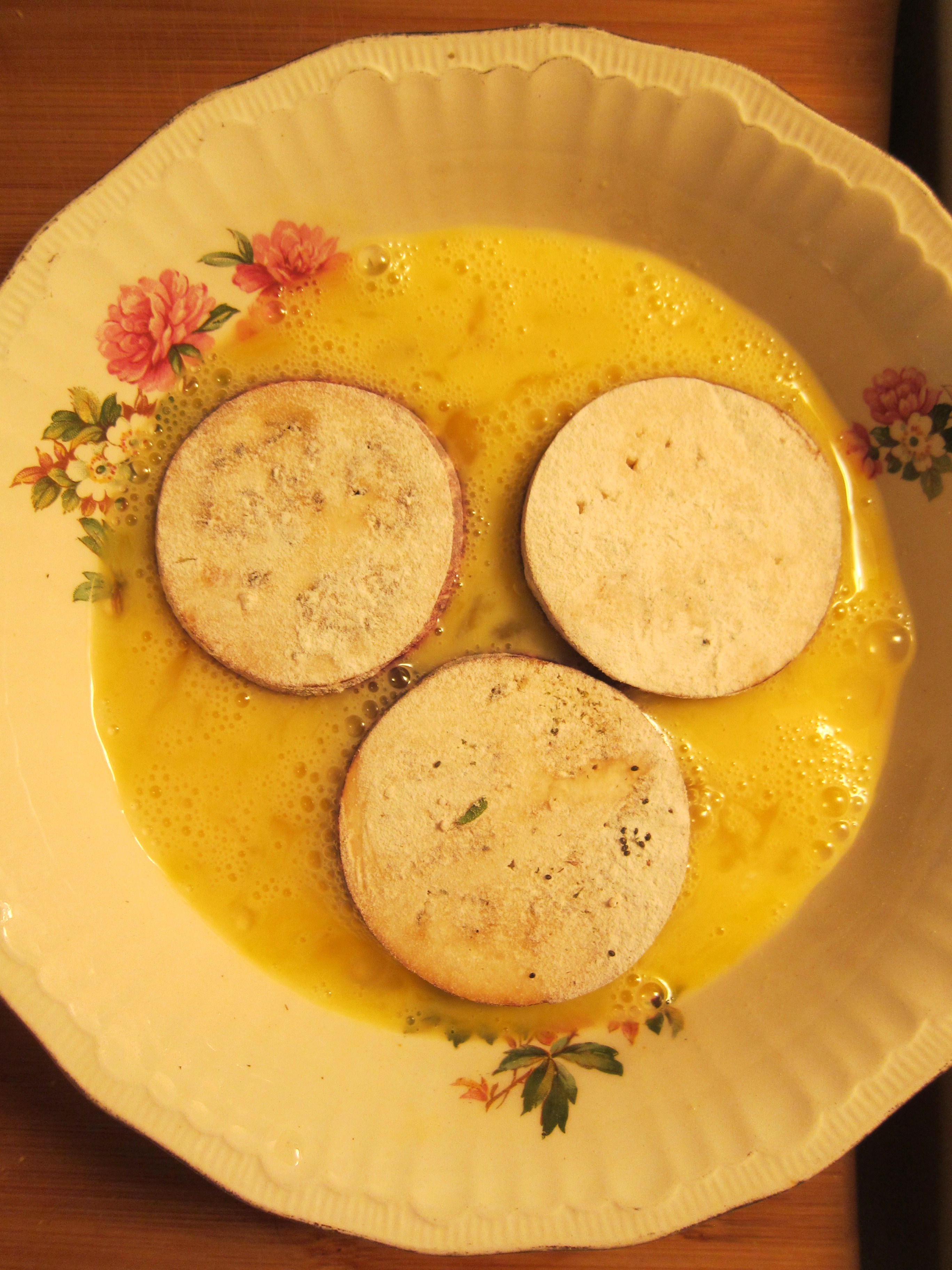
Preheat oven to 375° F. Prepare your breading station: beaten eggs in a shallow bowl, breadcrumbs on a plate and panko on a plate. Dredge eggplant slices in the flour, then the egg, then the breadcrumbs.

Arrange them separately on an oiled baking sheet. Drizzle additional olive oil over them. Place them in the oven and cook for 15-20 minutes, turning once halfway through the cooking time.

On a plate (or on top of salad, spinach, polenta), layer baked eggplant slices, tomato sauce and grated parmesan until you reach a stack size that pleases you. Finish with a light grating of parmesan.

Share this:

  • Tweet
  • Share on Tumblr
Like Loading...

A true lady – and duck

03 Thursday May 2012

Posted by julia chews the fat in Lunch & Dinner, The Basics

≈ 7 Comments

It started with the realisation that I’d spent half the day with my watch on upside down. And the secondary realisation that I had probably consulted it a few times since putting it on. These are moments when I feel lucky not to have the responsibility of taking care of pets and small children. I can easily imagine my morning starting with a dog in a diaper or a child frolicking in the garden on a leash.

I’m not generally a scatterbrain, but I’ve been abnormally distracted these past few days, because this week marks a milestone birthday – one that both petrifies and thrills me. And while a true lady never divulges her age, I can tell you that the week I was born, the number one country music hit in Canada was “Same Ole Me” by George Jones.

Did you really just look that up? Impressive. You win a big, fat plate of duck.

There’s something vaguely regal about duck. It’s got pomp. It’s got sass. And it’s the kind of thing I pick up when I’m feeling a bit posh. If I’m feeling EXTRA posh, I’ll also pick up a bottle of port to accompany my duck, in the spirit of “one splash for the pot, and one splash for me”. On birthdays, a dish of duck and port is a good way to highlight another year that has passed – and to usher in all the ones to come. *Cin cin*

Birthday Duck (serves 2)

  • 2 duck legs (thighs)
  • 1/2 cup chicken stock
  • 1/2 cup of port
  • one carrot, diced
  • one stalk of celery, diced
  • one small onion, diced
  • 3 cloves of garlic, chopped
  • one bay leaf
  • sea salt & black pepper

Directions

Heat the oven to 325°F. Put a cast-iron pan on the stove on medium-high heat. While that’s heating up, prepare your duck by patting it dry with paper towel and seasoning liberally with sea salt and freshly ground pepper. When the skillet is hot, place duck legs in the pan and sear for about 5 minutes on each side. Remove from pan and place in an oven-proof casserole dish. Pour off most of the fat, leaving behind about a tablespoon in the pan.

With the pan on medium heat, add the onion, garlic, carrot and celery. Sauté a couple of minutes until softened, then add the port. Allow to reduce for about 5 minutes, then add the stock and bay leaf. Reduce again for about 10 minutes.

Pour the port mixture over the duck and cover loosely with foil. Allow to braise for 30-45 minutes, checking from time to time to make sure that there’s still braising liquid in the dish. The duck is ready when the meat can be easily pulled away from the bone.

Share this:

  • Tweet
  • Share on Tumblr
Like Loading...

Sausage factory

28 Tuesday Feb 2012

Posted by julia chews the fat in Cooking with Nonna, The Basics

≈ 3 Comments

The other day, at 8:53 am, my mother calls me: “We’re making sausages tonight, you want in?”

Some people might shudder at the thought of spending their leisure time squeezing 15 lbs of pork meat into intestine casings. It’s not exactly something for the faint of heart. In part because you’re handling pounds of raw pork, intestines and a heavy-duty meat grinder, but also because someone will inevitably comment on how the much the act of strapping a wet casing onto a nozzle and filling it with meat resembles the use of a common prophylactic. In my case, TWO people felt at liberty to make this assertion. And before you call me a prude – did I mention we were doing this as a family?

One other caveat: since each intestine is blown into before it gets rolled onto the nozzle of the meat grinder, you’d better have someone who isn’t afraid to get up close and personal with pig intestine and nominate them as “casings-blower” (by the way, I’m almost certain that modern recipes skip this step, but it makes for an amusing bit of comic relief in a process that is pretty intense. Don’t be surprised if you are overcome with the urge to ask the casings-blower to make you a balloon poodle).

So why on earth would we put ourselves through something that sounds so unpleasant? Well, first, I should mention that we generally buy sausages from the butcher. But even the best butchers in town sometimes mix additives into their meat. The man behind the counter may look the part – authentically rotund, red-cheeked, moustached – but the fact is that they will most likely put preservatives in their meat to extend the shelf life of their product.  Since the word “nitrate” is no less disconcerting than the words “Aspartame” and “diglyceride”, I feel that any chance you can make something from scratch (with ingredients your grandma would use) is worth a shot.

***

A note on botulism: while it is understandable that you would avoid sausage-making for fear of killing your loved ones, fret not. As long as your implements are extremely clean and that you keep the meat chilled, you shouldn’t have to worry about contaminating anyone. In fact, in the 50 + years that our family has made sausage, we have never heard of anyone getting sick – and it’s not because we have magical immune systems. If you think about it, the foods that generally make us ill are the ones that have been processed in a plant somewhere miles from our home. In fact, the last few food-poisoning stories I’ve heard involved pre-packaged, highly processed foods. I promise not to get on my soap box – just a point to consider.

So, dear reader, I ask you to trust me and to trust yourself in this process. If you’re willing to take on this project, make sure to have a few people on board – it makes everything go much smoother and ultimately, makes for better stories.

Sausages (fennel, paprika and salt & pepper)

  • Two large pork loins (about 5lbs total)
  • Boneless pork chops (about 10 lbs; cut an inch thick)
  • 1 package of casings (from the butcher)
  • Twine
  • Meat grinder
  • 2-3 committed people

Seasonings (to be divided amongst 3 batches of meat):

  • 2 tbsp fennel (anise) seeds
  • 2 tbsp paprika
  • 2 tbsp each of salt & pepper
  • Extra salt for the fennel & paprika sausages

Directions

1) Soak the casings in cold water to soften them (the butcher will have packed them in salt).

2) Remove connective tissue from the meat, cut it up fairly small, and chill it.

3) Meanwhile, have someone rinse each casing three times in cold, running water. This step will remind you of the water-balloon days of your youth; admittedly, the activity of filling casings with water is far less thrilling.

4) Grind the meat in batches, alternating fattier pieces with leaner ones to evenly distribute the fat. Place a cookie sheet under the grinder to collect the meat. It’s important to make sure you’re turning the crank and pushing the meat through the top of the grinder at a consistent, steady pace. Failing to do so will invite comments from the more seasoned sausage-makers in the room.

5) Transfer meat to a large bowl, then add seasonings. At this point, you may want to cook a small meatball to test for seasoning.

6) Place a wet casing onto the nozzle and roll it up gently so that the entire casing is scrunched up against the base of the nozzle. Grind the meat again, so it emerges from the nozzle into the casing, wiggling the casing gently away from the nozzle as it fills. Wait for someone to make the first inappropriate joke about the way this all looks.

7) Periodically, tie the casing to make links. Lay out on a cookie sheet lined with parchment paper to chill or transfer directly to freezer bags.

This slideshow requires JavaScript.

Share this:

  • Tweet
  • Share on Tumblr
Like Loading...

End-of-week trainwreck

24 Friday Feb 2012

Posted by julia chews the fat in Lunch & Dinner, The Basics

≈ 3 Comments

Is it just me or is everyone a little rough around the edges these days? Maybe it’s because we’re at the tail-end of winter and everyone’s just fed up – it’s been grey and wet and for the better part of the week, the snow has been covered in that pre-spring lacquer of muck typical of a winter hanging on for dear life. It’s a soul-sucking time of year and I’m convinced that we’re all taking it out on each other. It’s been a week of being elbowed on the sidewalk and being cut in line; a week of innumerable public transit failures and a record-breaking number of newspaper-to-the-face moments, courtesy of fellow subway commuters. In the last few days, I’ve been sneezed on and shoved, and unintentionally groped on the bus (usually by elderly women and children, whose balance on moving vehicles is so-so). Last night while in bed, I had the pleasure of listening to an upstairs neighbour’s wrathful phone rant. Nothing like the sound of a stranger’s rising blood-pressure to help lull you to sleep.

The fact that we’re halfway to an expected 20cm of snow will undoubtedly increase everyone’s murderous tendencies, which is why I’m taking cover – at home, with pleasant things to keep me occupied.

Which brings me to…

RISOTTO.

It’s one of those perfect dishes that can smooth over any prickly week. The technique is simple, it just requires a little time and a little love.

And who knows – maybe the repetitive stirring will help you achieve that perfect catatonic state you’ve so desperately needed.

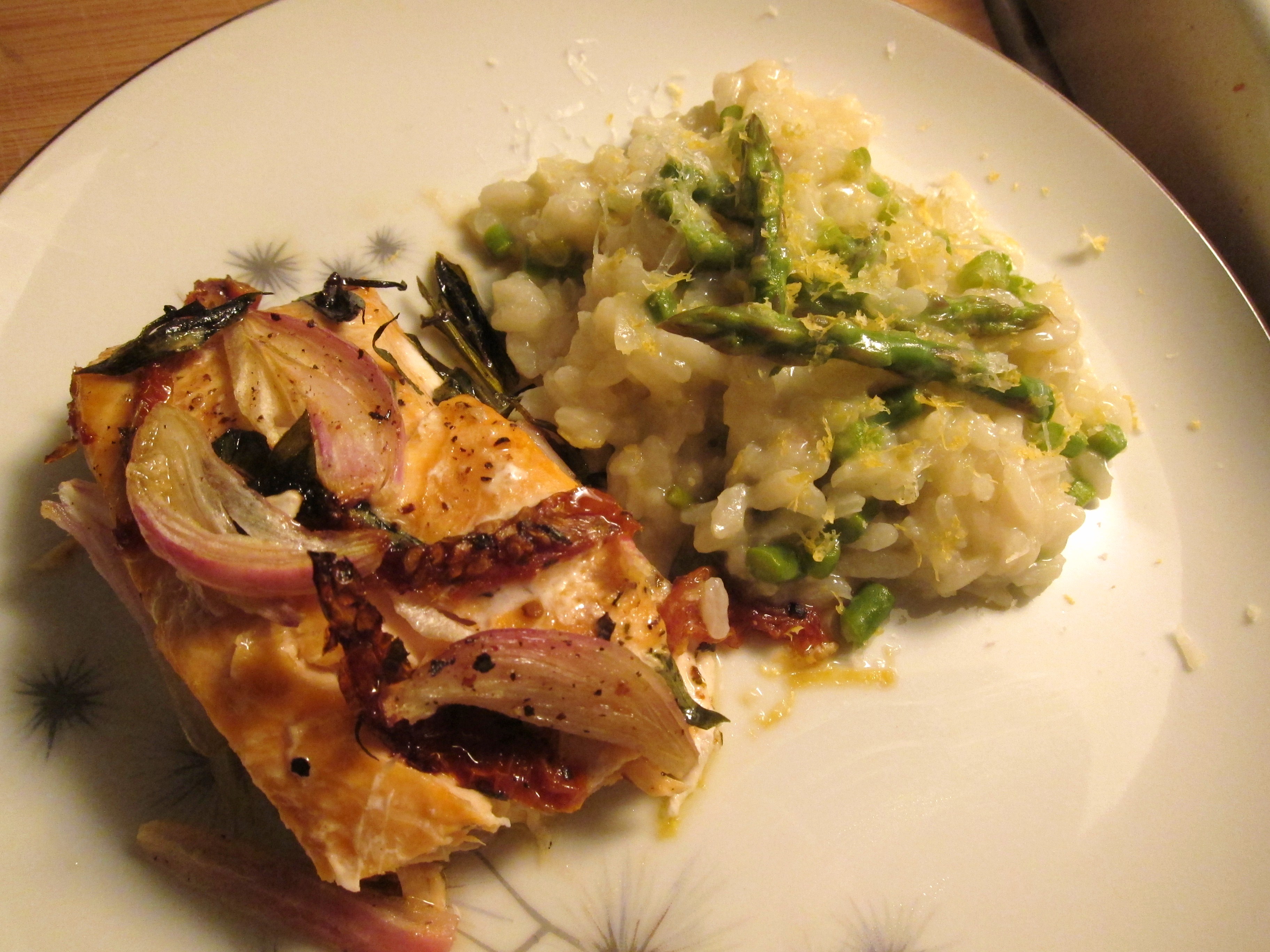
Asparagus Risotto with Lemon (serves 4)

  • 1 litre chicken stock (home-made is always better)
  • 1 1/2 cups Arborio rice
  • 1 small leek, finely chopped
  • 1/2 pack of asparagus, chopped – stalks and tips separated
  • 1/2 cup parmigiano reggiano (+ a bit for serving)
  • 1 wine glass of dry vermouth (or white wine)
  • 2 knobs of butter
  • 1tbsp olive oil
  • zest of 1/2 lemon
  • sea salt to taste

Heat the stock in a saucepan. Heat one knob of butter and the oil in a separate saucepan on medium-high heat. Once the butter and oil get a bit frothy, add the leek and cook until softened (don’t let it brown). Stir in the chopped asparagus stalks. Add the rice and give it good stir with a wooden spoon, ensuring that each kernel gets a good coating of fat*. Toast the rice for about 1 minute and then add the vermouth. Don’t be alarmed by the fantastic sizzle that will come from the pan.

Cook briefly, just until the vermouth has cooked into the rice. Add a ladleful of hot stock** and a pinch of salt. Stir lovingly and turn down the heat to medium-low. Continue adding ladlefuls of stock, waiting for each addition of stock to be absorbed into the rice before adding the next. About 12 minutes into cooking, add the asparagus tips (the “spear” part of the asparagus) and allow to cook for a couple of minutes.

At about the 15-minute mark, taste the rice to see if it is cooked. Like pasta, il should be al dente – not hard in the center, but not mushy either. If you run out of stock before the rice is cooked, don’t panic – just boil some water and add it a bit at a time like the stock.

Once the rice is cooked, remove from the heat and add the 2nd knob of butter. Taste again for salt. Grate lemon zest & parmigiano over risotto before serving.

*this step is what helps the rice stay firm and toothsome

**hot stock is key – cold stock will cool down your risotto for no good reason and will result in a hard, uncooked kernel.

Improvised baked salmon (serves 2-4 depending on the size of the filets)

  • 2 salmon fillets
  • 1 small shallot (échalotte), sliced
  • a couple of sundried tomatoes (in oil), sliced
  • a couple of lemon slices
  • fresh tarragon
  • olive oil
  • sea salt & pepper to taste

Preheat oven to 350°F. Place salmon skin-side down in a baking dish. Top with shallot, sundried tomatoes, tarragon, lemon slices, salt and pepper. Drizzle some olive oil on top. Bake for approximately 10 minutes, taking care not to overcook. The general rule of thumb is 8 minutes of cooking for each inch of thickness. Fatty fish like salmon is better when the outside is opaque but the center is still slightly translucent.

Share this:

  • Tweet
  • Share on Tumblr
Like Loading...

Oeuf Cocotte

10 Friday Feb 2012

Posted by julia chews the fat in Breakfast & Brunch, Cooking Solo, The Basics, Vegetarian

≈ 5 Comments

It’s not everyday that your health-practitioner offers you foodstuffs. Especially the home-grown kind. But it just so happens that my chiropractor has started keeping a few chickens in her backyard so, naturally, she’s become my no.1 egg supplier.

This, friends, is a very good thing.

One of her “girls” roaming the garden

There’s really nothing like a free-range egg – the yolks are generally thicker and darker and they just have this overall oumf about them. But free-range, organic eggs don’t come cheap and so I’m doubly grateful for the fortuitous circumstances that led me to getting my back fixed and getting free eggs.

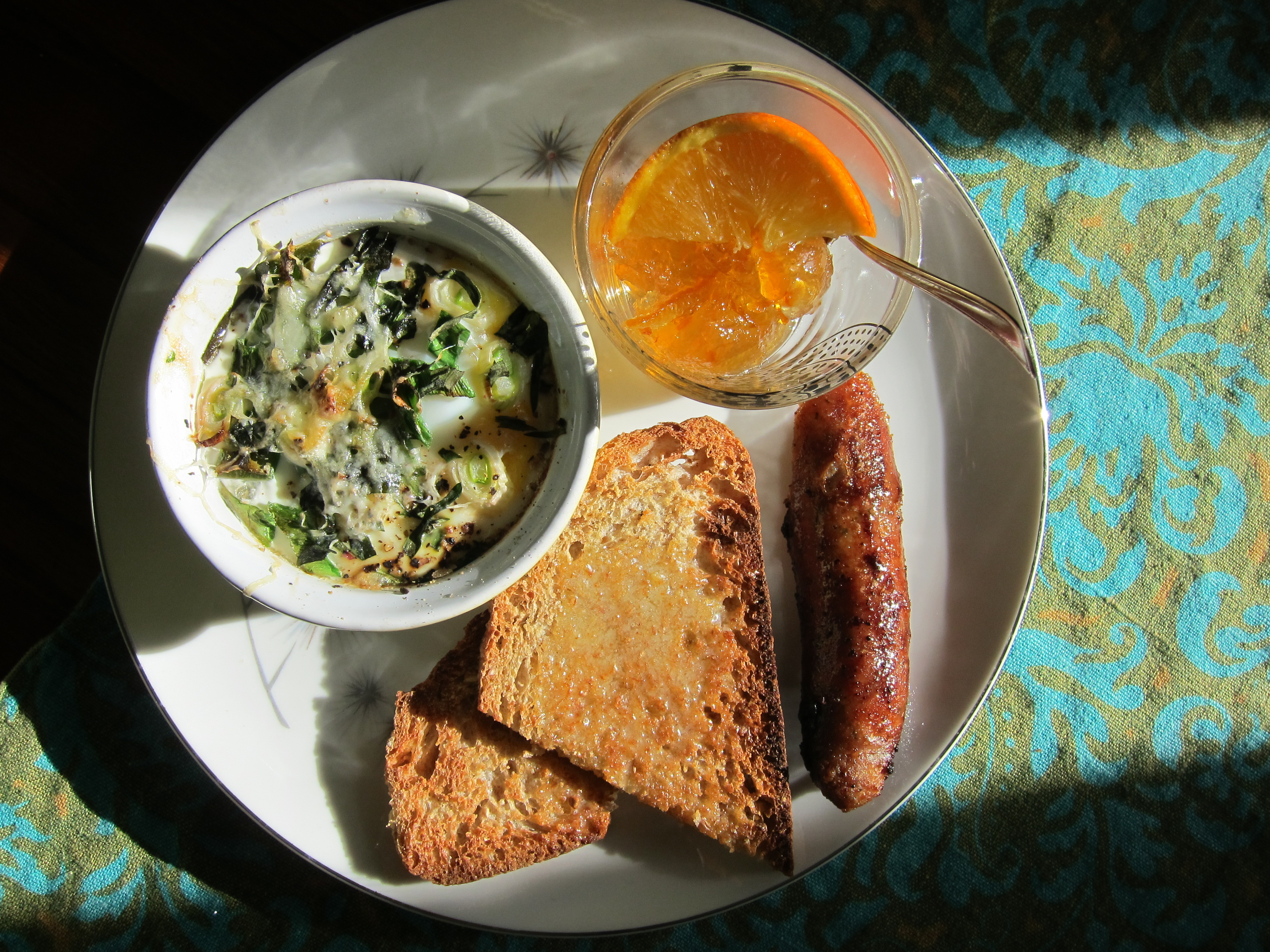
This weekend, that small, mismatched batch in my fridge led to the recipe below. Aside from being super simple to put together, oeuf cocotte is arguably the lsweetest breakfast item you will ever lay your eyes on – one egg, baked in a ramekin with tangy crème fraîche, green onion, and a few diced vegetables. The ingredients you choose to include in your cocotte need not be the same every time – use whatever you have handy in the fridge that might go well with eggs. Pair it up with a little toast and a spicy Bloody Mary and you’re off to a very good day.

Oeuf  Cocotte

  • 1 egg
  • 1 tbsp crème fraîche (or fresh soft cheese, thick yogurt)
  • 1/4 of a green onion, sliced
  • small handful of diced vegetables, sautéed (zucchini, mushrooms, etc)
  • a few cherry tomatoes and/or sundried tomatoes
  • small knob of butter
  • a small handful of grated cheese
  • a smattering of fresh herbs (basil, cilantro, tarragon, parsley…preferably not all together)
  • one ramequin
  • one small ceramic, oven proof dish

Preheat your oven to 430°F. Rub the butter along the bottom and sides of ramekin. Lay your veg at the bottom, add a dollop of crème fraîche and then crack the egg on top. Season with salt and pepper. Sprinkle on the green onion and herbs. Finish with a layer of grated cheese.

Place the ramekin in a gratin dish and pour hot water into the dish until it reaches half-way up the sides of the ramekin. This is your bain-marie. Put in the oven for 10-12 minutes, depending on how oozy you like your eggs and serve with toast, etc.

blog 022

Share this:

  • Tweet
  • Share on Tumblr
Like Loading...

Image

Tomato canning

07 Tuesday Feb 2012

My half-Italian upbringing has led me to believe that certain things are normal: buying an entire prosciutto, pitting 15 pounds of olives in one sitting, knowing all the nicknames of the numbers in Tombola and all the lyrics to “Volare”. Never having to use canned tomatoes from the supermarket is another one of those things that I’ve always accepted as normal; it’s only as I’ve gotten older that I’ve come to appreciate how special this is.

If you’ve tried your hand at tomato canning, you are well aware that it is a laborious endeavour – nothing glamorous here. But it’s dead simple and really rewarding. Our family does it around mid-September, when the tomatoes are at their very handsomest. One big batch (100 jars or so) will last us for the year.

If you decide to take this on as a project in the near future, here are a few steps to keep you in check:

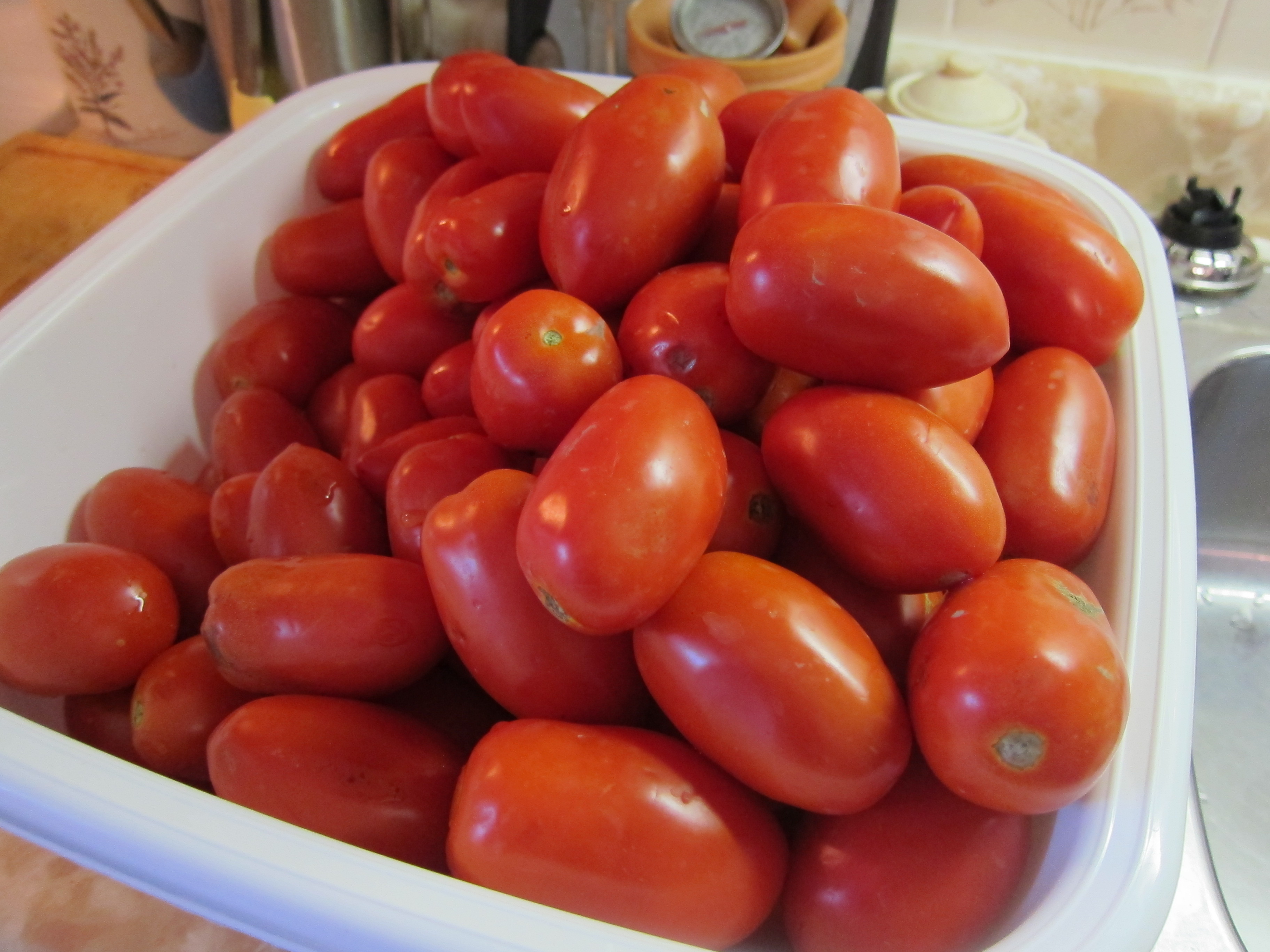
Start with 2 bushels of San Marzano tomatoes.

Pick out the funny-looking ones and make jokes about how they look like people you know.

Blanch the tomatoes in boiling water for a couple of minutes.

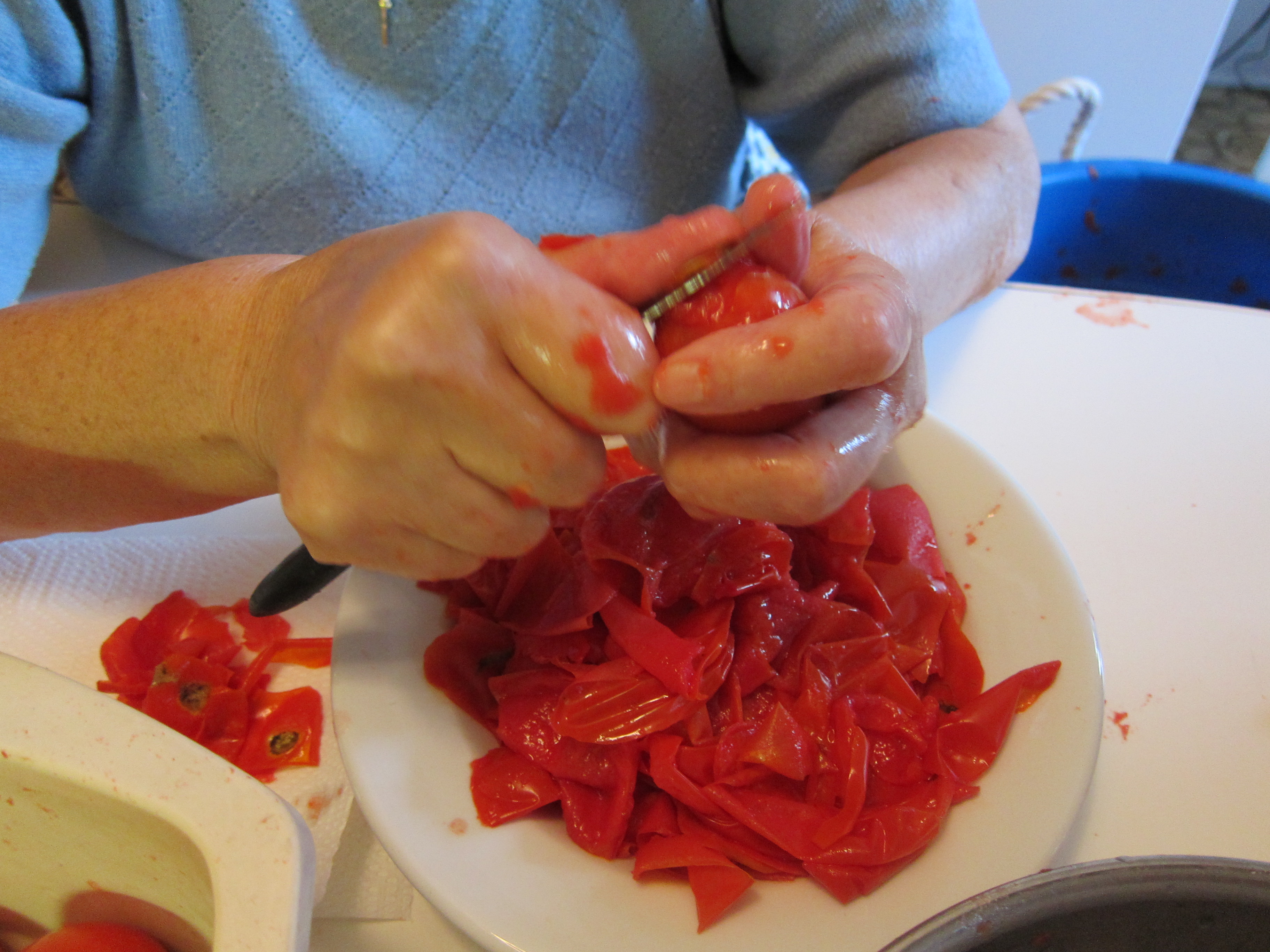
Diligently remove the “occhi” (eyes) of each tomato and peel them with your favorite Nonna.

Reserve the peel. You will use it later.

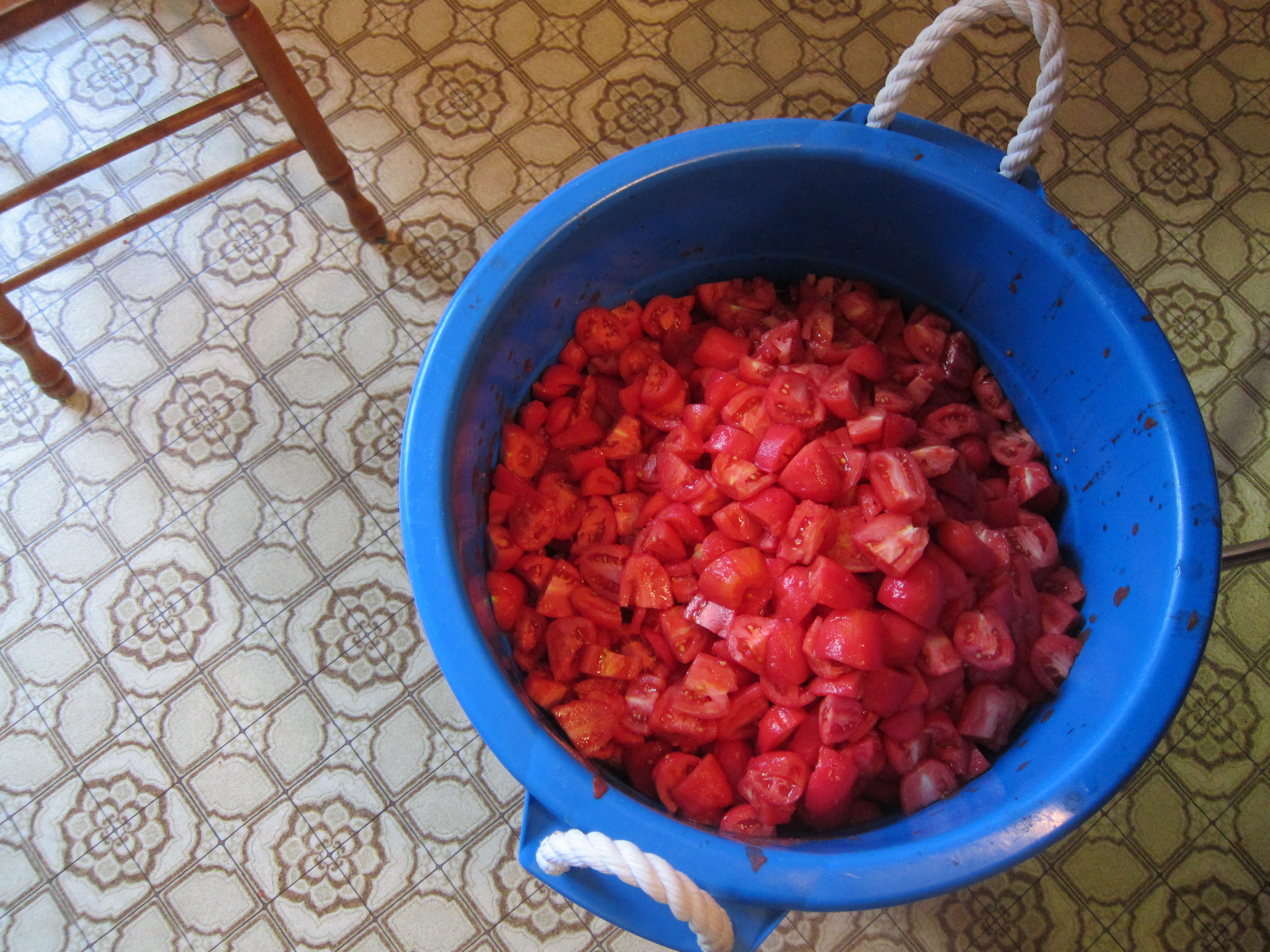
Halve each tomato, then cut into thirds.

Dump tomato chunks into the biggest (sterilized) vat you can find.

Press the reserved peel through a grinder to make tomato paste (alternately, use your hands to squeeze the peel and extract the leftover pulp). I have no idea where you would buy this device in Canada. All I know is that this one came from someone named Pina in Italy and cost 5000 lira (about 5 bucks). Obviously it’s old – the price was given to me in lira.

Add the tomato paste to your big vat of tomatoes.

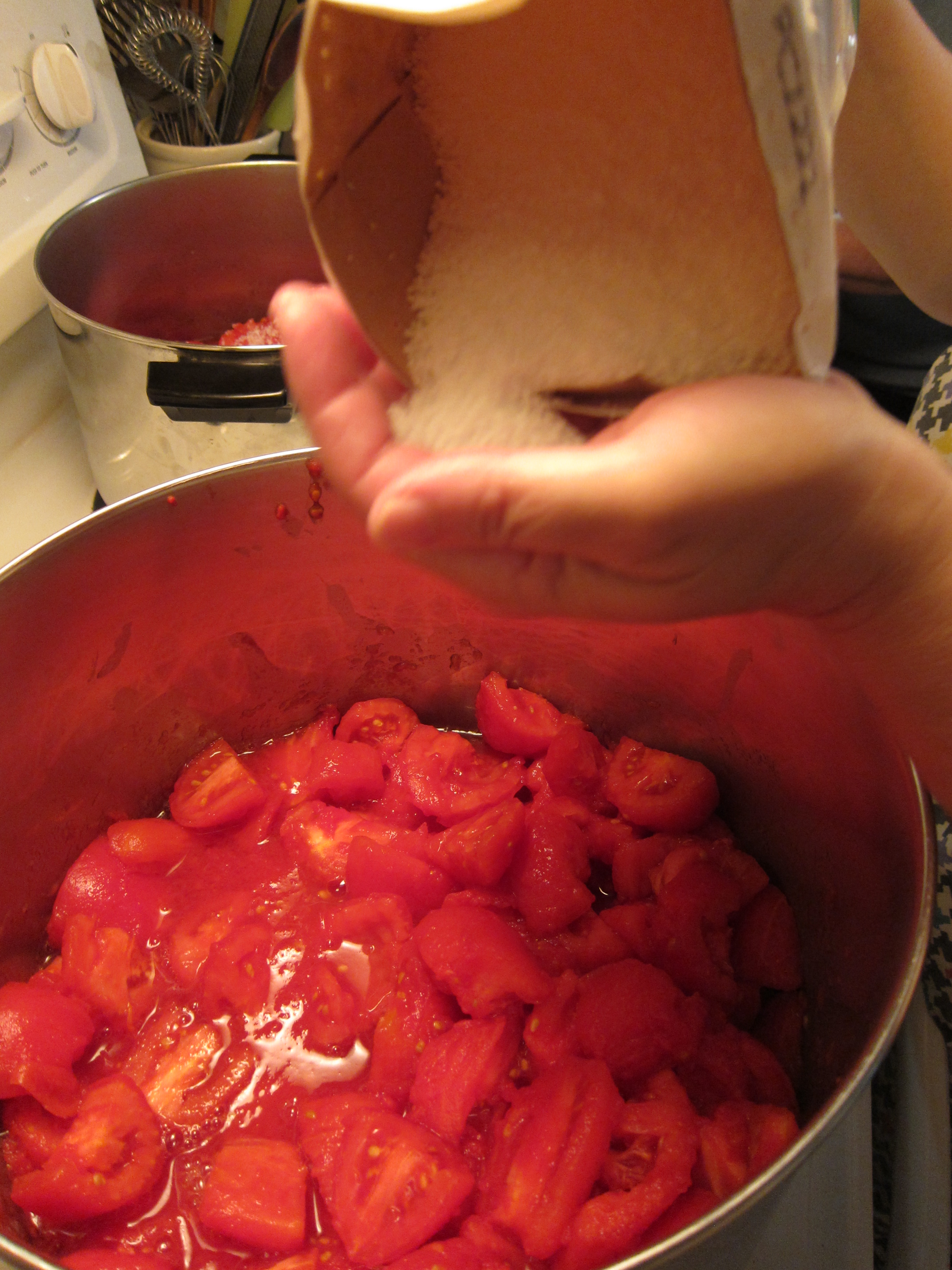
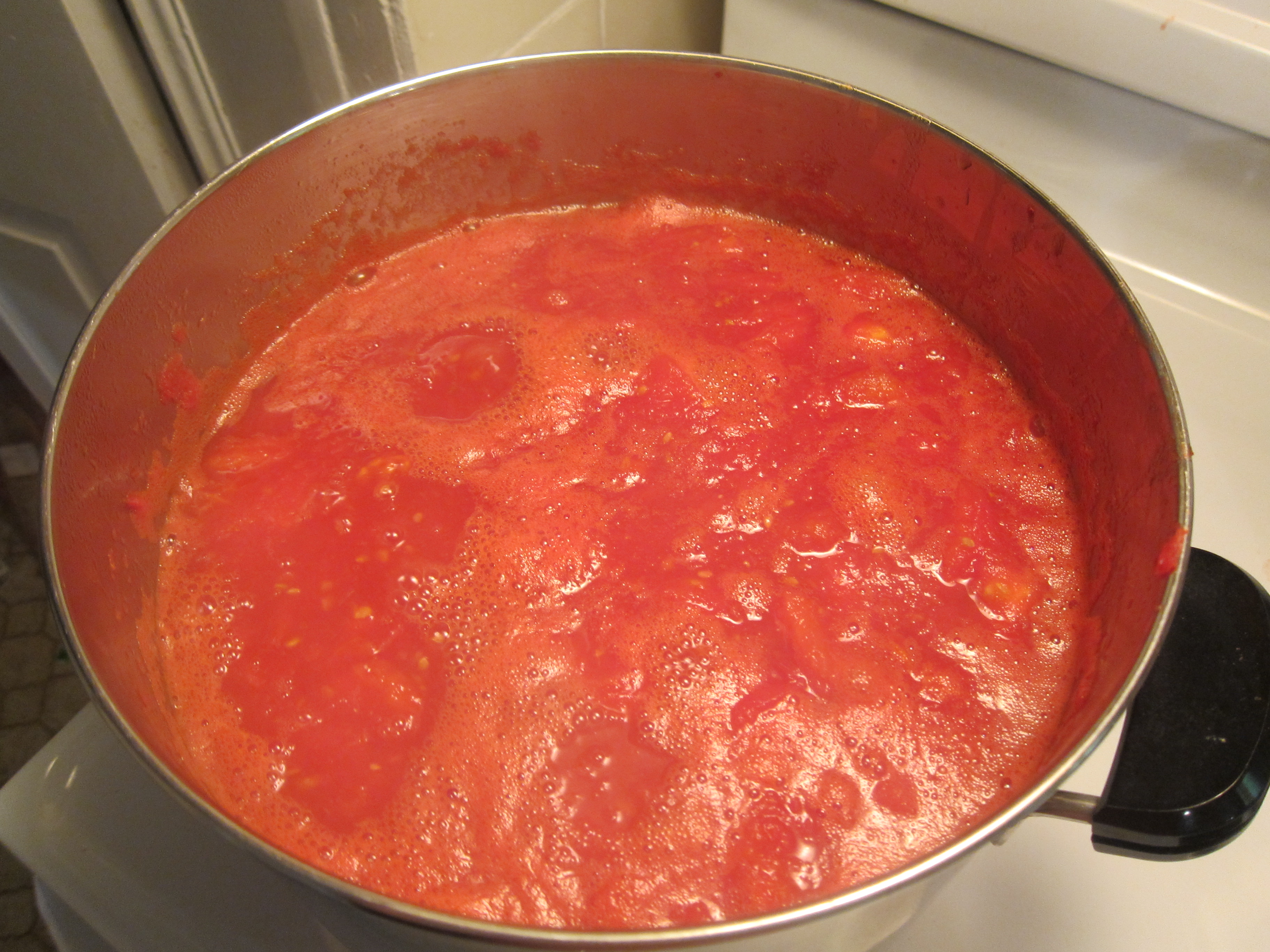
Find the biggest & deepest stove-top saucepan you have. Fill it with tomatoes, leaving about 2 inches from the top. Add a good handful of coarse salt.

Stir them lovingly. The rules of stirring resemble the 101 of relationships: don’t be neglectful (they will stick to the bottom), but don’t be too clingy (they won’t reach the right temperature). Either extreme will compel your tomatoes to cheat on you with your best friend.

Once the tomatoes have reached a boil, let them go for about 10 minutes. Be sure to stir every so often (see “the rules of stirring”).

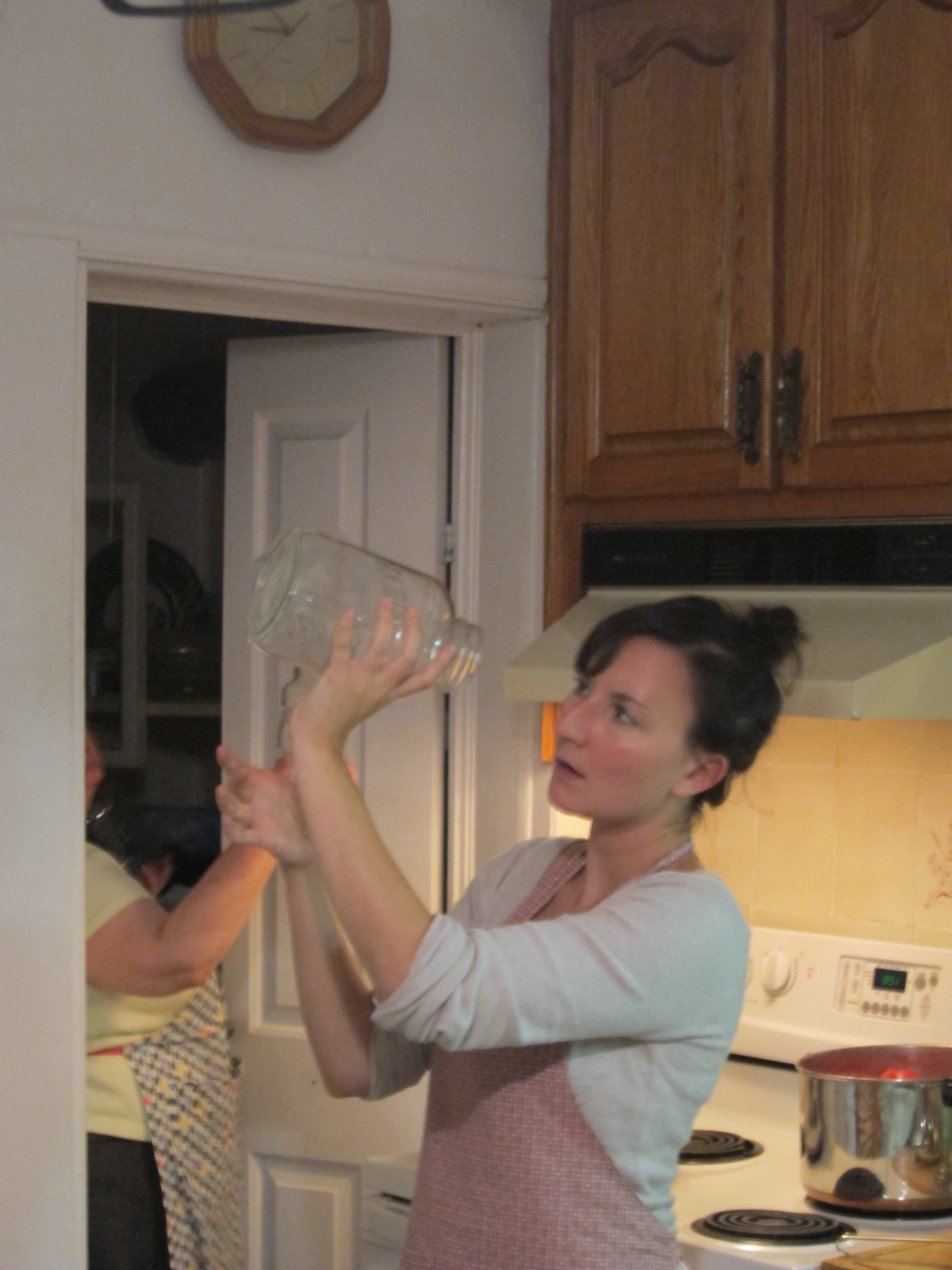
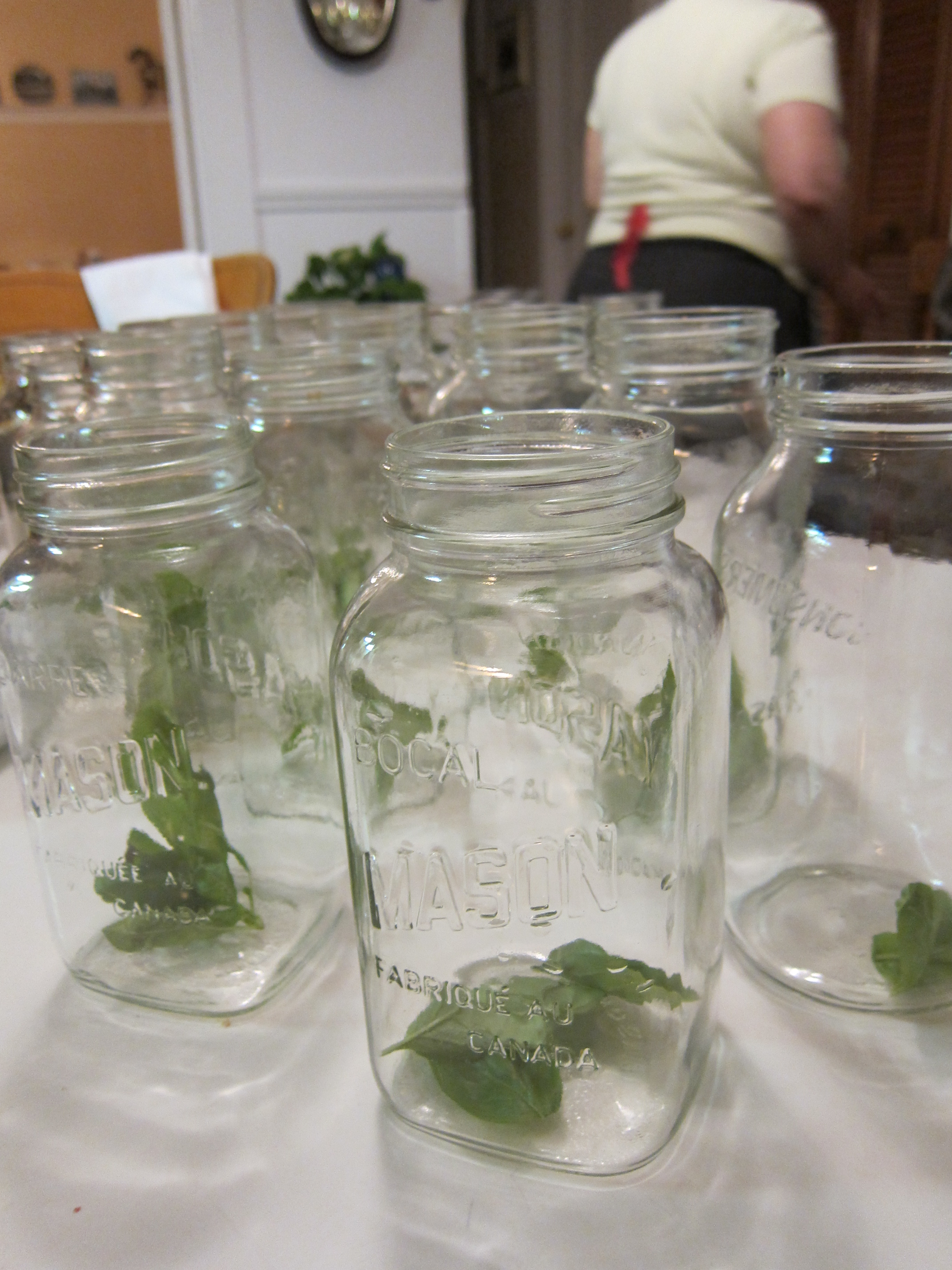
Prepare your army of sterilized jars & lids.

Check to make sure there are no leftover water droplets from the sterilization process. You want dry jars.

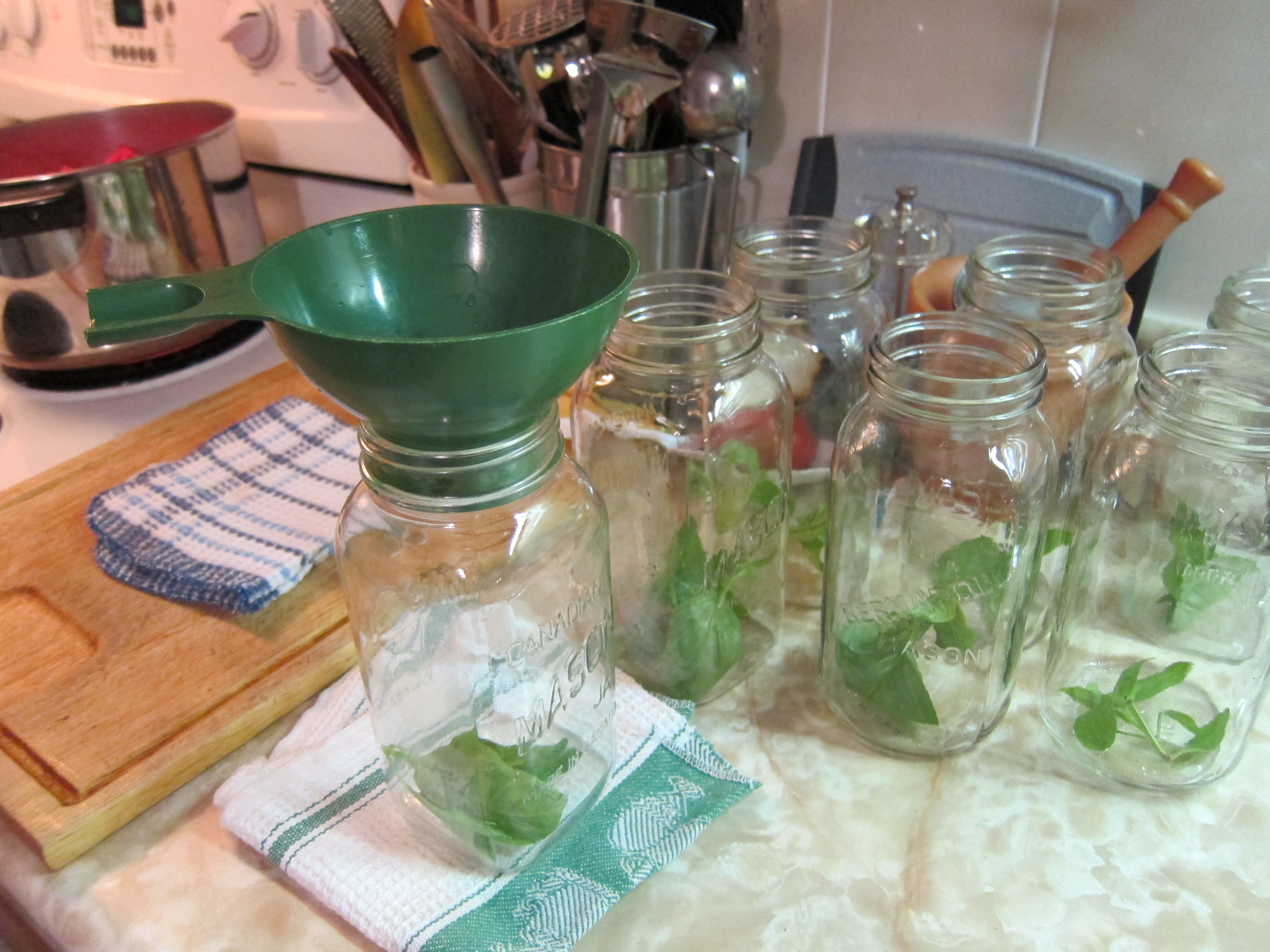
Add a few leaves of fresh basil to each jar. Every second or third jar, take in a deep breath. You’ll remember why basil is so rad.

When discussing how much basil to add to the jars with Nonna, remember that no matter what, she is always right. Using Italian gestures to reinforce your point will not help.

Get your jars near a sink & prepare one with a funnel.

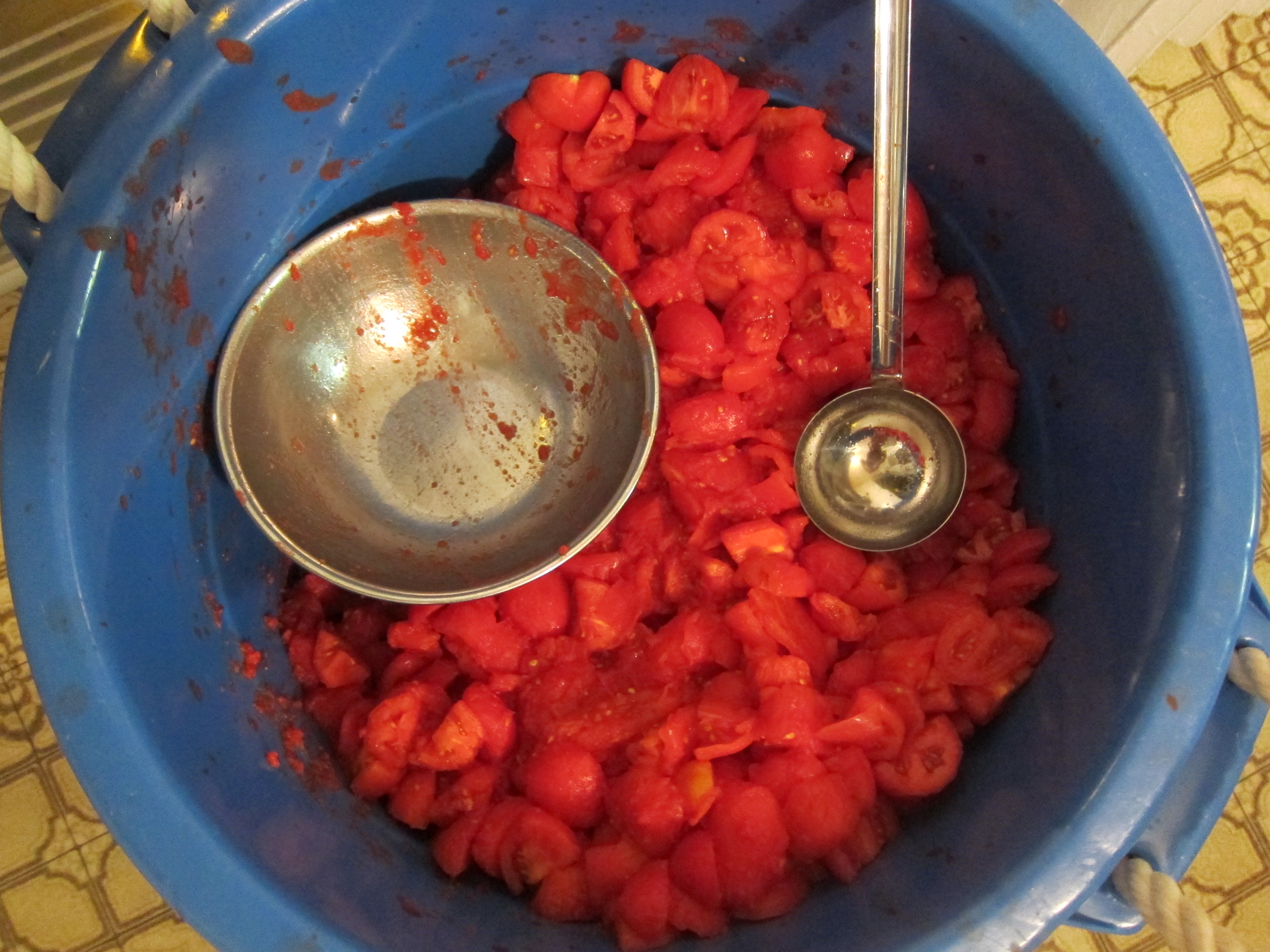
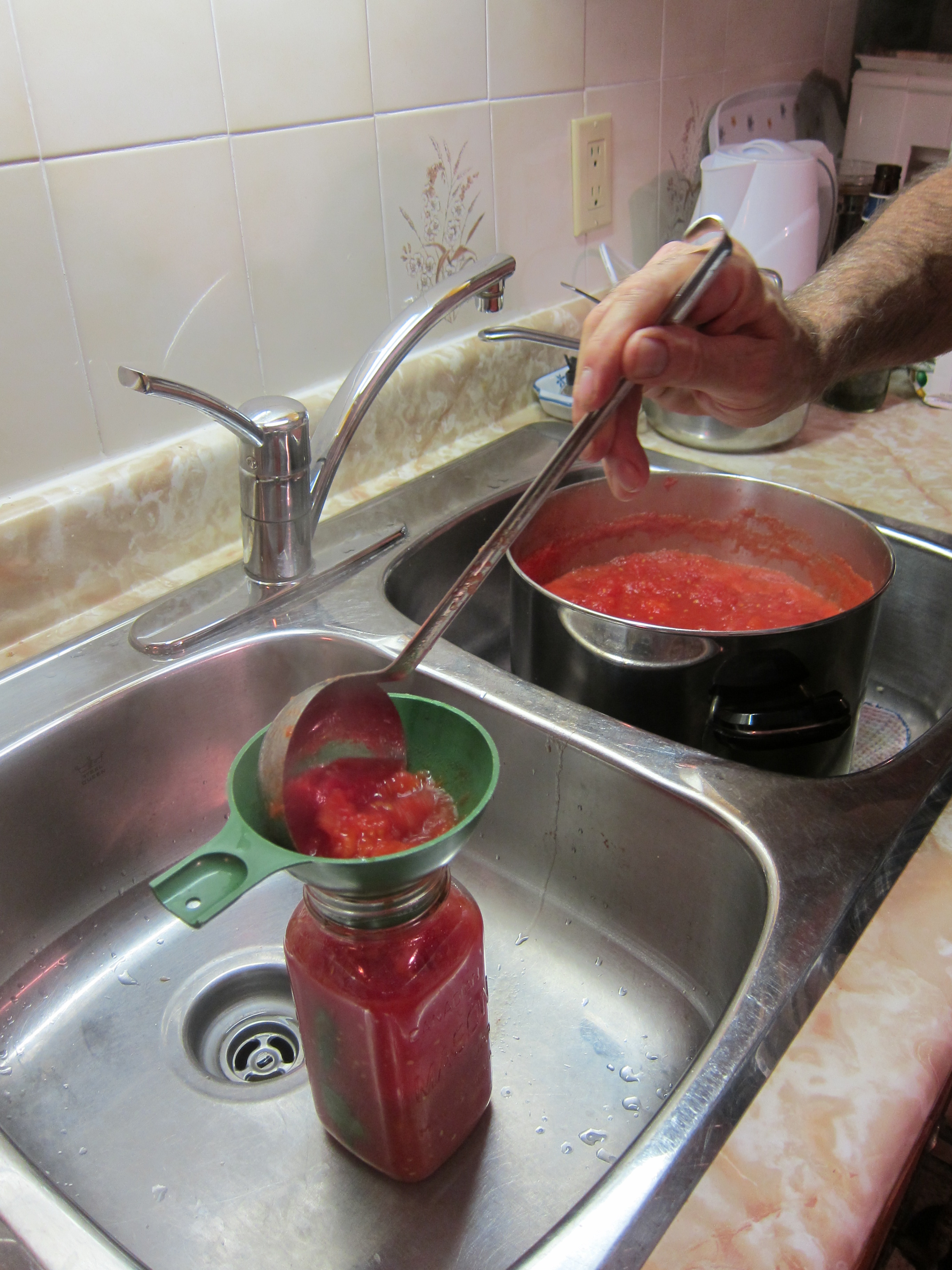
Carefully ladle hot tomato mixture into each jar, leaving some space at the top.

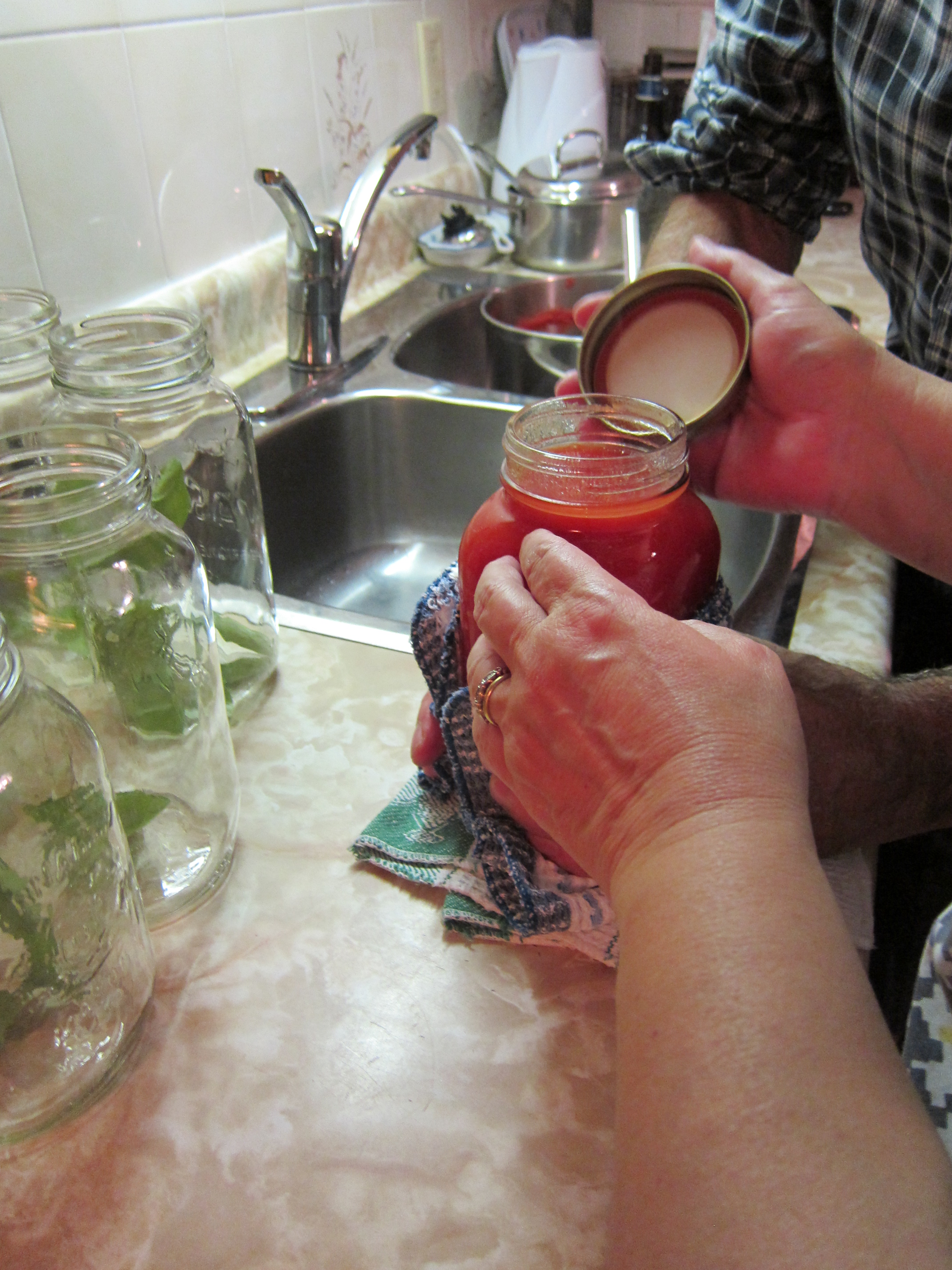
Quickly screw on each lid. Not too tight though – screw band down evenly and firmly, just until resistance is met (“fingertip tight”).

Always keep a glass of vino handy for when things get a little tense in the kitchen.

Find old blankets or towels to line the boxes in which you will put your finished jars. You may run into old items such as sheets you turned into protest banners. Use them – they will make Nonna laugh.

Place finished jars in your blanket/towel-lined boxes. Move to an area that will not experience severe fluctuations in temperature. You want these babies cooling down slowly.

Pour a drink for you & Nonna. You’re done.

***Note: months after this was originally posted, I took a workshop offered by a former pastry chef, turned entrepreneur/canner-extraordinaire who instructed us to process the jars after they were filled, as you would do when making pickles and jams (i.e putting them in a pot of simmering water and allowing them to boil for 30-40 minutes). Though our family has never done this (and no one has ever died, or been sick from botulism), it’s an option that you may choose to incorporate in your canning project. Search the web for more detailed info.

Share this:

  • Tweet
  • Share on Tumblr
Like Loading...

Posted by julia chews the fat | Filed under Cooking with Nonna, The Basics, Vegetarian

≈ 8 Comments

Newer posts →

Facebook

Facebook

Instagram

No Instagram images were found.

Recent Posts

  • Layers and Rows
  • Finding Buoyancy
  • February
  • Wednesday
  • Cross My Heart, Miso

Archives

  • May 2017
  • April 2017
  • February 2017
  • December 2016
  • November 2016
  • September 2016
  • August 2016
  • July 2016
  • June 2016
  • May 2016
  • April 2016
  • March 2016
  • February 2016
  • January 2016
  • December 2015
  • November 2015
  • October 2015
  • September 2015
  • August 2015
  • July 2015
  • June 2015
  • May 2015
  • April 2015
  • March 2015
  • February 2015
  • January 2015
  • December 2014
  • November 2014
  • October 2014
  • September 2014
  • August 2014
  • July 2014
  • June 2014
  • May 2014
  • April 2014
  • March 2014
  • February 2014
  • January 2014
  • December 2013
  • October 2013
  • September 2013
  • August 2013
  • July 2013
  • June 2013
  • May 2013
  • April 2013
  • March 2013
  • February 2013
  • January 2013
  • December 2012
  • November 2012
  • October 2012
  • September 2012
  • August 2012
  • July 2012
  • June 2012
  • May 2012
  • April 2012
  • March 2012
  • February 2012

Categories

  • Beverage
  • Breakfast & Brunch
  • Condiments
  • Cooking For Your Peeps
  • Cooking Solo
  • Cooking with Nonna
  • Food Away From Home
  • Food Writing
  • Holidays
  • Intro
  • Lunch & Dinner
  • Snacking
  • Soups
  • Sweet Tooth
  • The Basics
  • Vegetarian

Enter your email address to follow this blog and receive notifications of new posts by email.

Join 82 other subscribers

Blog at WordPress.com.

  • Subscribe Subscribed
    • julia chews the fat
    • Join 82 other subscribers
    • Already have a WordPress.com account? Log in now.
    • julia chews the fat
    • Subscribe Subscribed
    • Sign up
    • Log in
    • Report this content
    • View site in Reader
    • Manage subscriptions
    • Collapse this bar
 

Loading Comments...
 

    %d