Phobias, exposure therapy, and cream puffs

Not too long ago, flipping through an old issue of Scientific American, I came across one of the most dismal terms in the medicalisation of fear – MAGEIROCOPHOBIA. The sheer idea of it floored me. Not because I don’t believe it exists – the kitchen can be a scary place for a lot of people – but because I couldn’t imagine it as a bona fide psychological condition for which someone might seek cognitive behavior therapy, or treatment in the form of serotonin reuptake inhibitors.

Pretty heavy stuff.

Like other phobias, it seems to have varying degrees of severity. And since “the fear of cooking” is rather large in scope, mageirocophobia encompasses a wide range of anxiety triggers: it can be the fear of cooking for a large crowd, or the fear of injuring oneself while cooking, or it can be the fear of complex recipes. While each of us has particular aversions in the kitchen, I find it compelling that we’ve come to dread something that has, at least traditionally, been an integral part of our social exchanges as families and communities, not to mention our basic survival. How did we come to be so apprehensive of the one thing that provides us sustenance? Is it because we’ve gotten used to having other people do it for us? Is it because frozen pizza and powdered sauces have become our steady kitchen companions?

Thinking about this phenomenon made me curious to find out what the people around me were afraid of in the kitchen. Over the course of a week, I asked friends and colleagues to submit ideas of “food that scares them”: meals or recipes they’ve wanted to make, but have avoided for fear that they are too complicated or intimidating or too time-consuming. After collecting about 30 submissions – ranging from Beef Wellington to macarons – I put them in a hat and selected one at random. I gave myself the task of making whichever recipe came out.

The winner was my friend, Kate, who submitted “cream puffs”. Kate is a very good cook and baker – and a brave one at that (the first time I made home-made ice cream was thanks to Kate’s initiative) – but cream puffs seemed arduous to her: “I hear they’re easy but I haven’t tried because it just feels like work.”

Like Kate, I thought cream puffs would be a pain to make. It turns out that they’re really no sweat – the dough comes together in few minutes, in a pot on the stove (so no finnicky kneading, chilling, rolling) and is then piped out onto baking sheets; the cream filling is fairly simple too – a handful of ingredients that come together on the stove with the help of some warm milk and a whisk. C’est tout, les amis.

You might decide to make these cream puffs, or not.  Either way, I’m hoping this post will entice you to face your cooking demons, however they manifest themselves. I’m also hoping it will be somewhat therapeutic; think of it along the lines of remedial exposure therapy, where the more you do the things that scare you, the less afraid you’ll be of them.

Happy cooking, everyone x

—–

Cream Puffs = choux pastry + custard or cream filling

Pâte à choux– makes about 24 small buns – adapted from the Encyclopedia of French Cooking, 1982

136

  • 1 1/4 cups water
  • 1/2 cup butter
  • 3/4 tsp salt
  • 1 1/4 cups all-purpose flour
  • 4 large eggs

Preheat the oven to 400° F.

Heat the water in a large pan with the butter and salt. When the butter has melted, bring the liquid to the boil and remove from the heat.
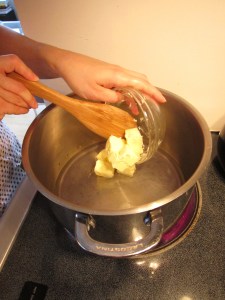
Butter, water, & salt

Immediately add the flour all at once, then beat vigorously with a wooden spoon. Return the pan to a low heat and continue beating until the mixture draws together and leaves the side of the pan. Do not overbeat – the dough should be smooth and shiny, but not oily.

115

Remove the pan from the heat, then add the eggs one at a time, beating vigorously after each addition and making sure the egg is fully incorporated before adding the next. Add the last egg a little at a time, beating to make a shiny dough that just falls from the spoon – if the dough will not absorb the last egg, then do not add it.
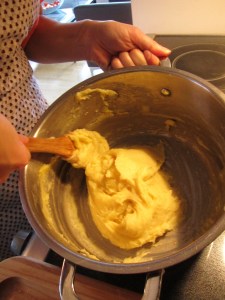
118

Fill a pastry bag fitted with a large plain tip with the warm choux mixture and pipe small (about 1-inch) dots onto a parchment-lined baking sheet. Wet your finger with cool tap water and lightly tap any peaks on the batter.

125

Bake in preheated oven for 10 minutes, then reduce the heat to 375° F and bake for another 10 minutes. Allow the pastries to cool before filling.

Crème pâtissière (vanilla custard) – makes about 2 cups – from the Encyclopedia of French Cooking, 1982

Prepped ingredients

  • 2 cups milk
  • 1 vanilla bean, sliced down the center lengthwise
  • 4 large egg yolks
  • 1/2 cup of sugar
  • 1/2 cup of all-purpose flour
  • knob of butter, to finish

Bring the milk to just below boiling point with the vanilla pod, then cover and leave to infuse for 15 minutes. Strain, then bring to the boiling point again.

Infused milk

Put the egg yolks in a medium bowl with the sugar and whisk together until pale and thick. Add the flour and whisk again until thoroughly incorporated, then gradually whisk in the boiling milk (do this in a slow, steady stream to avoid scrambling your eggs).

Milk in egg mixture

Pour the custard into a heavy-based pan and whisk over medium heat until boiling. The mixture may be lumpy, in which case, remove from the heat and whisk until smooth. Return to the heat and bring to the boil again, the simmer for 1 to 2 minutes to cook the flour, whisking constantly.

099

Remove custard from the heat, then rub the surface with a knob of butter to prevent a skin from forming. Once cool, either fill the dough puffs by spreading a layer of custard between two halves, or alternately, fill a pastry bag with the custard and gently insert into the dough puffs, filling them until you feel a bit of resistance.

Cream puffs

Note: as there is no sugar in the dough, these work equally well (sans custard) along savoury dishes or on a cheese plate with other breads.

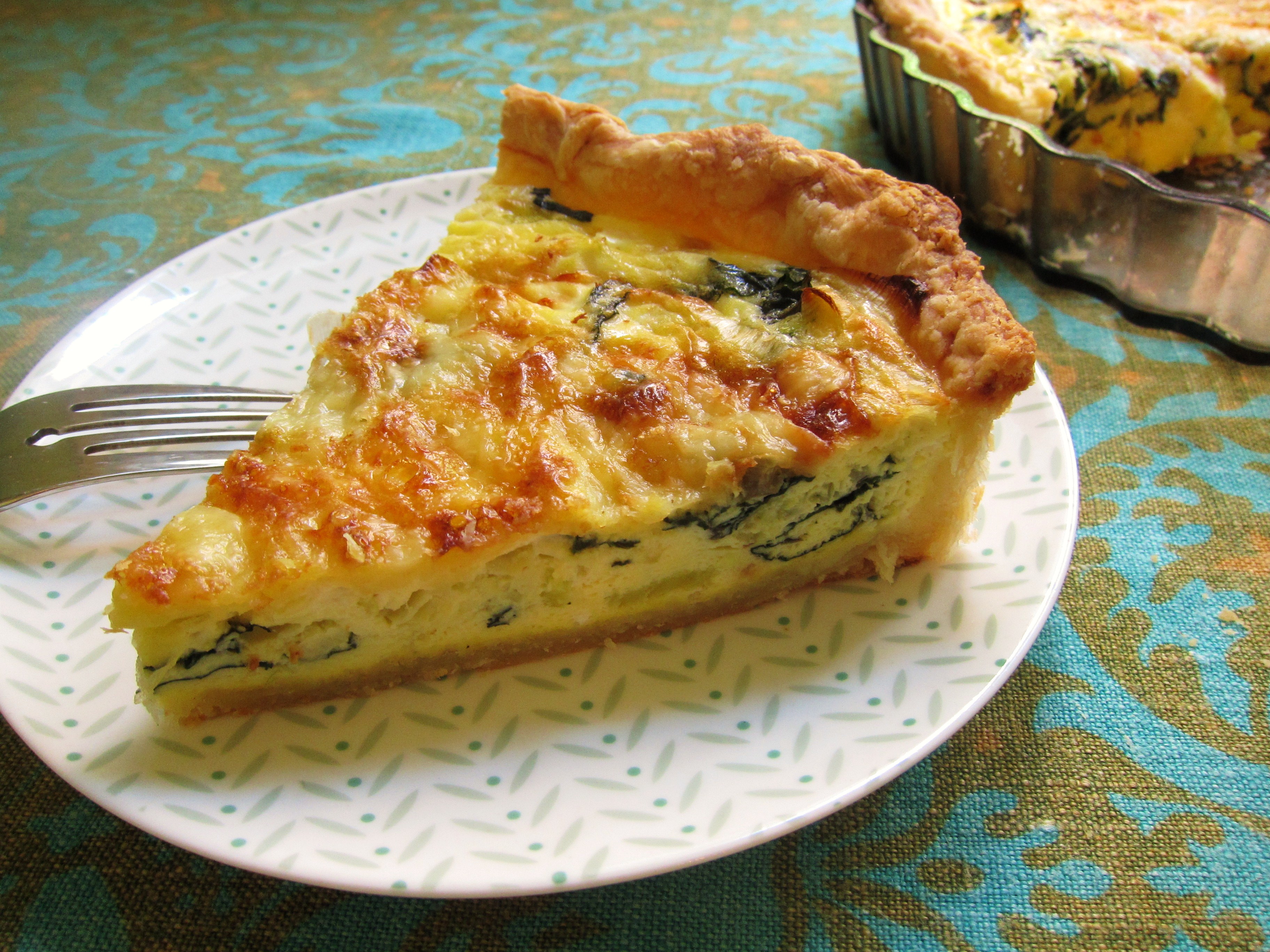
My little friend, quiche

“The skies are charcoal grey,
It’s a dreary downtown day,
But at the end of my 30-foot leash,
Is my little friend Quiche” – B-52’s Quiche Lorraine

Fine. The B-52’s aren’t rhapsodising about food; this song is actually an ode to a poodle. But I like listening to it and pretending it’s about the real thing, for the simple reason that I prefer quiche to poodles (case in point: I just re-read that last word as noodles), not to mention that it’s fun to imagine Fred Schneider and Cindy Wilson singing emphatically about beaten eggs baked in a crust. Yes? Yes.

There’s something both versatile and comforting about quiche, in that it’s equally acceptable to have for breakfast as it is at a fancy dinner party or when you’re cooking for a first date. It’s just a matter of tinkering with the ingredients to match the mood. No matter the occasion, though, I fully endorse the all-butter crust – it’s light and flaky and unctuous all at the same time, the perfect vessel for a custard of egg and cheese.

The recipe here was made for a friend who had recently moved back to the city after several months away on the West Coast. Not having seen her in a long while, I’d invited her for Sunday lunch – that one time you can geek out on making delicate foodstuffs and set out your best cutlery and serving platters, without feeling like you’re overdoing it  (even if it’s just the two of you). On the best of days, there’s even an attractive tablecloth in there too. The one you’ve been saving for such an occasion.

This quiche – with it’s ruffled crust and silky layers of egg, Gruyère and sautéed veg – had Sunday lady lunch written all over it. I hope this recipe inspires you to share good food with good people, surrounded by all the pretty little things you cherish most.

Sunday lady-lunch quiche (serves 6)

All-butter crust (makes 2) – from Marta Stewart

  • 1 teaspoon salt
  • 2/3 cup ice water
  • 3 cups plus 2 tablespoons all-purpose flour, plus more for work surface
  • 1 cup plus 5 tablespoons very cold unsalted butter, cut into 1-inch pieces

Directions

In a small bowl, mix together salt and water. Place bowl over an ice bath until ready to use.

Put flour and butter in the bowl of a food processor. Pulse briefly until mixture forms large crumbs. Add the salt water mixture and continue pulsing until a dough has just formed but is not smooth. Be careful not to over-mix.

On a lightly floured work surface, evenly divide dough into two pieces. Form each piece of dough into a disk about 1 inch thick. Wrap each disk with plastic wrap and chill at least 2 hours and up to overnight.

Leek and Swiss chard quiche filling

  • 1 small leek, white part sliced (reserve the green part for another use)
  • 1 small bunch (about 2 cups) Swiss chard, ribs removed and  leaves chopped
  • 3/4 cup – 1 cup of grated Gruyère
  • 1/2 cup of crème fraîche or full-fat yoghurt
  • 6 large eggs
  • about 1 Tbsp fresh thyme leaves
  • 1 Tbsp olive oil
  • salt and pepper

Assembly

1. On a lightly floured work surface, roll dough into a 16-inch round; fit dough into a 9” tart pan/dish (mine was 1-inch thick), gently pressing it into the sides. Flute, crimp or cut the edges.* Cover with plastic wrap; chill tart shell until firm (about 20 minutes).

2. Preheat oven to 375°

3. Line the tart dough with a sheet of parchment paper and fill with pie weights or baking beans. Transfer to oven and bake until golden (about 20 minutes – be sure to check in every once and a while to make sure that the edges aren’t browning too much). Remove weights and parchment paper and continue baking until golden brown, about 5 minutes. Transfer to a wire rack; let cool.

Baking blind with pie weights and baking beans

4. While the pie crust is baking, you can get started on the filling – heat the olive oil in a deep pan; once hot, add the leeks and allow them to cook a couple of minutes until translucent. Add the thyme leaves and the chopped Swiss chard and cook for another 2-3 minutes, until chard is wilted, but not fully cooked. Remove from pan and allow to cool.

5. Whisk eggs in a medium-sized bowl. Add crème fraîche or yoghurt and mix until combined. Add salt and pepper to taste.

6. Once the chard mixture has fully cooled, spoon into the pie shell. Pour over egg mixture until the tart shell is full (depending on the size of your pie shell and your eggs, you may not need to use all of the egg mixture – if you have leftover dough, make mini-quiches!). Sprinkle the Gruyère over the top.

7. Bake 10 minutes; reduce temperature to 325 degrees, and continue baking until filling is slightly firm and crust is a deep golden brown, 20-25 minutes. Transfer quiche to a wire rack to cool until set, about 10 minutes. Serve warm or at room temperature with a salad of mixed greens.

Chicken broth, the magical elixir

A couple of weeks back, I babysat my friend’s kids. This request comes up from time to time and when it does, I’m quick to accept because, well, her daughters are two lovely little people that I like spending time with.

I mean, would you say “no” to these magnificent creatures?

That said, if you have kids, or know people who do, you are well-aware that children between the ages of two and five spend most of their waking hours at school or daycare sticking their fingers in other kids’ mouths, thus becoming spectacularly efficient germ incubators. The night I came over to babysit, the sick one (who will remain nameless) happened to sneeze in my face – not on my cheek, or my forehead. No. Instead, directly into my mouth. There was something rather unsettling about the perfect timing between that sneeze and that yawn. Something vaguely Darwinian and cruel. The germ incubator, for her part, thought it was quite hilarious.

That, dear friends, marked the beginning of a fourteen-day chest cold. And by the fourteenth day, everything began to feel dramatic: having to replace a burnt-out light bulb on the ceiling fixture. Taking public transit. Taking out the trash.

Expletives abounded.

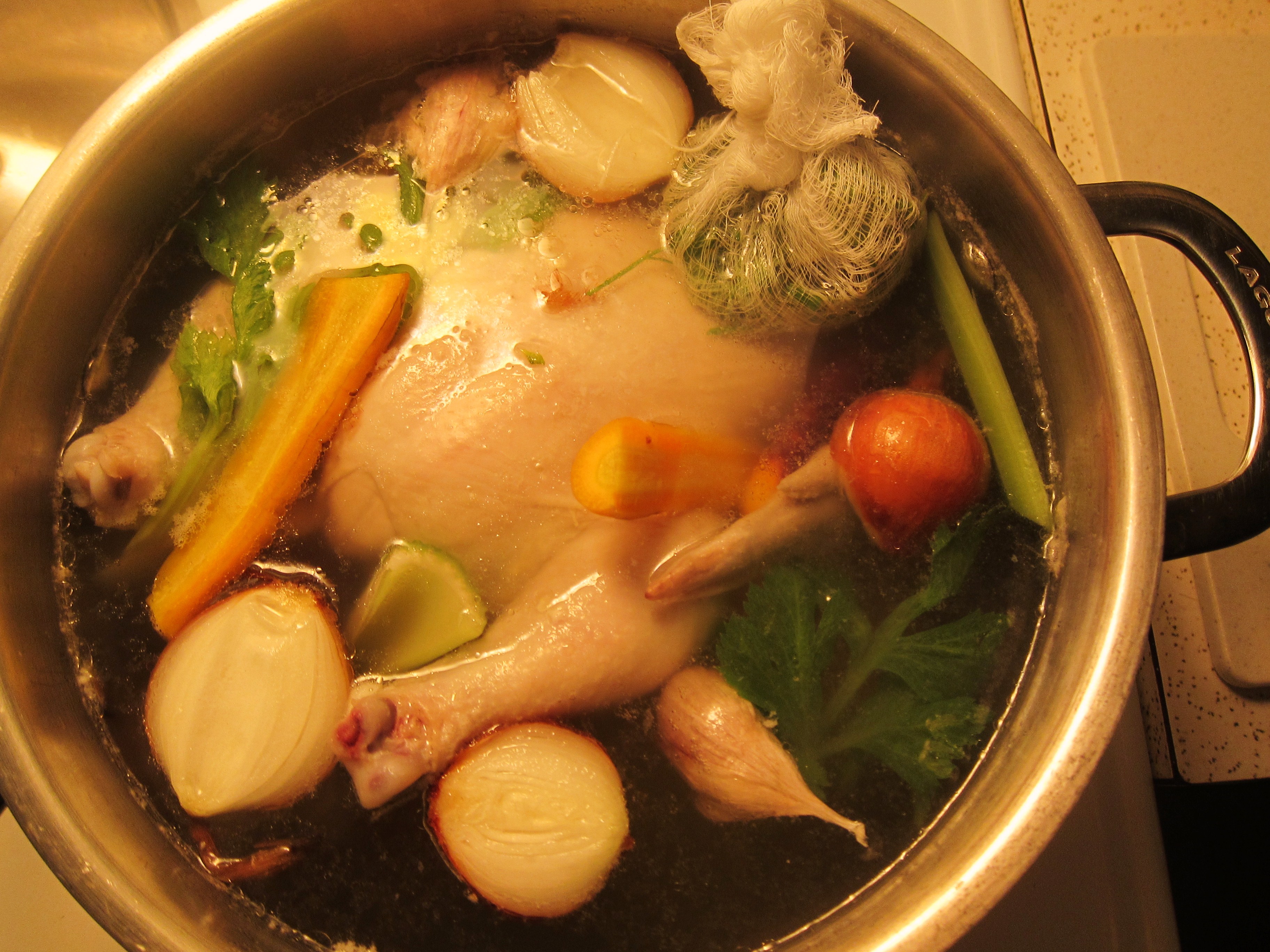
To curb any further cold-induced swearing, I took on the standard routine of sleeping, drinking tea, gargling salt water, and consuming vast quantities of soup – ones made with heady, home-made chicken broth. More specifically, mom’s chicken broth – a simple elixir of chicken, root vegetables and herbs that simmers slowly on the stove top. It’s your reward for making your way through an entire box of tissues.

Next time you feel like the contents of a trash bag, make this broth (or even better, ask someone to make it for you), pour some in a bowl and sip it slowly – no spoon required.

Cold-curmudgeon pacified, guaranteed.

Mom’s Chicken Broth – makes about 2 litres

  • one whole chicken (organic, if possible)
  • 1 onion, halved (if you want a darker broth, keep the peel on)
  • 1 large carrot, roughly chopped
  • 1 celery stalk (leaves on, if possible), roughly chopped
  • a few springs of fresh thyme
  • a few springs of fresh parsley
  • 1 bay leaf
  • salt
  • cheesecloth
  • kitchen twine

(*I add one whole garlic clove, smashed – but don’t tell mom)

Place chicken in a large Dutch oven (i.e. a heavy-bottomed, two handle soup pot) and cover with cold water. Set the pot on medium-high heat.

While the water heats up, prepare the onion, garlic, carrot and celery; set aside. Make a bouquet garni by filling a piece of cheesecloth with the thyme, parsley and bay leaf and tying it with a piece of twine.

Bring water to a boil and periodically skim off the frothy bits with a wooden or slotted spoon – this will ensure that you get a clear broth.

When the frothing has subsided, reduce heat to medium-low, add some salt, the vegetables and the bouquet garni. Simmer for about 1 – 1½ hours, (the cooking time will obviously vary depending on the size of your chicken) until chicken is cooked. Remove it from the pot and reserve. Strain the broth into a large bowl through a fine sieve (or a fine sieve with some cheesecloth). If you choose, you can reserve the vegetables for another use.

Eggplant Stacks with Tomato Sauce

Normally around this time of year, I would be telling you about tomato canning. Normally, I would relish in describing the whole process, it’s laborious nature and the well-worth-it results. I would tell you that you MUST MUST MUST preserve tomatoes. Normally, I’d have photos to show you and anecdotes to tell. Normally.

But this year, due to a series of unforeseen circumstances, I missed out on our family’s tomato canning festivities. The weekends got consumed with other things, and eventually we were nearing the end of September and locally-grown tomatoes had become scarce at the markets. And then it got colder and suddenly it was October.

It makes me a bit sad to know that the annual ritual had slipped by me this year. To compensate, I spent much of September/early October fitting in as many tomato recipes as humanly possible. A ludicrous amount of tomatoes have found their way into my kitchen in the last several weeks – Roma from my little garden with Rob & James, San Marzano from Nonna’s backyard, Cherry from Sophie’s place and a lovely, yet-to-be-identified variety from the small vines that grow in my apartment’s shared courtyard. Yes – it’s been fortuitous times in the tomato department. Which means that my cookbooks are littered with sticky-notes on every page with the word tomato, pomodorotomate. I’ve definitely put my time in. Any day now I might morph into a giant red Beefsteak and dutifully rolled away by a gang of Oompa Loompas.

Toxic tomato love.

Below is a nifty little recipe that will help you get through that last batch of tomatoes. It’s a quicker and lighter take on eggplant parmigiana and is nice layered on top of a bed of spinach or a ladleful of polenta.

Breaded Eggplant Stacks with Tomato Sauce (serves 3-4) 

Fast tomato sauce (enough for this recipe + leftovers)

  • 6-8 medium tomatoes, chopped (or one jar of Nonna’s tomatoes)
  • 2 cloves of garlic, minced
  • 1 small onion or leek, chopped
  • 1 Tbsp tomato paste
  • olive oil
  • knob of butter

Heat up a large saucepan on medium-high heat. Add a glug of olive oil and the knob of butter. Once the fats are hot, add the onion and reduce the heat to medium. Sweat the onion for about a minute or so, then add the minced garlic. Stir. Allow the onion and garlic to cook and turn golden, but do not allow to brown. Add the chopped tomatoes. Stir and reduce the heat to medium-low. Allow the sauce to simmer for at least 20 minutes*, stirring occasionally.

*Note: my nonno used to start his sauce in the morning and let it simmer for a few hours before serving it at lunch. The taste of a well-simmered sauce is unparalleled.  If you have the time, I recommend simmering your sauce on low heat for a couple of hours.

Breaded eggplant

  • 2 eggs, beaten
  • 2-3 small eggplants
  • 1/2 cup flour (flavoured with fresh or dried oregano, salt and pepper)
  • 1/2 cup panko breadcrumbs
  • olive oil
  • 1/2 cup parmesan, grated

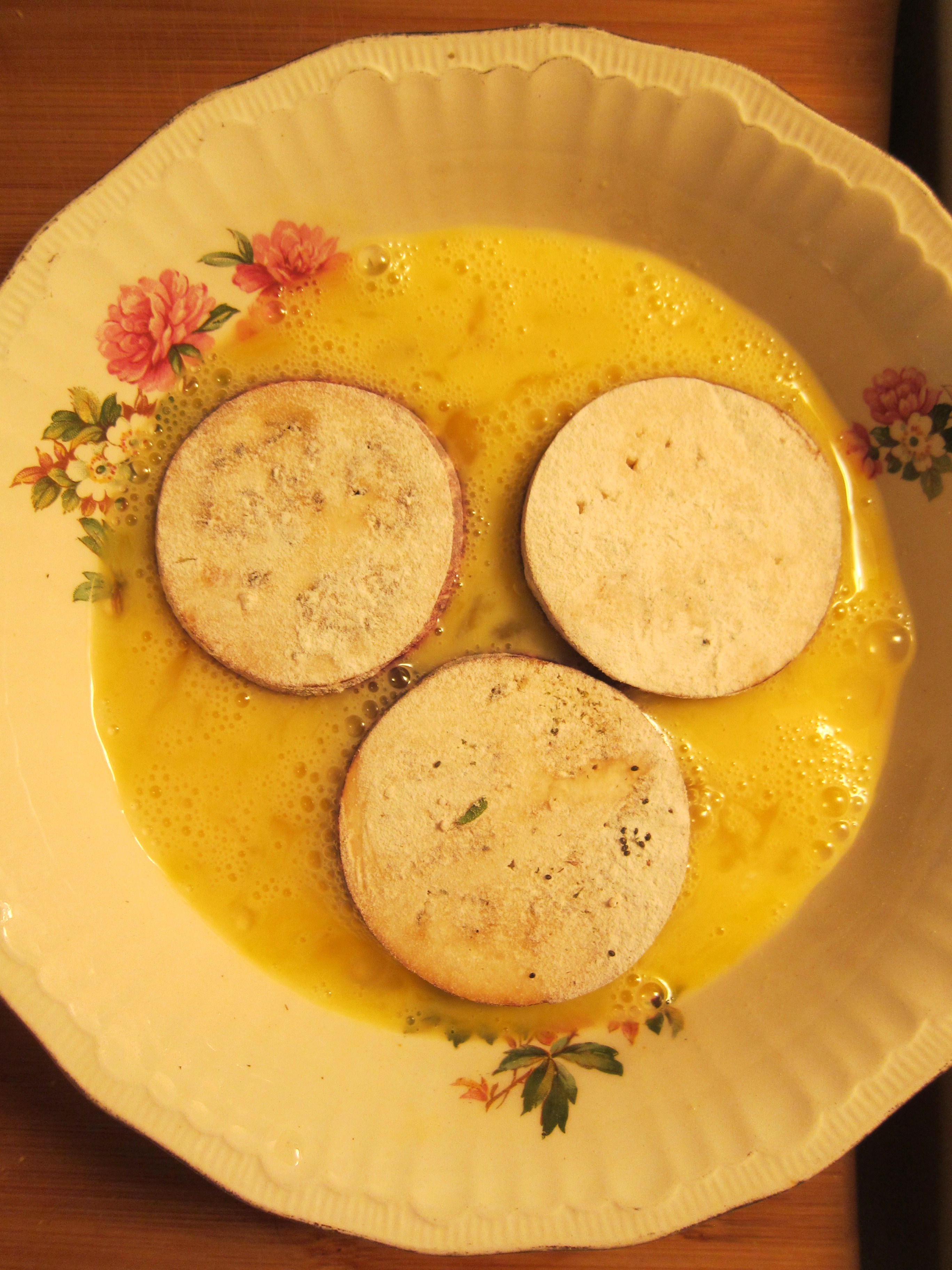
Preheat oven to 375° F. Prepare your breading station: beaten eggs in a shallow bowl, breadcrumbs on a plate and panko on a plate. Dredge eggplant slices in the flour, then the egg, then the breadcrumbs.

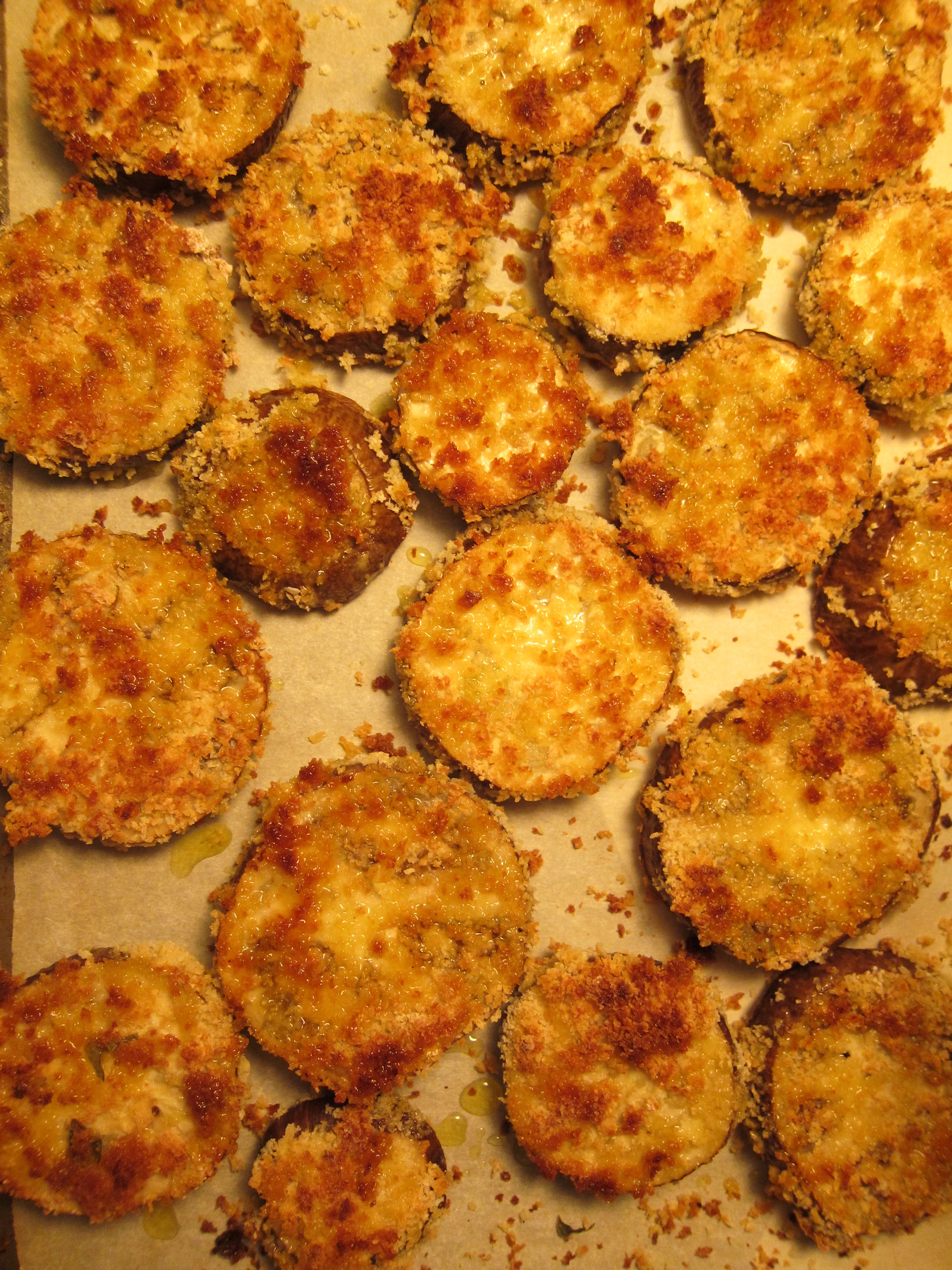
Arrange them separately on an oiled baking sheet. Drizzle additional olive oil over them. Place them in the oven and cook for 15-20 minutes, turning once halfway through the cooking time.

On a plate (or on top of salad, spinach, polenta), layer baked eggplant slices, tomato sauce and grated parmesan until you reach a stack size that pleases you. Finish with a light grating of parmesan.

Hibernation and steak

This past weekend was one nippy, blustery bugger. Gusts of wind blew in short, but phenomenal bursts, ruffling the curtains and knocking over small household objects. Stepping outside felt both thrilling and mildly threatening. If I were a small animal, I would have burrowed into a hovel deep in the ground, and not come out until the coast was clear.

I settled for the human equivalent, spending the day doing laundry and listening to Erik Satie on repeat. A bad day for being outside turned out to be a good day for doing a final triage of summer clothes and getting reacquainted with the warmer, woolier things that will slowly make their way into the wardrobe. I felt like a squirrel counting her acorns. Except my acorns included leg warmers, thermal socks and oversized sweaters. I can’t wait for the day I decide to wear all of those items together. Ladies, hide your boyfriends.

—-

Transitioning into hibernation mode involves embracing the slow layering of mental and physical adjustments that come with cooler days and earlier nights. It’s a time when our fat-storing faculties kick in and we start to crave deeper and richer things. I don’t want to, say, drink a quart of whipping cream, but by this time of year, I start to forgo salads and ceviche and begin to daydream about steak. With mashed potatoes. And mushrooms in wine sauce.

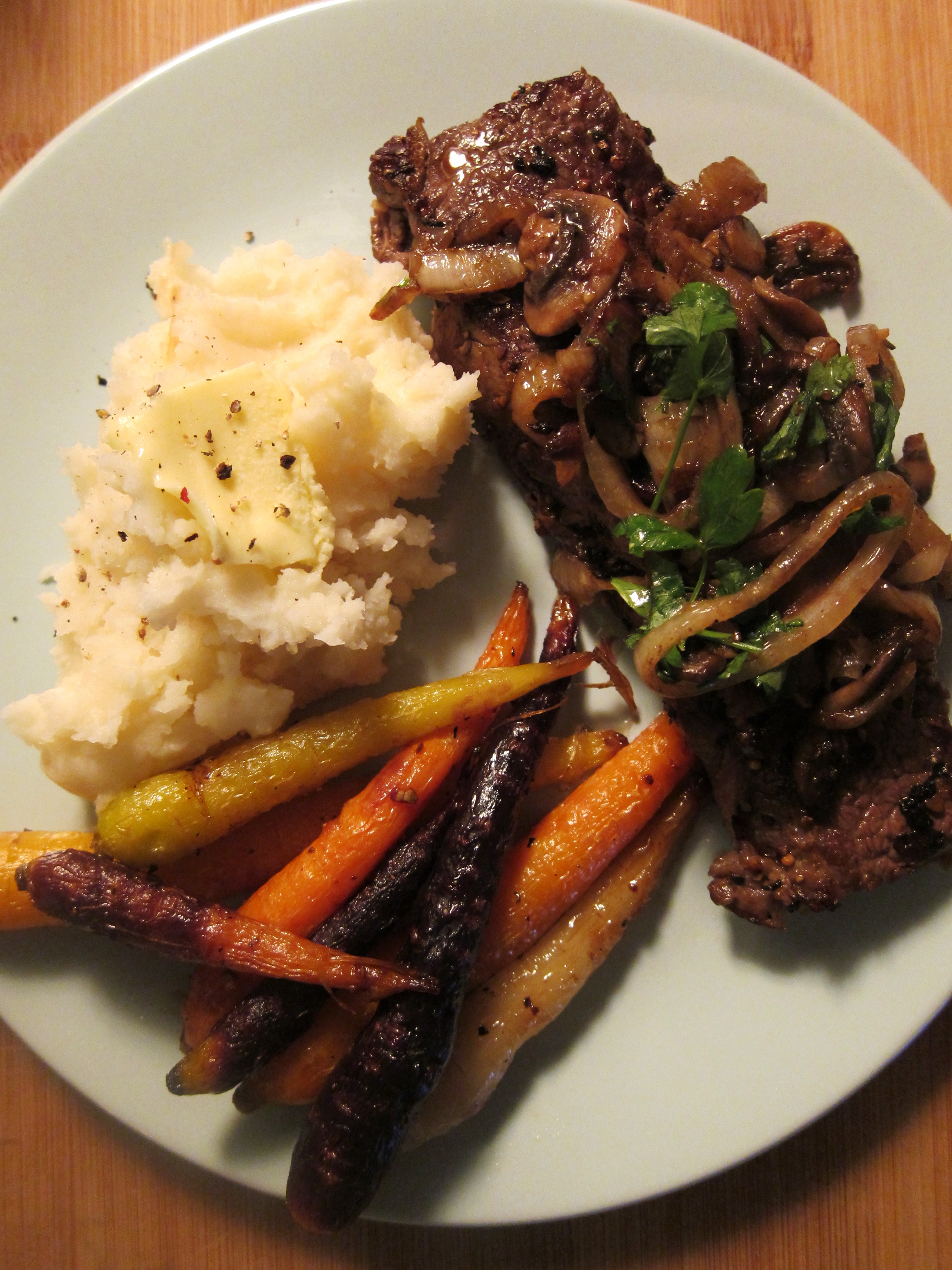
The line-up below is one of the best ways to take cover from a windy, rainy night – bar none. Pour yourself a glass of red and you’re set.

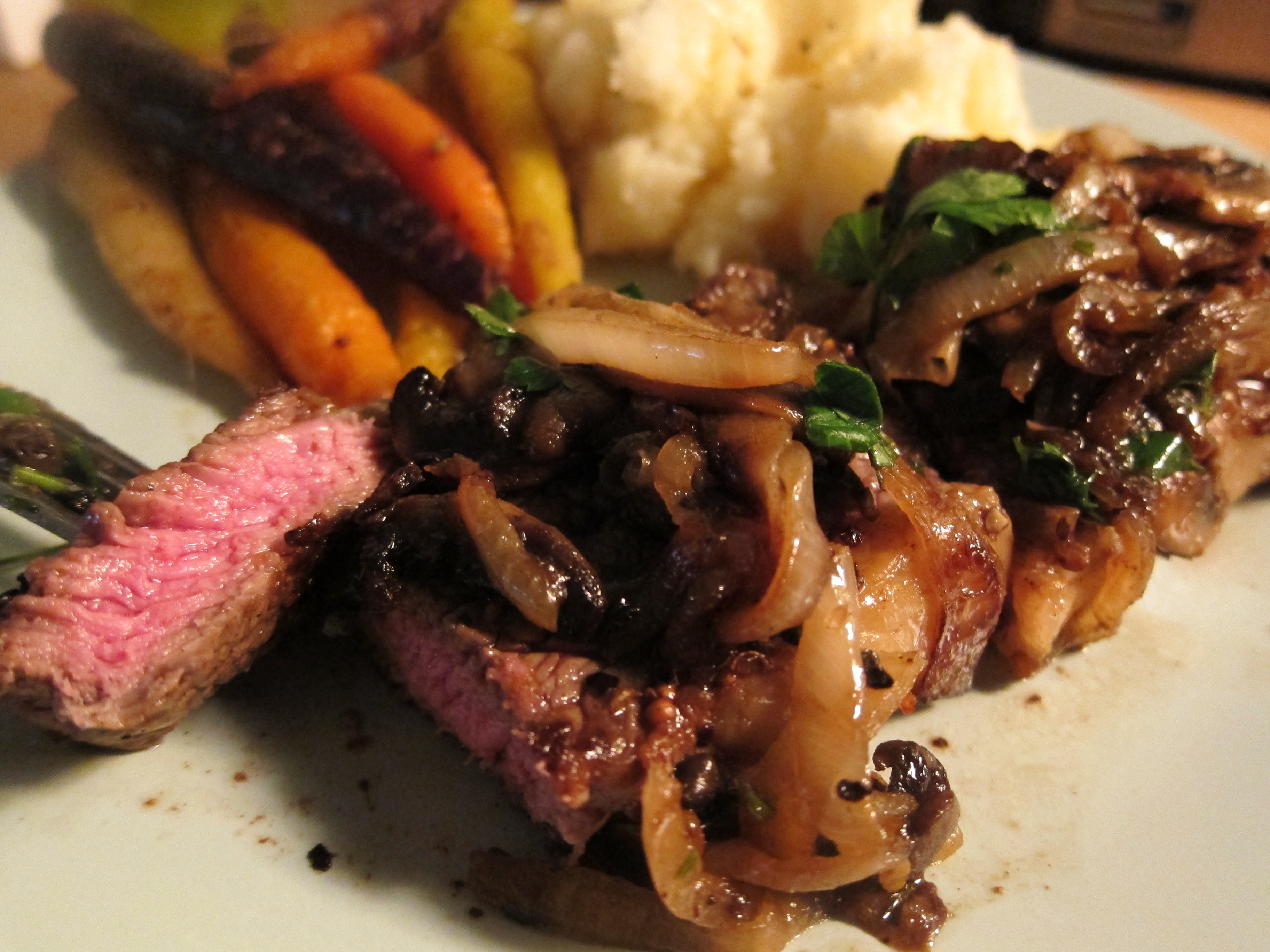
Pan-fried steak with garlic mashed potatoes and honey-roasted carrots

(serves 2)

Note: start with setting the oven to 400°F for the carrots and prepping and boiling the potatoes before doing anything else. Carrots and potatoes should be almost done when you’re ready to start cooking the mushrooms and, at the very end, the steak.

For the carrots:

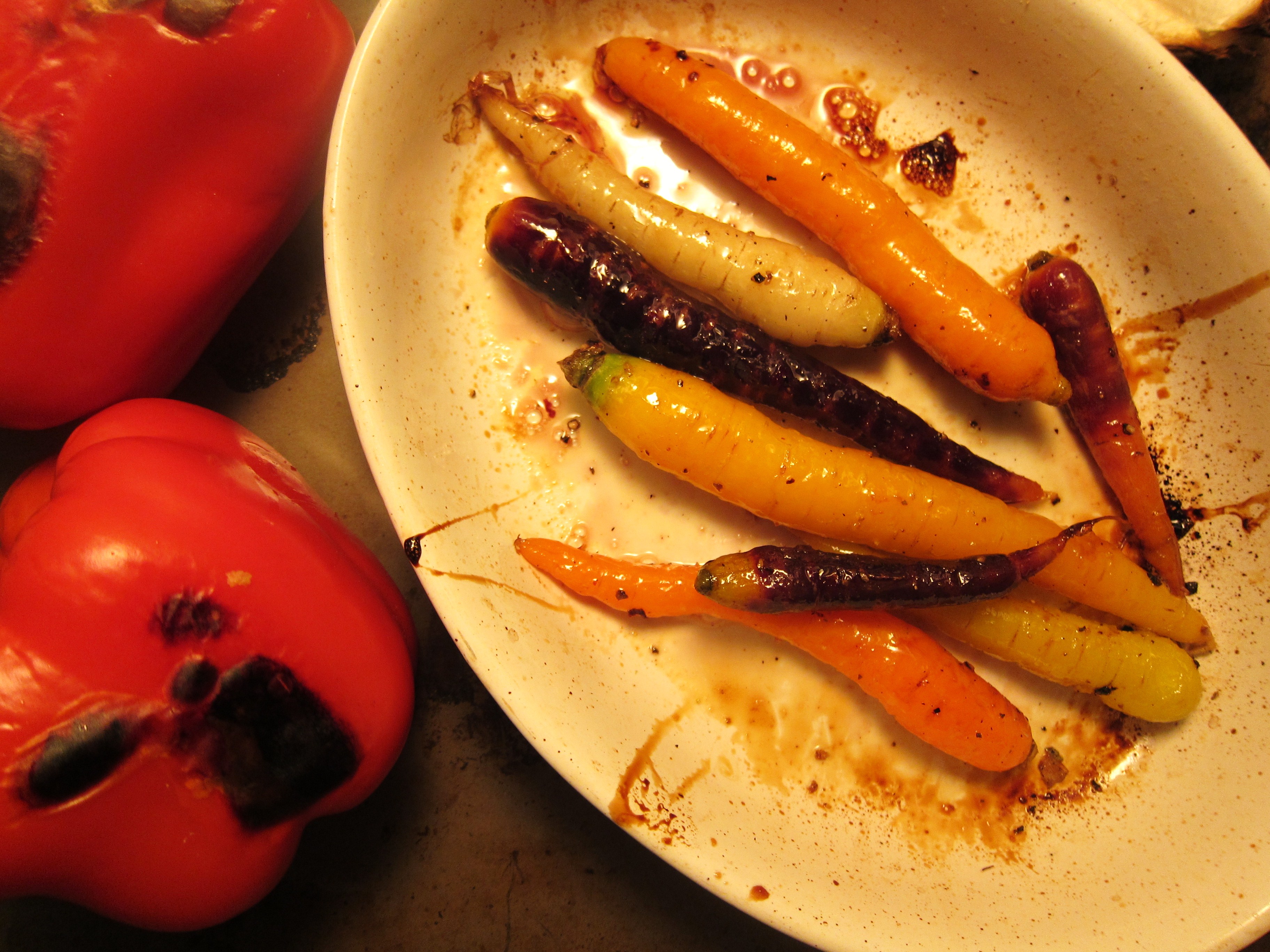
  • 10 small French carrots (carottes de Nantes)
  • 1 Tbsp honey
  • olive oil
  • Maldon salt or fleur de sel
  • freshly ground black pepper

Directions:

Set the oven to 400°F. Place whole carrots in a roasting dish with the oil, honey, salt and pepper. Put in the oven and roast for about 10-15 minutes, depending on the size of your carrots. Toss the carrots once, halfway through the cooking time.  (Note: Stick a half-head of garlic in the oven when you start roasted the carrots – you will use this for the potatoes.)

For the potatoes:

  • 4 medium-sized potatoes, chopped into rough cubes
  • a knob of butter
  • 1/4 cup milk (or cream)
  • 2-3 cloves of garlic (roasted in the oven with the carrots – see above)
  • sea salt
  • potato ricer

Directions:

Put the chopped potatoes in a large saucepan or Dutch oven and fill with enough cold water to cover the potatoes. Place on high heat until the water comes to a boil; lower the heat and allow to boil until the potatoes are soft and easily fall apart (for this recipe, about 15 minutes).

Drain potatoes and spoon into potato ricer a bit at a time, squeezing the shreds into the saucepan. Squeeze the roasted garlic through the ricer as well and mix into the potatoes with a wooden spoon. Add the knob of butter and the milk. Season with salt and stir until smooth.

For the mushroom/onion fricasée:

  • 1 1/2 cups sliced white mushrooms
  • 1 large onion, sliced
  • handful of Italian parsley, chopped
  • 1/4 cup sweet Vermouth or red wine
  • olive oil
  • sea salt and pepper

Directions:

Heat a swig olive oil in a pan on medium-heat heat. Once the oil begins to get hot, add the onions. Cook for a couple of minutes until they are translucent; add the mushrooms and cook until mushrooms and onions are browned, stirring occasionally. Season with salt and pepper. Add the vermouth to de-glaze the pan. Toss in the parsley and give it all a stir. Keep warm until ready to serve on top of the steak.

For the steak:

  • 2 x 200 g (7 oz) pieces of entrecôte, a.k.a rib-eye steak (note: the 250 g piece I cooked was enough for 2 people)
  • 2 tsp steak rub (I used Montréal steak spice, but I encourage you to get creative will your mortar and pestle)
  • olive oil
  • knob of butter

Directions:

Allow steak to come to room temperature. Heat a cast iron skillet or grill pan on medium-high heat. Toss in the knob of butter and a swig of olive oil to coat the pan. While the butter melts, prepare your steak by coating it in the spice rub.

When the fat starts to smoke, pull the pan off the heat, place the steak in the pan (there should be a sizzle), and return to the heat. Grill each side between 2-2½ minutes (for medium-rare for a one-inch steak). Wrap in aluminium foil and allow to rest 5-10 minutes before serving (you can pour any accumulated juices from the steak into the mushroom fricasée and heat gently before serving.

Blueberries – a proper farewell

That nip in the air, the earlier sunsets, the back-to-school gear that’s begun to monopolize the store shelves…there’s no point in sugar-coating it, kiddos: summer is almost finito.

The end of August marks a transition; it’s a seasonal no-man’s land that makes us feel a little uneasy about letting go of summer. You know the feeling: when you’re in a store at this time of year and see a crestfallen kid whose mother is stocking the cart with quad notebooks and pencils, both of them still wearing flip flops. You have that moment of empathy – that moment of wanting to say, “I know, buddy. It feels too early.”

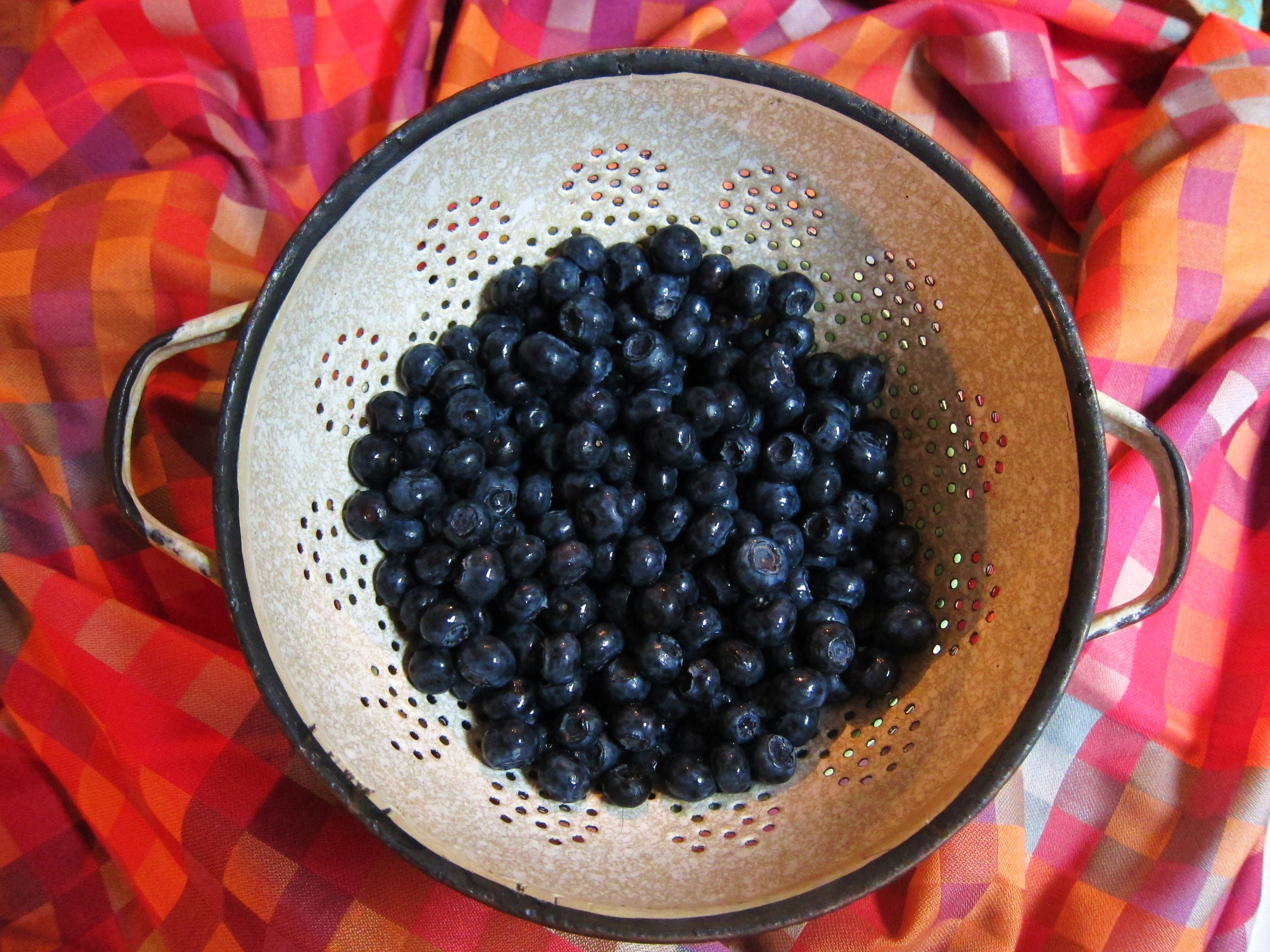
Times like these require us to seize what we have, while we have it. This may translate into a final few evenings at the beer garden; or a couple more weekends out at the lake. In the realm of summer foodstuffs still available in northern latitudes, it means one last fling with blueberries.

—–

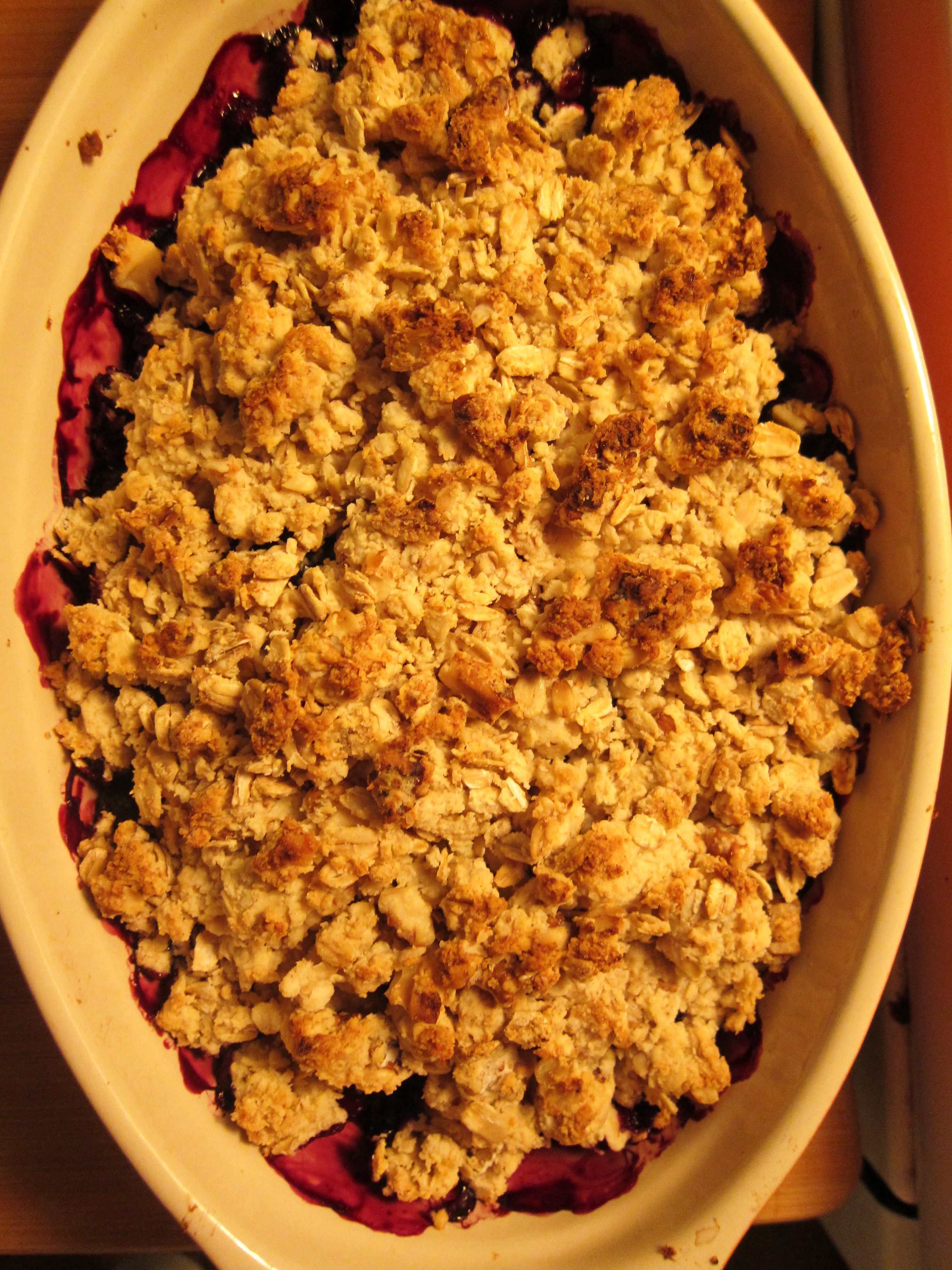
I secured a hefty batch of some of the last Quebec blueberries two weekends ago, the same weekend that I was invited to a friend’s for a last-minute dinner. The recipe below is the result of those lovely circumstances coming together. This cobbler was put together in about the same time it took me to shower, put on some clothes and dash out the door. It arrived at the dinner table still warm from the oven with a deep perfume of summer – one that will hopefully linger on just a little while longer.

Bueberry Cobbler (adapted from Bon Appetit) – serves 6

  • 1 cup flour
  • ½ cup rolled oats
  • ¼ cup walnuts
  • 1/3 cup plus 2 Tbsp natural cane sugar (or brown sugar)
  • 1 ½  tsp baking powder
  • ½  tsp salt
  • 6 Tbsp. chilled, unsalted butter, cut into 1/2” pieces
  • ½ plain Greek yogurt (full-fat)
  • 6 cups blueberries
  • 2 Tbsp. lemon juice
  • 1 Tbsp. lemon zest

Directions

Preheat oven to 375 F. In a large bowl, whisk flour, oats, walnuts, baking powder, salt and 2 Tbsp sugar. Add butter, using your fingers and combine with flour mixture to make pea-size clumps. Gently mix in yogurt. Knead until biscuit-like dough forms, being careful not to over-mix (which will toughen the dough).

In a separate bowl, combine remaining 1/3 cup sugar, berries, juice and zest. Toss to coat. Pour into a baking dish. Tear biscuit topping into rough pieces and scatter over berries.

*Note: Technically, a cobbler has spaces between the topping pieces, but somehow mine just sort of melded together while it baked – it doesn’t effect the taste, but aesthetically, it ended up looking more like a crisp and less like a cobbler. For a more “authentic” look, just use less bits of topping and make sure there are spaces so that that the berries can pop through.

Bake until juices and thick and bubbling and topping is cooked through and golden brown (35-45 minutes).

Poach this egg

Up until a few short years ago, my interest in poached eggs hovered between mild to non-existant. Growing up, there were two variations of eggs on rotation in our household – scrambled and omelette – and the idea of a jiggly or, lord forbid, runny yolk was something my kid sensitivities couldn’t quite handle. I expected my egg yolks to be cooked practically into oblivion, always mixed with the whites (no hard-boiled here) and doused with a generous squeeze of Heinz ketchup.

Things are very different now. If I were able to hop into a time machine, I would tell my kid-self that a) runny yolks are great; b) ketchup should be reserved for hot-dogs; and c) The Barenaked Ladies are not the coolest band on Earth (except, maybe, when they did that cover of Bruce Cockburn’s “Lovers in a Dangerous Time“. For that one my adult-self will make a valid exception).

With eggs, the game-changing moment happened shortly after the end of a five-year relationship, when I started to dine on my own again. The specifics are a bit fuzzy, but I remember it being brunch, on a weekend, at this place. I don’t think there was anything particularly special about these eggs – they were served on English muffin, with Mornay sauce (maybe some spinach, à la Florentine?) – but for some reason that was the moment I understood why people were into poached eggs. It was the first time I was able to appreciate their rich and oozy centres, that splash of bright yellow that flows in unruly swirls all over the plate, before being mopped up with a wedge of bread.

It’s strange how that happens – when something that used to send shivers down your spine suddenly becomes good. I hesitate to admit it, but I suspect that part of this shift in taste was a happy by-product of a larger effort to etch out out a new side of myself post-split. It goes without saying that eating a poached egg is not an earth-shattering, epic, Gloria Steinem-esque affirmation of independence. But at the time, it felt like a small gesture, a nudge towards new things. He hated poached eggs, so we never ate them at home, and I had pretty much given up on them at some point between the time my musical preferences gravitated from Paula Abdul to Steven Page.

Post-split felt like the perfect time to give poached eggs another go.

Since that pivotal moment, I’ve eaten my way through many plates of Benedict and Florentine – out at brunch, or over at friends’ houses. But until this past weekend, I’d never been able to make a decent one myself. The water wouldn’t be hot enough. Or it would be too hot. Or I would attempt the vortex method, watching passively, with mouth agape, as each egg got sucked into the water tornado, only to swiftly fall apart into a holy mess of stringy egg whites.

That is, until I listened to the Spilled Milk podcast on poached eggs last week.

The hosts of Spilled Milk – Molly Wizenberg and Matthew Amster-Burton – have easily become the Paula Abdul and Steven Page of my adult life. I look forward to listening to their podcasts the same way I used to look forward to slipping “Forever Your Girl” or “Gordon” into my Walkman. Spilled Milk makes me giggle in public, by myself, in the company of strangers. Once I tried so hard to told back laughter I snorted latte out my nose on a metro car full of people. I am willing to put my dignity on the line to listen to them discuss the merits of sour candy and the perils of eating rhubarb.

This nerd crush runs deep, people.

The episode on poached eggs addressed their apprehensions of the poaching process. Hearing them confess their struggles not only made me feel less ashamed of my ineptitude, but also assuaged my fears of making another batch of egg-streaked vinegar-water. Emboldened, I went digging for a recipe on Molly’s site Orangette and came across one for “Turkish Poached Eggs with Yogurt and Spicy Sage Butter”.

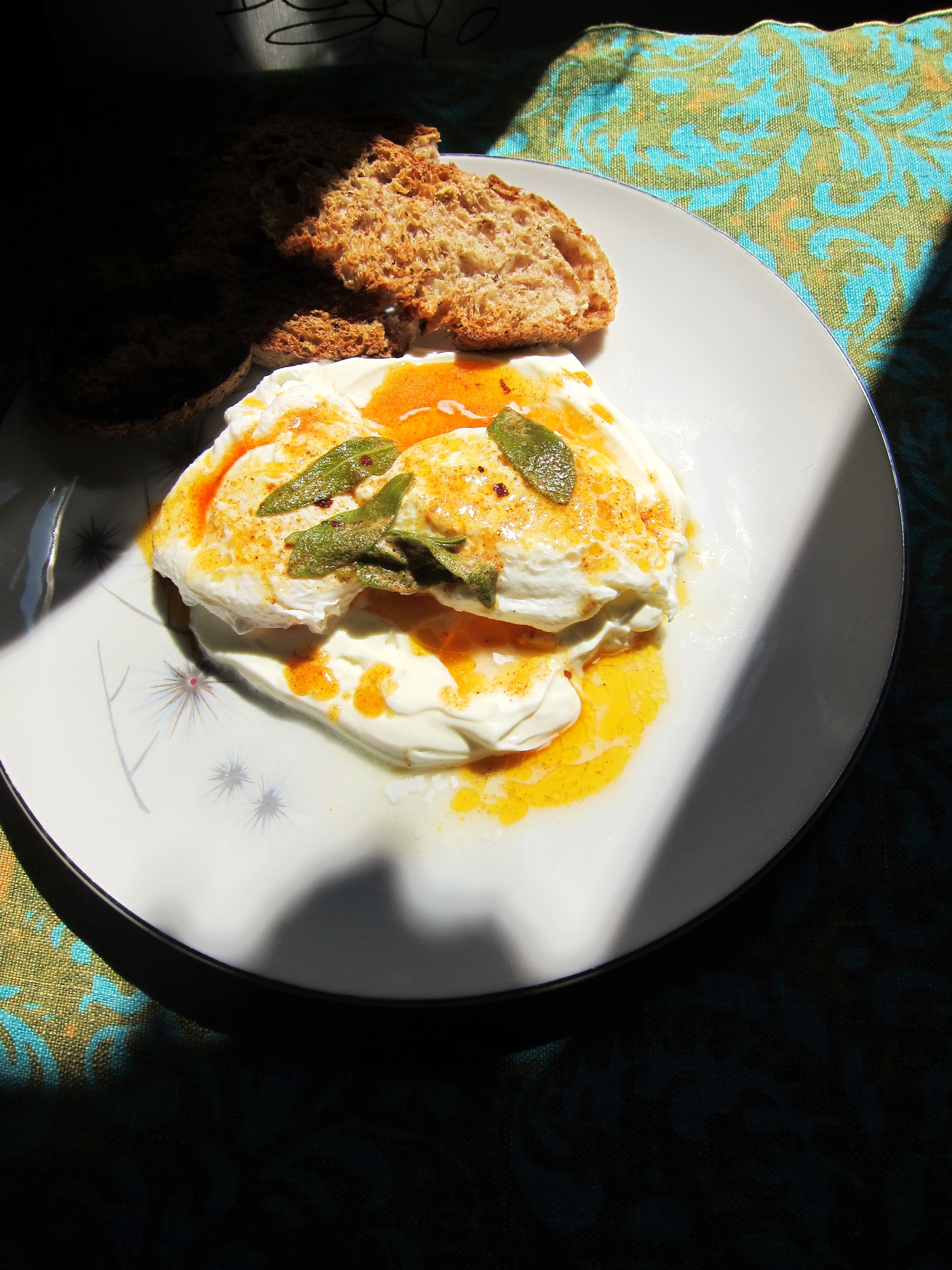
What you get is a couple of pillowy poached eggs on a layer of garlicky yogurt, drizzled with a toasty sage-paprika butter. Everything about this was right. Everything.

Please poach this egg.

Turkish Poached Eggs with Yogurt and Spicy Sage Butter (serves 2) – from Orangette

½ cup plain Greek yogurt (full-fat)
½ garlic clove, crushed in a mortar and pestle (or with a garlic press)
⅛ cup (¼ stick) butter
6 fresh sage leaves
¼ tsp sweet paprika
¼ tsp dried crushed red pepper
Salt
1 tbsp white vinegar
4 eggs*
Bread for serving

*The fresher the egg, the better. If in doubt, try the sink/float test: if an egg submerged in water sinks, it is very fresh; if it floats, it’s generally not. I award you double-extra nerd points if you were just about to get up and test all the eggs in your fridge.

Directions

Blend the yogurt and crushed garlic in a small bowl; season with salt. Divide the mixture between four plates, dropping a dollop in the centre of the plate and spreading it out with the back of a spoon to form a large, thin circle.

Melt the butter in a small, heavy saucepan over medium heat. Add the sage, paprika, and red pepper, and stir just until the butter sizzles. Be careful not to let the butter burn or get too coloured. Remove it from the heat, and season to taste with salt.

Fill a large skillet about two-thirds full with water, to a depth of about 2 inches. Add about a tablespoon of white vinegar, and bring it to a slow simmer over medium-high heat. Once you see several little bubbles along the bottom of the pan and the surface of the water is gently bubbling (not a rolling boil), your water is ready. While you wait for the water to heat up, prepare a medium bowl with warm water and set it aside.

Crack an egg into a heatproof cup or ramekin. Holding the cup upright, lower the base into the water, and then, slowly and gently, twist your wrist to turn the egg out into the water. Allow the first egg to settle a bit before adding a second one. Depending on the size of your skillet, you can poach 2-3 eggs at a time. Given that this recipe includes 4 eggs, I did it in 2 batches.

Cook each egg for 2-3 minutes total, until the white is opaque. Lift each egg out with a slotted spoon. Slide the egg into the bowl of warm water that you have set aside to keep them warm while you finish up the other eggs, make toast, etc.

When you are ready to serve, remove the eggs from the water with the slotted spoon, gently shake off any water, and place two eggs atop the yogurt on each of the four plates. Spoon the paprika-butter over the eggs and yogurt. Serve with bread, toasted or plain.

Summer grilled cheese

The heat waves of the last couple of weeks have put me in a bit of a cooking coma. The last thing I’ve wanted to do in the 40°C heat of an apartment without air-conditioning is boil water or broil meat. So, my diet over the past while has consisted mostly of salads. It goes something like this: arugula, walnuts, goat’s cheese; mâche, pumpkin seeds, goat’s cheese; arugula, walnuts, cucumber, goat’s cheese. You get the picture. Snore.

It’s true that salads don’t need to be this monotonous. They really don’t. But being creative in the kitchen sometimes requires certain conditions. And humid heat is not amongst them. When you’re reclining on your couch in front of a rotating fan, in your bathing suit, in the dark, your mind is not usually dreaming up inspiring salad recipes. Rather, it ponders inanities such as, “How long will it take to fill the bathtub with ice cubes?” or “What are my chances of breaking into the city pool without getting arrested?”

As the weather seems to have dipped into cooler territory – at least for the next few days – I’ve gravitated toward things with a bit more substance. And nothing says “substance” like a good ol’ sloppy grilled cheese, particularly one that is bursting at the sides with not one, but two types of fromage. The following is my antidote to the light and breezy summertime salad. Because, let’s face it – salads are wonderful, but every once and a while it’s nice to cradle something hot and gooey in one’s hands.

And this, dear readers, is that something.

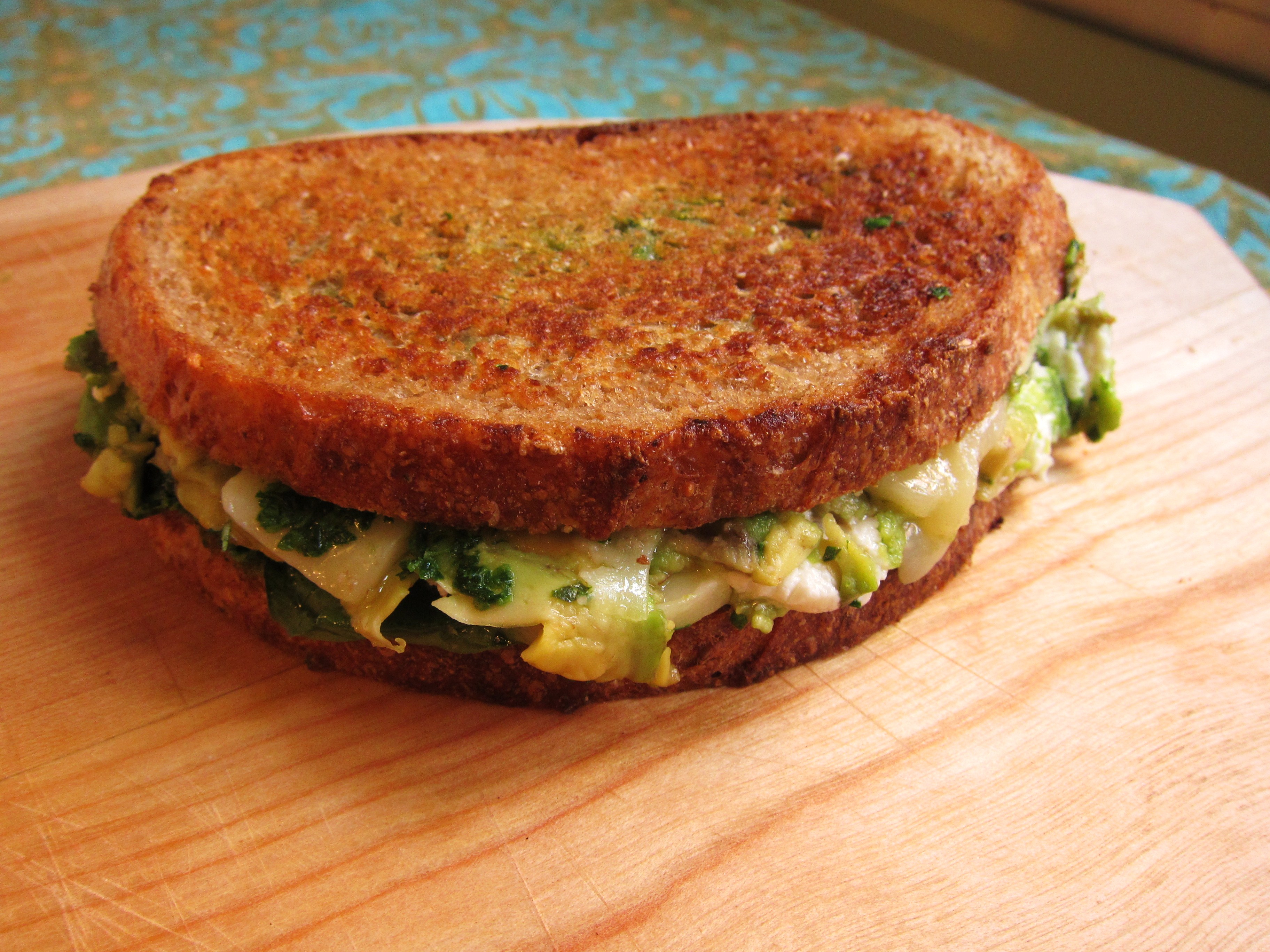
Summer Grilled Cheese

makes 1 sandwich

Ingredients

2 slices wholegrain or sourdough bread
2 tbsp Herb Pesto (see recipe below)
2 slices aged cheddar
2 tablespoons goat’s cheese, crumbled
1/2 avocado, sliced (or mashed)
a few leaves of baby spinach
olive oil
butter

Directions

Spread about 1 tablespoon of the Herb Pesto (see recipe below) onto each slice of bread. On one slice of bread, layer: 1 slice of cheddar, avocado, goat cheese, spinach, second slice of cheddar. Top with second slice of bread and press together gently.

Heat approx. 1 tsp. olive oil in a frying pan with a small knob of butter over medium heat. When butter is melted, place the sandwich in the pan and cook until golden brown. Press down on the sandwich lightly, then flip it over and cook the other side until it is golden brown.*

(*I can’t believe I just told you how to make a grilled cheese. You’ve probably been making them since you were old enough to man the stove.)

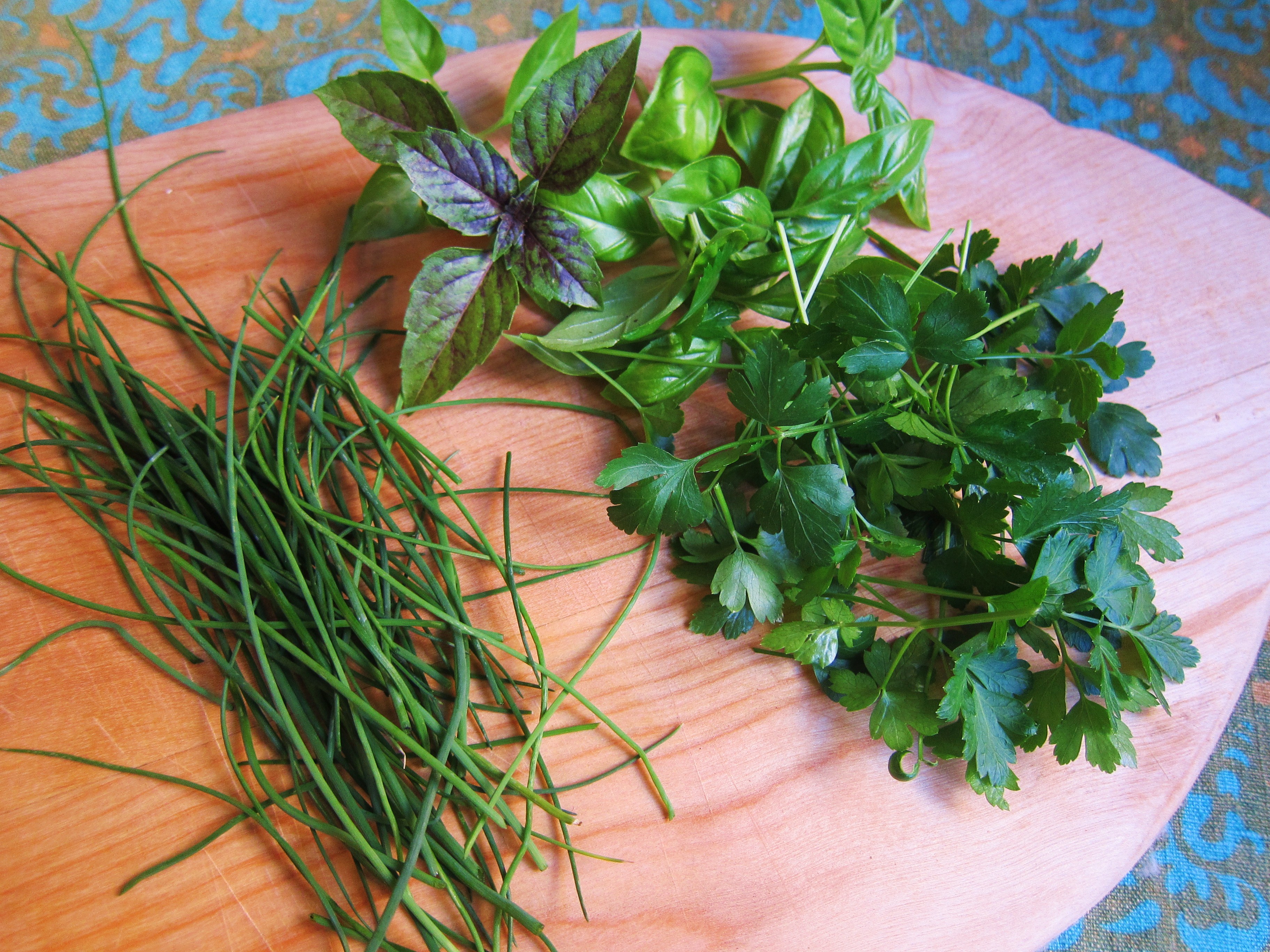
Herb Pesto

1 clove garlic, smashed
1-2 anchovy fillets (packed in oil) – omit for vegetarian option
handful of spinach
handful of fresh Italian parsley
handful of fresh basil
handful of chopped chives
juice of 1/2 a lemon
1/4 cup olive oil
salt and pepper to taste

Directions

Pulse garlic and anchovy in food processor until chopped. With the food processor running, add lemon juice, parsley, spinach and chives. Slowly drizzle in olive oil until it reaches the consistency of a pesto. Add more oil if you feel it needs it. Season with salt and pepper.
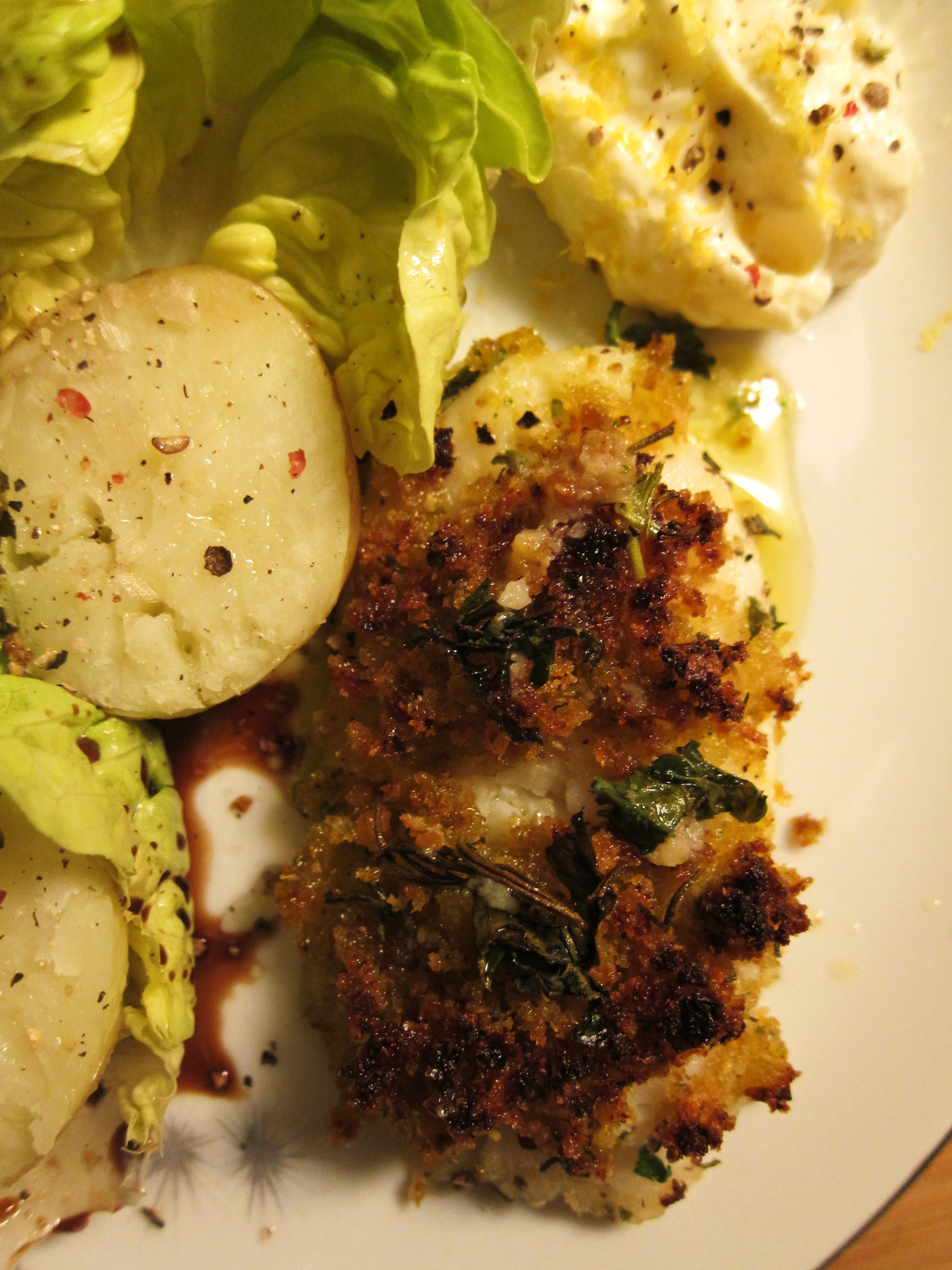
La lotte and the machine

Last Christmas, I was gifted a food processor. In my pre-food processor days, it was a kitchen gadget I longed for, along with the bread mixer and electronic scale. I thought it would be cemented to my counter-top for years to come. It was easy to imagine cancelling Friday night plans to stay in and make hummus or pie dough or soup…

It is now July and I have used it all of three times, twice for the same recipe. This is due in part to the fact that it’s a beast – as large as a desktop computer screen from the early 90s and equipped with so many bits and pieces that the idea of assembling it, then disassembling it, then cleaning every nook and cranny with a dishcloth has convinced me that, for the most part, it’s better off left in the box. It also came with a hefty “congratulations on your purchase” brochure and an instructional DVD, just in case you put part “y” with part “x”, when part “y” should actually go inside part “z”. Ugh. I get tired just thinking about it.

This aversion has also been nurtured by the serious lack of counter space in my kitchen(ette). The food prep area is the size of a standard cutting board and often vies for territory with the dish rack. It’s a sad sight, but I’ve made sure that “large, sprawling countertop” has made it into my mental list of “things to work towards to be happier” (weirdly, “large sprawling countertop” also coincides with “reasons to marry rich”).

Hm, what were we talking about? Right. The food processor.

Despite my general ambivalence towards using it, there are moments when I decide to extract it from the box, specifically when the option of not using it is more distressing. The recipe below is the perfect example of how the food processor can be useful, and ultimately, more friend than foe.

The recipe itself is a variation of “Tasty Crusted Cod” from Jamie Oliver’s Meals in Minutes. It calls for home-made breadcrumbs, which I can’t say I often have on hand. What I do often have on hand, for some absurd reason, is a big hunk of baguette in the freezer. Now, I don’t know if you’ve ever tried to make breadcrumbs from frozen bread by hand, but it ain’t pretty and commonly results box-grater wounds. Enter Food Processor Maximus – the device that allows you to pulse up some breadcrumbs both quickly and gracefully. If you’re using fresh bread, I suggest making a batch for the freezer so that you can return the food processor to its box for a long summer’s nap.

The recipe “variation” mentioned above is two-fold, in that the peripheral ingredients are slightly different, as well as the main feature – the fish. As the name suggests, this dish is to be made with cod. But when I arrived at the fish monger’s, he was fresh out. Undissuaded, I asked him to suggest a good alternative. “Nous avons des beaux morceaux de lotte, mademoiselle”, he said, emphasizing that it had the same toothsome texture, white flesh and mild flavour. I concluded that Jaime Oliver would approve and brought it home.

Now, having lived my whole life in Montreal, I consider myself bilingual. I went to school in French. I work in French. I have French-speaking friends. However, as can be expected, there is still some vocabulary that I haven’t yet had the pleasure of encountering. And apparently “lotte” is one of those words that has been a stranger all these years. So, naturally, I looked it up:

http://www.keraliou.com/images/produits/lotte/lotte3.jpg

Yeah.

After a few more minutes typing search words into my computer, I discovered that this was probably NOT the lotte found in the fresh waters of Québec. But regardless of which variety had ended up in my kitchen, one fact remains true: “lotte” is bottom-feeder, and thus slimy, limp and amphibian-like. This was not the visual that had inspired me to make “Tasty Crusted Cod”. Also, the fact that a) I have a pretty vivid imagination and b) I’d just watched Alien the night before may not have aided the situation.

After coming across a few more unfortunate photos, I shut off the computer, walked to the kitchen and decided that it was silly to discriminate between a “pretty” fish and an “ugly” fish and began prepping it for the oven. I likened it to kissing the frog before he turns into a prince – it would be weird at first, but worth it in the end. And, as luck would have it, my lotte-fish prince turned out to be quite a hunky specimen, cloaked in herbs and toasted breadcrumbs.

Lesson learned? Kiss the frog. You may just live happily ever after.

Monkfish with Toasted Breadcrumbs and Herbs (serves 2-4), adapted from Jamie Oliver’s Meals in Minutes

      • 2 monkfish fillets (about 1 lb each), skinned
      • 1/2  baguette (preferably day-old or frozen and thawed)
      • 3 cloves garlic
      • 4 anchovies (in oil)
      • 4-5 sun-dried tomatoes
      • small, 1-ounce chunk of Parmesan
      • 1/2 lemon
      • a swig of balsamic vinegar
      • sea salt and freshly ground black pepper
      • herbs: a small handful of basil; a few springs of thyme

*****

Find an oven-proof dish large enough to accommodate the fish and drizzle some olive oil over the bottom. Sprinkle the salt and pepper into the dish and then add the fish fillets, tossing them in the oil mixture. Place the dish on the middle rack of the oven and turn it on to broil. Allow to cook for about 5 minutes.

Break the bread into rough chunks and place in a food processor. Crush one clove of garlic and toss them in the machine; as it’s processing, add a drizzle of olive oil through the feed tube. Blend until you have breadcrumbs then empty them into a bowl.

Place the anchovy fillets into the food processor with the sun-dried tomatoes and a little of their oil. Add the other two cloves of garlic, chunk of Parmesan and the basil. Grate in the zest from half a lemon and squeeze in the juice. Add a splash of balsamic vinegar and blend to make a paste.

Remove the fish from the oven and spread a layer of the tomato-mixture over the top of the fillets; add a layer of breadcrumbs. Top with the thyme sprigs then place back under the broiler until the breadcrumbs have turned golden brown (8-10 minutes).

Iberian ham et al.

It’s been a little over two weeks since I’ve arrived back from Barcelona – land of impeccable taste in eyewear, graceful architecture, and some of the most well-manicured public gardens in all of South-Western Europe. It’s also home to an inordinate number of men – gentlemen, really – with very high sartorial standards, especially those having reached the salt-and-pepper ranks of manhood. Holy Toledo, espadrilles never looked so good.

That said, not even a well-groomed, tanned Iberian man in a linen suit can distract me from good food, which, luckily, is also plentiful in Spain.

When it comes to food, Barcelona excels at many things, but there a few things that were especially memorable – the beautiful, unrefrigerated eggs and rosy Saturn peaches from the market; the honeyed coca flatbread and peppery Manchego cheese, sold by the pound; the dense potato omelettes, creamy béchamel croquetas, and sandwiches with tomato-rubbed bread (Pa amb tomàquet) at the tapas bars; the saffron-infused paella, dotted with shiny black mussels and rosy prawns, still in their shell.

These are the edibles that left their mark.

Of course, there is one additional thing that Spain does particularly well and that is, beyond a doubt, cured meat. Every sandwich I ordered from the moment I stepped off the plane until the moment I stepped back on included some version of cured pork – each of them as delectable as the last. The chorizo at the Boqueria market was so good I nearly wept. I am not ashamed to admit that in seven days I ate my weight in Iberian ham, or that it took a whole afternoon to talk myself out of trucking an entire leg of Pata Negra and a dozen chorizo sausages with me on the plane home. If the sheer absurdity of arriving at the airport with a suitcase brimming with pork products wasn’t enough to dissuade me, my brother (and travel partner) kindly pointed out that the risk of being handed a hefty fine at customs wasn’t worth it (a cautionary piece of advice that lost all its weight when we were handed that miserable, cellophane-wrapped “Asian-style chicken” on the plane – a reminder that there is so much bad food out there that the feat of smuggling a few pieces of hand-crafted cured meat would have been VERY much worth the risk of getting the stink-eye from the authorities.)

Suffice it to say that Barcelona had several shining food moments – some while eating out and others from meals put together at the apartment (despite the sad use of dull, dull knives). There are many more that I’d love to share with you, but I’ll cap it here and spare you the detailed play-by-play of my Spanish food escapades, which, let’s be honest, would be the equivalent of gathering you round for an infernally-long slideshow of blurry vacation photos, charming only to the person manning the projector.

Instead, I have put together a quick slideshow of some highlights (plus an little Spanish omelette recipe further below). Buen provecho.

This slideshow requires JavaScript.

Tourist version of Tortilla Española (serves 2-3)

  • 5-6 large free-range eggs
  • 4 small waxy potatoes, scrubbed and sliced thin (skin-on)
  • 2 shallots, peeled and finely sliced (alternately – 1 small sweet onion)
  • 1/4 grated Manchego cheese
  • olive oil
  • sea salt and freshly ground black pepper

Preheat the oven to 400°F. Beat the eggs in a medium-sized bowl and season with salt and pepper; put aside.

On the stovetop, heat an ovenproof skillet. Add a small glug of olive oil to coat the pan. Add the shallots and allow to cook for a couple of minutes until they begin to golden. Remove from pan.

Add the potato slices to the skillet and spread them so that they lay across the pan uniformly. Allow the potatoes to cook through, turning once (3-4 minutes if sliced finely). Remove from pan when they begin to brown.

Making sure you still have a bit of grease clinging to the skillet, pour the beaten eggs into the pan, then add the cooked potato slices and onion, arranging the pieces evenly. Place in the preheated oven until the omelette has fluffed up and is golden brown on top and just set in the center (depending on your oven, you may want to set it to broil for the last 30 seconds to finish browning the top). Sprinkle the Manchego over the omelette straight out of the oven.