• Home
  • About

julia chews the fat

julia chews the fat

Category Archives: Vegetarian

Beating the drum for breakfast in bed

09 Saturday Mar 2013

Posted by julia chews the fat in Breakfast & Brunch, Cooking For Your Peeps, Cooking Solo, Vegetarian

≈ 4 Comments

It started like any other Saturday – flip on the computer, the radio, get the Bialetti on the stove. Bored with eggs for breakfast, I tossed together a scone batter, cut it into segments and popped the pieces into the oven. Waiting for them to bake, I sat half-awake in front of my laptop, steeping in the newsreel trance that is social media.

Then I thought, Forget this. I’m going back to bed.

The timer went off, the scones came out of the oven. I shut off the computer, grabbed some coffee, a glass of juice and this month’s issues of The Walrus and Saveur and slid back under the sheets.

I bid you to not underestimate the power of breakfast in bed. It may feel lazy and backward and counter-productive (because you got your butt into gear to make breakfast, and now you’re back where you started). But it effectively breaks the routine and is a nice way to say “I like you”, to your partner, your kids and to yourself. Lounging around in a crumpled duvet with a magazine or the paper and a spread of food is, without a doubt, a prime way to start your weekend. Especially if Bill or Lou or Mulatu are accompanying you. And unlike meeting friends for brunch, you can stay comfortably unkempt, half-clothed and disheveled and bask in the glory that is breakfast sans bra. Don’t worry – Bill, Lou and Mulatu won’t mind.

Bfast spread

Orange-scented scones – adapted and translated from Josée di Stasio

  • 2 cups all-purpose flour
  • 2 tsp baking powder
  • 1/4 cup sugar
  • 1/2 tsp salt
  • 1/4 cup cold butter, cut into cubes
  • 2 tsp orange zest
  • 2 eggs
  • 1 tsp vanilla extract
  • 1/2 cup 35 % cream
  • demerara (raw) sugar for sprinkling – optional

Directions

Preheat oven 400 ° F and cover a baking sheet with parchment paper.

Sift flour, baking powder, sugar and salt into a medium bowl. Incorporate the cold butter into the flour with your fingers (or if you have hot hands, use two knives or a pastry blender) to reduce the pieces of butter the size of peas. Add the orange zest and stir to combine.

Whisk together eggs, cream and vanilla. Make a well in the center of the dry ingredients and pour the wet mixture into it. Stir quickly with a fork, bringing the flour into the center. When the mixture is almost amalgamated, transfer the dough on the floured work surface and knead just to make the dough. Add a little flour if necessary.Try not to overknead.

Roll out the dough with the palm of your hand about 1 inch thick in a circle 9 inches in diameter. Cut the dough disk into 8 wedges. Place the wedges on the prepared baking sheet, leaving about 2 inches between each scone. Sprinkle the surface of the scones with raw sugar.

Bake for about 10 minutes. Serve with jam, marmalade (my personal kryptonite) and/or softened butter.

(Note: I like my scones as basic as possible, but Di Stasio suggests adding raisins or dried cranberries to hers. Feel free to incorporate half a cup of either once you’ve incorporated the butter.)

Scones

Share this:

  • Tweet
  • Share on Tumblr
Like Loading...

Her Italian Clark Gable

14 Thursday Feb 2013

Posted by julia chews the fat in Cooking with Nonna, Lunch & Dinner, Vegetarian

≈ 11 Comments

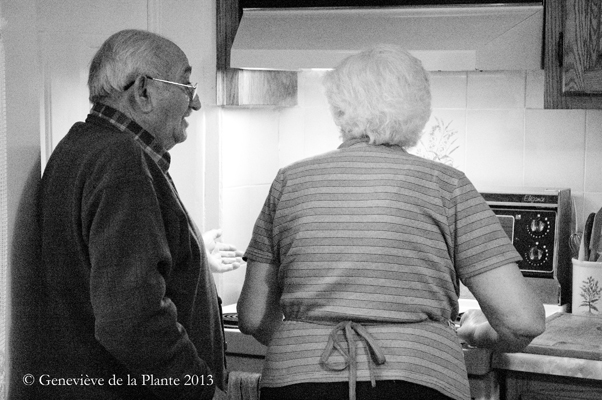
A few days ago I spent an evening with my Nonna. It’s rare that we find ourselves sharing some time and space together without any other family members in the mix, but on this particular night, circumstances lined up in such a way that it was just her and I. Nonna and nipote.

We put together a simple dinner – pasta with Swiss chard and ricotta – teasing each other about the “right” way to make it, a sort of a ping-ponging of questions and answers wherein I attempt (quite unsuccessfully) to enforce my points in broken dialect. We discuss the merits of handmade ricotta versus store-bought; she chops some chard and I watch over the garlic frying on the stove. Side-by-side in her kitchen, we reminisce about little details, many about my grandfather – how he liked his pasta cooked into oblivion; how he used to always help himself to seconds; how much he loved having people over for dinner, with a carafe of his homemade wine stationed on the table. His wine was practically undrinkable and we always complained that the pasta was overcooked – but we were happy.

Nonno didn’t talk much during meals, often telling us we talked too much, but he still found moments to inject a zinger or two into the conversation – usually something he knew would get a rise out of my grandmother, who would respond with a small, but swift whack to the back of his head. Without fail, he would peel into laughter and Nonna would shake her head, playfully lamenting: “Oh Lord, give me patience.”

gnocchislowres

The way they interacted was, to me, completely unique. It was integral to who they were as a couple and as partners, and inseparable from my memory of them as grandma and grandpa. We often think that romance is the first thing to disappear in a marriage, especially one that is decades old. But even in their late age, I would sometimes find him bringing her coffee in bed or holding her hand. They were simple gestures, but ones that were nonetheless tangible reminders of their love for one another; small expressions that slipped inconspicuously into their day-to-day, even in their last ones together.

Nonna&NonnoThe soul of that relationship lives on every time I talk to my grandmother about Nonno. She speaks about him with such tenderness. My mom once joked that he was her Italian Clark Gable. He no doubt drove her crazy in moments too – but when you strip it all down, what remains is the affirmation of a true partnership, one rooted in whole-hearted devotion and capable of withstanding the worst of life’s adversities.

As I sit with Nonna at the dinner table, I recognize the love she had for him. I also recognize the love I have for her and how spending this time by her side fills my heart with a warmth that is pure and unspoken and unparalleled.

Happy Valentine’s, Nonna. Ti amo. x

—–

Pasta with Swiss Chard and Ricotta – serves 2

  • 1/2 bunch Swiss chard
  • 1 small onion, sliced
  • 1 clove of garlic, finely chopped
  • about 1/4 tsp dried pepperoncini flakes
  • olive oil
  • 1/3 lb dry fettucine (or linguini)
  • about 1 cup fresh ricotta

Put a large pot of water on to boil.

Wash chard and dry well (a salad-spinner works best). Remove large ribs (the white part at the base of each leaf) and chop the leaves. Set aside.

Once the pot of water has reached the boil, add a handful of sea salt. When the water has reached a rolling boil, add the pasta. Cook uncovered until al dente, being careful to stir every so often.

Put about about 2 Tbsp of olive oil in a large pan set on the stove on medium-high heat. Once the oil is hot (but not smoking), add the onion and fry until transluscent. Add the garlic and pepperoncini flakes and fry for about 1 minute, until the garlic is fragrant and lightly golden (but not browned). Then add the chopped chard and sauté for 3-4 minutes*.

(*you can add a bit of the pasta water to help steam the chard.)

Drain the pasta and add to the pan with the chard. Move the pasta around the pan (tongs work best) to coat with the chard mixture.

Serve in pasta bowls with a generous dollop of fresh ricotta and a drizzle of your best olive oil (and a few flecks of Maldon salt – but don’t tell Nonna).

Note: a nice alternative is to lightly broil the ricotta on the pasta before serving (see image below). Set the oven on broil at 500°F. Once you’ve mixed the pasta and chard, spoon it into a baking dish and add a layer of ricotta on top. Broil on center rack for about 2-3 minutes or until cheese is golden.

0311

Share this:

  • Tweet
  • Share on Tumblr
Like Loading...

Sick-day omelette

10 Sunday Feb 2013

Posted by julia chews the fat in Breakfast & Brunch, Cooking Solo, The Basics, Vegetarian

≈ 4 Comments

Hi there.

I’m three days into a head cold, so this one’s going to be quickie. If there are spelling mistakes, or incoherencies, I apologize in advance. Trying to write with NeoCitran coursing through your veins feels like being at the steering wheel with one arm.

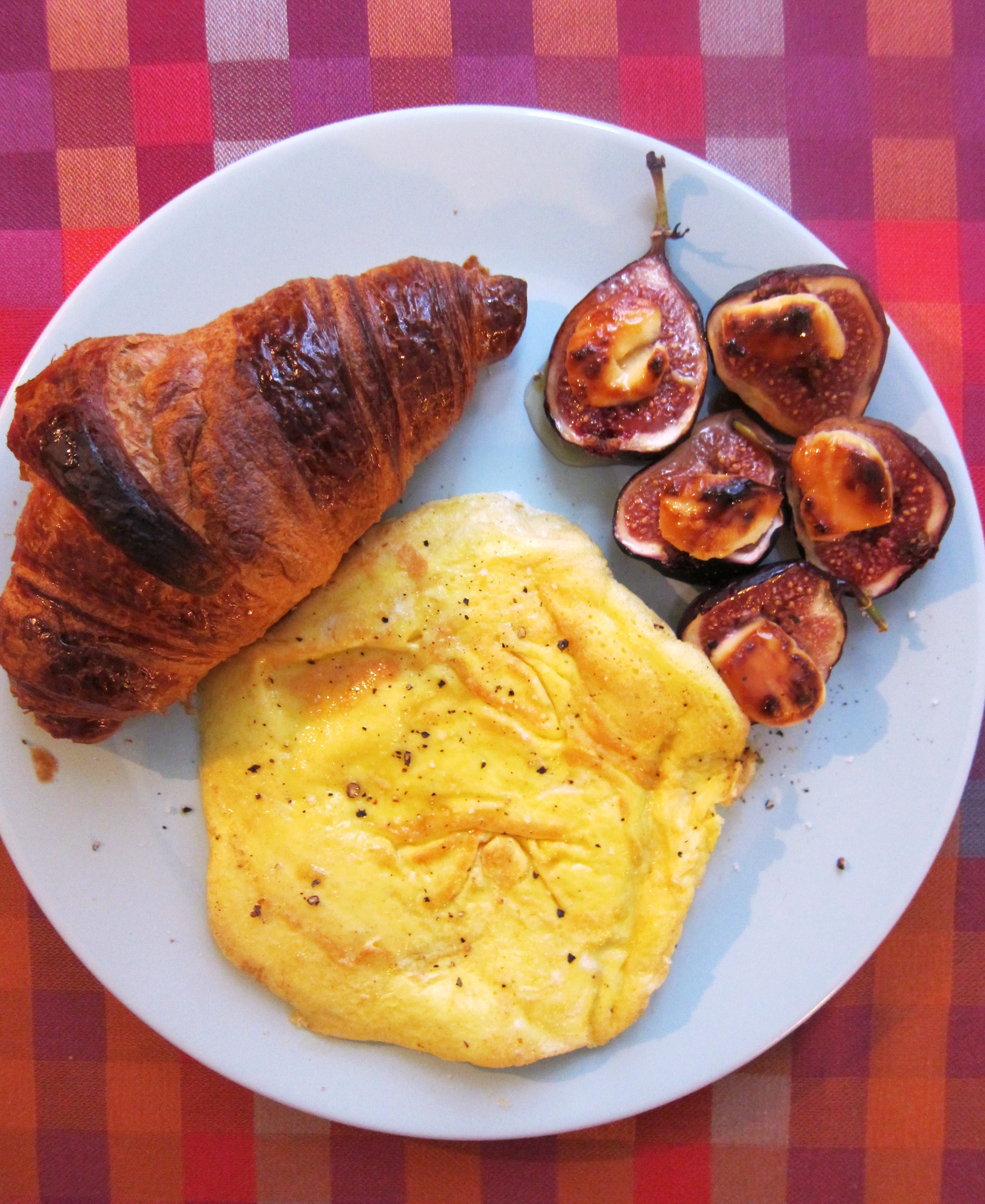
So I will be economical with my words, and just say this: MAKE THIS OMELETTE. It might just be the best one you’ve ever had. It’s filled with clusters of air bubbles that crackle and melt in your mouth – the kind of food that makes you involuntarily close your eyes between bites. Like women do in yogurt commercials.

Oh and the figs? They will sucker punch you into a euphoric haze. So, yeah, make those too.

Well. It was nice checking in with you – but if you don’t mind, I’m going to go back to drinking lemon tea and watching Timothy Olyphant in a cowboy hat.

Souffléed Omelette with Honeyed Figs (serves 1) – inspired by Luisa Weiss’ My Berlin Kitchen

omelette with honeyed figs

  • 3 eggs divided
  • 1 tbsp. cold butter 
  • Salt and freshly ground pepper

1) Divide eggs, putting whites into a medium bowl and yolks into a small bowl. Season egg yolks to taste with salt and freshly ground pepper, mix together with a fork, and set aside.

fig omelette 001

2) Beat egg whites with a whisk until soft peaks form. Fold egg whites gently into egg-yolk mixture until combined and set aside.

whipped egg whites

3) Melt butter in a cast-iron pan on medium heat. When the butter starts to bubble, pour egg mixture into skillet and spread evenly in pan. Cook omelette, gently shaking skillet over heat occasionally, until bottom is golden, 2-3 minutes. Loosen omelette and flip it onto the other side. Cook covered for an additional 2 minutes or until center in just set. Serve straight away.

(Note: another option is to fold the omelette into a half-moon after the first 2 minutes of cooking, then pop it into a 350°F oven to finish. You can also add grated cheese, chives, etc to the beaten egg yolks if you wish.)

For the Honeyed Figs:

  • 2- 3 fresh figs
  • 1 Tbsp honey
  • about 2 Tsbp goat’s cheese

Set the oven to 400°F. Wash and halve the figs. Lay in a roasting pan, cut-side up and drizzle with the honey. Add a dollop of goat’s cheese onto each fig. Place into preheated oven and bake for 6-8 minutes. Set the oven to broil and bake the figs for an additional 30 seconds or until the cheese is bubbling and golden.

Share this:

  • Tweet
  • Share on Tumblr
Like Loading...

Winterism & amateur athleticism

14 Monday Jan 2013

Posted by julia chews the fat in Breakfast & Brunch, Lunch & Dinner, Vegetarian

≈ 2 Comments

Nothing, absolutely nothing, makes me feel frumpier than winter.

Sure, for the first appearances of snow, a handful of us are possessed (Exorcist-style) with the bright-eyed, bushy-tailed enthusiasm of children, enchanted by the soft flakes that tickle our noses and crunch delightfully under our feet. “Let it snow!”, we say, grinning like idiots as we make snow angels and throw snowballs at each other in the street.

Ultimately, though, the romance wears thin by January, when we realise that we aren’t kids anymore and have responsibilities, including, but not limited to: shoveling the walkway, commuting to work, running errands, getting to appointments and classes and other scheduled things (all to be done during the snowstorm of the century, no less). At this point, I’m just barely holding on to the whimsical notion that snow is lovely and magical, an effort unaided by the fact that I’ve been wearing the same shapeless coat, clunky boots and “aw, did-your-grandma-knit-that-for-you?” hat for weeks now, making me feel like an over-packed duffel bag forgotten on the airport conveyor belt.

Shovelling in January

Bleurk.

My goal for January? To cultivate feelings opposite from those oozing from this photo.

Anti-frump goal no.1: indoor swimming

Now, to the uninitiated (me), this activity does not come without mixed feelings. Deciding to squeeze into a bathing suit in the dead of winter and trek through snow to the pool defies all logic; it feels like you’re missing a beat on the evolutionary trajectory. You’re not supposed to be swimming when it’s minus 20 C, dummy. To make matters worse, I hadn’t been to an indoor pool since elementary school, for swimming classes that I remember being nothing more than a series of recurring ear infections and an exercise in chlorinated-water ingestion. From that point on, I was never really drawn to swimming as a serious activity, occupying myself instead with the feat of making vortexes by running around our backyard above-ground and knocking my brother over the head with big foam pool noodles. As an adult, pool activities never involved anything more rigorous than floating on inflatable lounge chairs and drinking cocktails. These were scenarios devoid of hair-tearing bathing caps and wax earplugs. No “competitive-cut” bathing suits here, thank you very much.

However, I recognize that getting older means that you’re body starts to get creaky and achy unless you do something about it. And since I have yet to find a gym that doesn’t feel like a purgatorial dungeon, swimming has become a reasonable alternative.

The beginnings were rough. After the first few laps, I felt like I was going to have a heart attack, all the while revisiting my childhood memories of ingesting the contents of the pool and getting water lodged in my ears. Why? Why would anyone do this? But soon after my first swim, I discovered the pay-off. Once you’re done flailing around in the water and you’re stepping out of the changing room and onto the street, you feel like the sexiest person alive. You feel like a full-on, miracle-performing superhero.

Another thing you feel is how hungry you are. All of that thrashing around to keep your head above water makes you very, very hungry – though interestingly, you’re not seduced by burgers or take-out Chinese food or any other highly caloric, heavy fare. In fact, all you want is salad. A big mother of a salad. But it’s cold outside, so you still want something soothing and comforting – which leads us to the simple compromise below. Veggie-centric, but also warm and creamy, this salad makes you feel rewarded for your athletic feat, conveniently distracting you from the leftover pool water swishing in your ear.

Carrot, Beet & Tahini salad

Carrot, Beet & Tahini Salad (serves 2) -adapted from Sprouted Kitchen

  • 1/2 Tbsp. butter
  • 2 Tbsp. extra virgin olive oil
  • 2 large beets, roasted and peeled, cut into ¼” pieces
  • 2-3 carrots, peeled into strips
  • sea salt + freshly cracked pepper
  • 1 tsp. honey
  • 3 Tbsp. white wine vinegar
  • 2 Tbsp. tahini
  • 1 Tbsp. lemon juice
  • 1/2 tsp. ground cumin
  • 12 cups mixed salad greens
  • 2 Tbsp. toasted sesame seeds, white or black or mixed

***if you’ve got some chickpeas hanging around, toss those into the pan too.

Melt the butter in the olive oil in a pan over medium-high heat. Add the carrots and beets and season with salt and pepper. Cook over moderate heat, stirring once or twice, until the carrots are crisp-tender, about 5 minutes. Add the honey and 2 tablespoons of the vinegar and cook over moderate heat, stirring occasionally, until tender and lightly glazed, 2 minutes. Transfer the vegetables to a bowl to cool.

Whisk the remaining tablespoon of vinegar, tahini and lemon juice into the skillet along with the cumin.

Toss the baby lettuces with a light coating of the tahini dressing. Plate the greens and top with the carrots, beets and sprinkle the sesame seeds. Serve straight away.

Carrot, Beet & Tahini Salad

Share this:

  • Tweet
  • Share on Tumblr
Like Loading...

Surviving Christmas dinner

29 Saturday Dec 2012

Posted by julia chews the fat in Beverage, Cooking For Your Peeps, Lunch & Dinner, Snacking, Vegetarian

≈ 2 Comments

Christmas dinner for 10, survived. But I’m not going to lie – the day after its execution, when I first sat down to write this, I had a knocker of a headache and pretty much just stared at the screen, mouth-breathing. I’m glad to have had these couple of days to step back and regroup.

So here we are, dear readers, on December 29th; I come to you with a sense of calm and sanity that I was unable to muster three days ago when the cooking parade was over and the kitchen looked like it had the worst hangover of its life. All I wanted to do was drink coffee and nap and watch bad movies until I felt functional again.

If nothing else, it was an interesting exercise in love and motivation – from the early-morning grocery shopping marathon, to the chopping, zesting, de-seeding, roasting, whipping, cocktail-shaking and family-wrangling – I have a new-found appreciation for the people who do this every holiday. People with kids, full-time jobs, partners…extra-curriculars. People who spend days, back-to-back, confined in their kitchen cube, but still manage to look like Doris Day when they set it all out on the table, maintaining polite conversation with their guests and smiling pleasantly throughout. You guys rule. Cha-peau!

That said, when you’re doing something out of love, the hard work is worth it. You might be a little worse for wear (box-grater wounds, oil burns, mental collapse) but you’ll recover. Plus, when your grandmother eats your food, puts her hand on your shoulder and very gently calls you “Brava”, all the bad melts away.

—–

Now since it’s almost New Year’s, I thought it’d be a good idea to lay out some (simple, sanity-friendly) recipes that you might find useful for your NYE entertaining. From the menu posted here, I’ve extracted a few delicious little things that would fit an end of year schmooze – whether you’re hosting for two, or a dozen (or even if you’re home sick and entertaining a party of one) – here are some tasty treats to say “Au revoir, 2012” and “Oh well, hello there, handsome 2013”.

Satsuma & Pomegranate Campari Cocktails – serves 6-8 (adapted from Baker’s Royale)

juiced satsuma

  • 4 parts satsuma (about 12), freshly squeezed, sieved and chilled*
  • 2 parts pomegranate juice**, freshly pressed, sieved and chilled
  • 2 parts Campari
  • 1 part white vermouth
  • fresh ice
  • strands of orange zest (optional)

*I know, I know…juicing fruit seems like a lot of work. But once you get into the swing of it, it ain’t that bad. And it makes the drinks so, so much better. Trust me on this one. Put on some music and karaoke your way through it if you want to. It’ll be worth it.

**Tips to de-seed and juice a pomegranate:

1) Remove any light-coloured clothing and put on an apron – things might get a little messy (à la slasher film).

2) Cut the pomegranate in half, hold it cut-side down with both hands over a large bowl and gently press the center, lifting the sides up slightly. This will help release the seeds from the pulp.

3) Holding the pomegranate over the bowl with one hand, cut-side down, firmly whack the skin-side (facing up, towards you) with the back of a wooden spoon until all of the seeds have fallen out into your hand and the bowl. Remove any little bits of pulp that may have found their way into the bowl (there shouldn’t be many).

4) Reserve about 1/4 of the seeds for serving. Pour the remaining seeds into a food processor and liquefy. Push the juice through a sieve to dispose of the tougher bits (the actual seeds within the juice-filled pod). Chill before use.

Serving the cocktail:

1) Divide the reserved pomegranate pods and orange zest strands evenly between 6-8 glasses (martini glasses or champagne coupes are pretty dapper).

2) Fill a cocktail shaker 1/4 full with ice.

3) Pour in the juices, the Campari and the vermouth. Shake until combined.

4) Serve in the prepared glasses. Bottoms up, baby.

pomegranate cocktail3

Persimmon and pear and caprese toasts (makes approx. 20 canapés) – adapted from Joy the Baker

  • 1 semi-firm persimmon, sliced + each slice cut into quarters
  • 1 medium pear (Bartlett or Anjou), sliced
  • 4-5 small bocconcini, sliced
  • 1 baguette, sliced thinly
  • 1/4 cup pesto (best way to revive frozen pesto from the summer)
  • basalmic vinegar (the best you can afford)
  • olive oil for brushing
  • fleur de sel and freshly cracked black pepper

persimmon toats detail

Directions

1) Preheat the oven to 350° F. Lay baguette slices on a pizza tray or baking sheet; brush with olive oil and bake for about 8 minutes, or until golden brown. Set aside to cool (if you want to do these ahead, conserve them in a brown paper bag until use).

2) Put pesto in a small bowl and brush onto the toasts. Next, toss the bocconcini slices into the bowl and stir to coat the cheese with pesto.

3) Arrange toasts on a serving platter and layer with a slice of persimmon, pear and bocconcini. Sprinkle with fleur de sel and cracked pepper. Finish with a gentle drizzle of balsamic vinegar*

(*if you have the time, it’s worth reducing the vinegar by heating it in a pan until it becomes a bit syrupy.)

Smoky sweet potato hummus – adapted from Blissful Eats
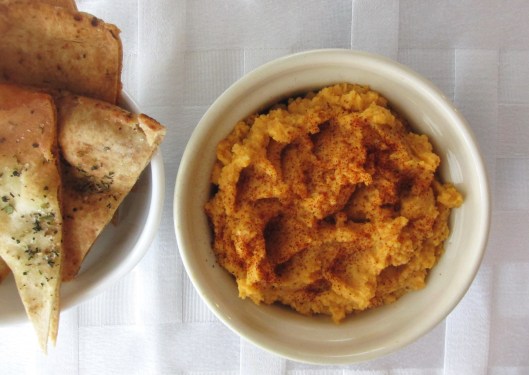
smokey hummus

Makes 4 cups

  • 1 pound sweet potatoes (about 2 medium)
  • 1 can chickpeas, drained and rinsed
  • 1 tsp chopped chipotle chili, canned in adobo sauce
  • 1 garlic clove, chopped
  • 2 Tbsp fresh lime juice
  • 2 Tbsp olive oil
  • 2 Tbsp tahini
  • coarse sea salt and freshly ground pepper

Directions:

Pre-heat the oven to 350° F.

Pierce potatoes several times with a fork; place on a foil lined baking sheet.  Bake until tender (about 45 mins).  Cool slightly, then peel and add to the bowl of a food processor.  Add chickpeas, lime juice, tahini, olive oil, chipotle and garlic.  Purée until smooth, adding up to 2 tablespoons of water if necessary. Season with salt and pepper. Garnish with a drizzle of olive oil and smoked paprika before serving.

Pita chips (makes about 60 chips)

  • 2 bags of pita bread (whole wheat and/or white)
  • herbes de Provence
  • olive oil
  • fleur de sel

Directions

1) Preheat the oven to 350° F.

3) Place pita slices on a pizza tray or baking sheet; brush with olive oil and sprinkle with herbes de Provence and fleur de sel. Bake for about 6 minutes, or until golden brown. Allow to cool and reserve in brown paper bags. Serve with smoky sweet potato hummus.
Share this:

  • Tweet
  • Share on Tumblr
Like Loading...

My little friend, quiche

17 Saturday Nov 2012

Posted by julia chews the fat in Breakfast & Brunch, Cooking For Your Peeps, Lunch & Dinner, Vegetarian

≈ 3 Comments

“The skies are charcoal grey,
It’s a dreary downtown day,
But at the end of my 30-foot leash,
Is my little friend Quiche” – B-52’s Quiche Lorraine

Fine. The B-52’s aren’t rhapsodising about food; this song is actually an ode to a poodle. But I like listening to it and pretending it’s about the real thing, for the simple reason that I prefer quiche to poodles (case in point: I just re-read that last word as noodles), not to mention that it’s fun to imagine Fred Schneider and Cindy Wilson singing emphatically about beaten eggs baked in a crust. Yes? Yes.

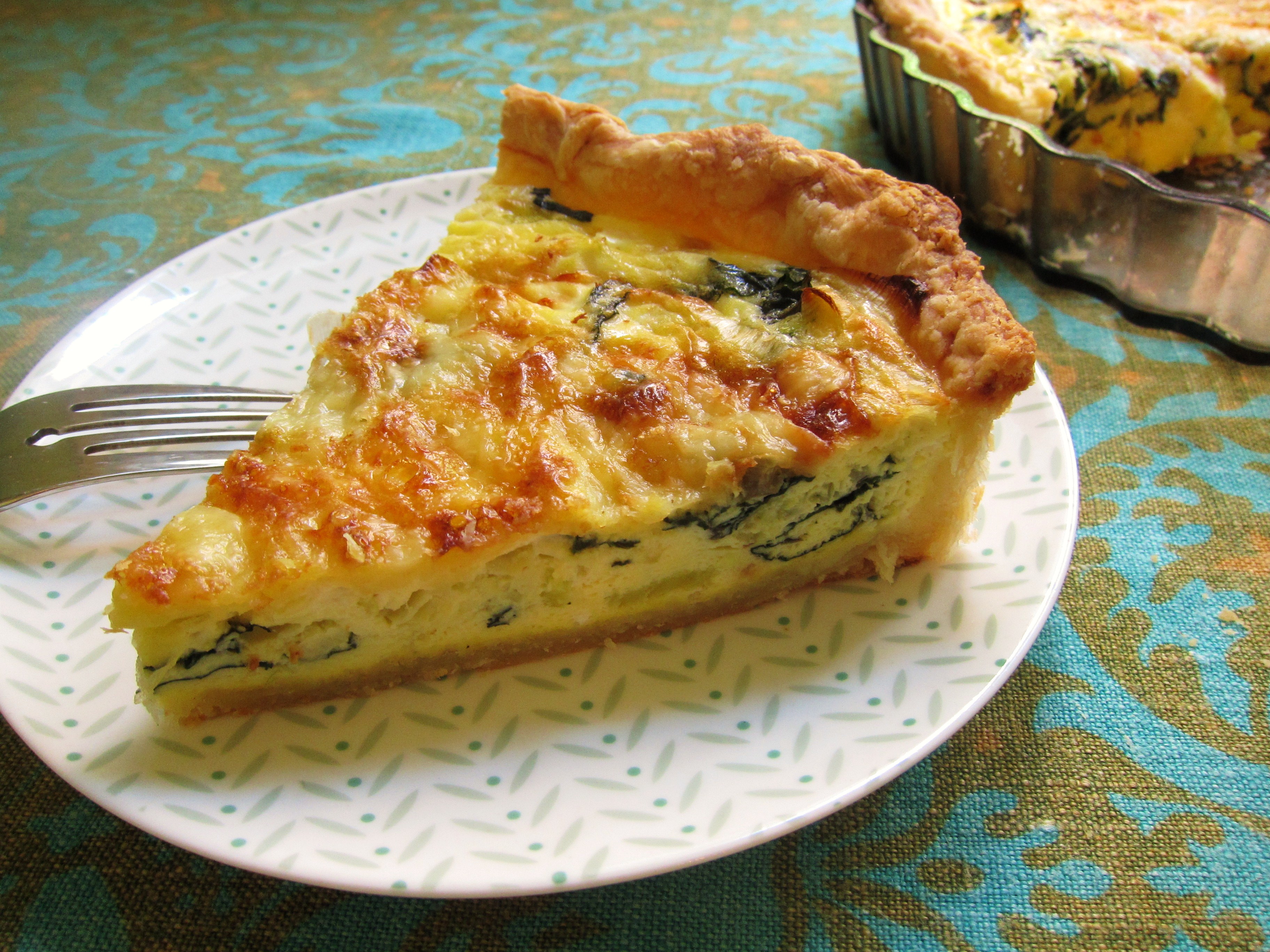
There’s something both versatile and comforting about quiche, in that it’s equally acceptable to have for breakfast as it is at a fancy dinner party or when you’re cooking for a first date. It’s just a matter of tinkering with the ingredients to match the mood. No matter the occasion, though, I fully endorse the all-butter crust – it’s light and flaky and unctuous all at the same time, the perfect vessel for a custard of egg and cheese.

The recipe here was made for a friend who had recently moved back to the city after several months away on the West Coast. Not having seen her in a long while, I’d invited her for Sunday lunch – that one time you can geek out on making delicate foodstuffs and set out your best cutlery and serving platters, without feeling like you’re overdoing it  (even if it’s just the two of you). On the best of days, there’s even an attractive tablecloth in there too. The one you’ve been saving for such an occasion.

This quiche – with it’s ruffled crust and silky layers of egg, Gruyère and sautéed veg – had Sunday lady lunch written all over it. I hope this recipe inspires you to share good food with good people, surrounded by all the pretty little things you cherish most.

Sunday lady-lunch quiche (serves 6)

All-butter crust (makes 2) – from Marta Stewart

  • 1 teaspoon salt
  • 2/3 cup ice water
  • 3 cups plus 2 tablespoons all-purpose flour, plus more for work surface
  • 1 cup plus 5 tablespoons very cold unsalted butter, cut into 1-inch pieces

Directions

In a small bowl, mix together salt and water. Place bowl over an ice bath until ready to use.

Put flour and butter in the bowl of a food processor. Pulse briefly until mixture forms large crumbs. Add the salt water mixture and continue pulsing until a dough has just formed but is not smooth. Be careful not to over-mix.

On a lightly floured work surface, evenly divide dough into two pieces. Form each piece of dough into a disk about 1 inch thick. Wrap each disk with plastic wrap and chill at least 2 hours and up to overnight.

Leek and Swiss chard quiche filling

  • 1 small leek, white part sliced (reserve the green part for another use)
  • 1 small bunch (about 2 cups) Swiss chard, ribs removed and  leaves chopped
  • 3/4 cup – 1 cup of grated Gruyère
  • 1/2 cup of crème fraîche or full-fat yoghurt
  • 6 large eggs
  • about 1 Tbsp fresh thyme leaves
  • 1 Tbsp olive oil
  • salt and pepper

Assembly

1. On a lightly floured work surface, roll dough into a 16-inch round; fit dough into a 9” tart pan/dish (mine was 1-inch thick), gently pressing it into the sides. Flute, crimp or cut the edges.* Cover with plastic wrap; chill tart shell until firm (about 20 minutes).

2. Preheat oven to 375°

3. Line the tart dough with a sheet of parchment paper and fill with pie weights or baking beans. Transfer to oven and bake until golden (about 20 minutes – be sure to check in every once and a while to make sure that the edges aren’t browning too much). Remove weights and parchment paper and continue baking until golden brown, about 5 minutes. Transfer to a wire rack; let cool.

Baking blind with pie weights and baking beans

4. While the pie crust is baking, you can get started on the filling – heat the olive oil in a deep pan; once hot, add the leeks and allow them to cook a couple of minutes until translucent. Add the thyme leaves and the chopped Swiss chard and cook for another 2-3 minutes, until chard is wilted, but not fully cooked. Remove from pan and allow to cool.

5. Whisk eggs in a medium-sized bowl. Add crème fraîche or yoghurt and mix until combined. Add salt and pepper to taste.

6. Once the chard mixture has fully cooled, spoon into the pie shell. Pour over egg mixture until the tart shell is full (depending on the size of your pie shell and your eggs, you may not need to use all of the egg mixture – if you have leftover dough, make mini-quiches!). Sprinkle the Gruyère over the top.

7. Bake 10 minutes; reduce temperature to 325 degrees, and continue baking until filling is slightly firm and crust is a deep golden brown, 20-25 minutes. Transfer quiche to a wire rack to cool until set, about 10 minutes. Serve warm or at room temperature with a salad of mixed greens.

Share this:

  • Tweet
  • Share on Tumblr
Like Loading...

Eggplant Stacks with Tomato Sauce

08 Monday Oct 2012

Posted by julia chews the fat in Lunch & Dinner, The Basics, Vegetarian

≈ 2 Comments

Normally around this time of year, I would be telling you about tomato canning. Normally, I would relish in describing the whole process, it’s laborious nature and the well-worth-it results. I would tell you that you MUST MUST MUST preserve tomatoes. Normally, I’d have photos to show you and anecdotes to tell. Normally.

But this year, due to a series of unforeseen circumstances, I missed out on our family’s tomato canning festivities. The weekends got consumed with other things, and eventually we were nearing the end of September and locally-grown tomatoes had become scarce at the markets. And then it got colder and suddenly it was October.

It makes me a bit sad to know that the annual ritual had slipped by me this year. To compensate, I spent much of September/early October fitting in as many tomato recipes as humanly possible. A ludicrous amount of tomatoes have found their way into my kitchen in the last several weeks – Roma from my little garden with Rob & James, San Marzano from Nonna’s backyard, Cherry from Sophie’s place and a lovely, yet-to-be-identified variety from the small vines that grow in my apartment’s shared courtyard. Yes – it’s been fortuitous times in the tomato department. Which means that my cookbooks are littered with sticky-notes on every page with the word tomato, pomodoro, tomate. I’ve definitely put my time in. Any day now I might morph into a giant red Beefsteak and dutifully rolled away by a gang of Oompa Loompas.

Toxic tomato love.

Below is a nifty little recipe that will help you get through that last batch of tomatoes. It’s a quicker and lighter take on eggplant parmigiana and is nice layered on top of a bed of spinach or a ladleful of polenta.

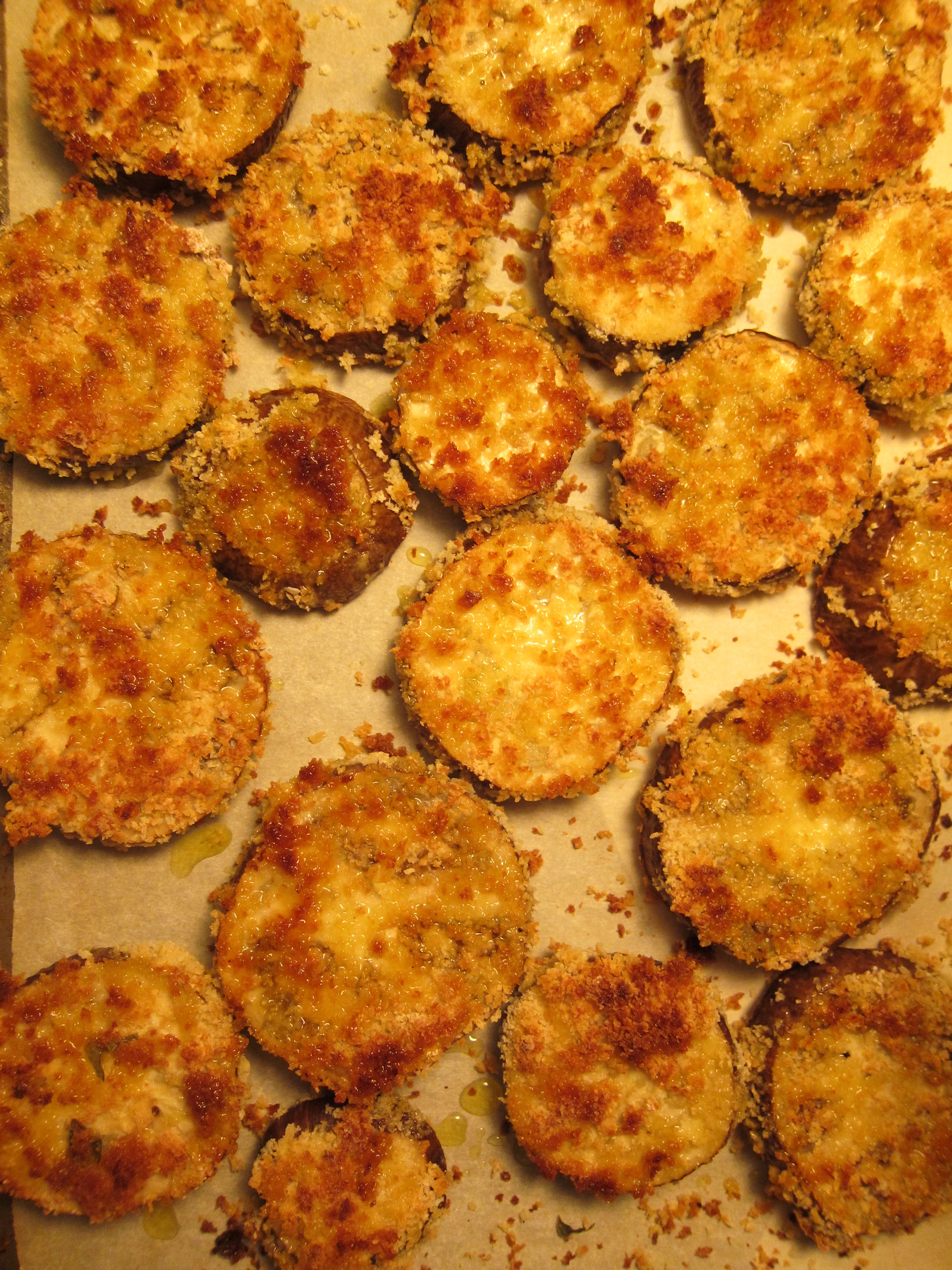
Breaded Eggplant Stacks with Tomato Sauce (serves 3-4) 

Fast tomato sauce (enough for this recipe + leftovers)

  • 6-8 medium tomatoes, chopped (or one jar of Nonna’s tomatoes)
  • 2 cloves of garlic, minced
  • 1 small onion or leek, chopped
  • 1 Tbsp tomato paste
  • olive oil
  • knob of butter

Heat up a large saucepan on medium-high heat. Add a glug of olive oil and the knob of butter. Once the fats are hot, add the onion and reduce the heat to medium. Sweat the onion for about a minute or so, then add the minced garlic. Stir. Allow the onion and garlic to cook and turn golden, but do not allow to brown. Add the chopped tomatoes. Stir and reduce the heat to medium-low. Allow the sauce to simmer for at least 20 minutes*, stirring occasionally.

*Note: my nonno used to start his sauce in the morning and let it simmer for a few hours before serving it at lunch. The taste of a well-simmered sauce is unparalleled.  If you have the time, I recommend simmering your sauce on low heat for a couple of hours.

Breaded eggplant

  • 2 eggs, beaten
  • 2-3 small eggplants
  • 1/2 cup flour (flavoured with fresh or dried oregano, salt and pepper)
  • 1/2 cup panko breadcrumbs
  • olive oil
  • 1/2 cup parmesan, grated

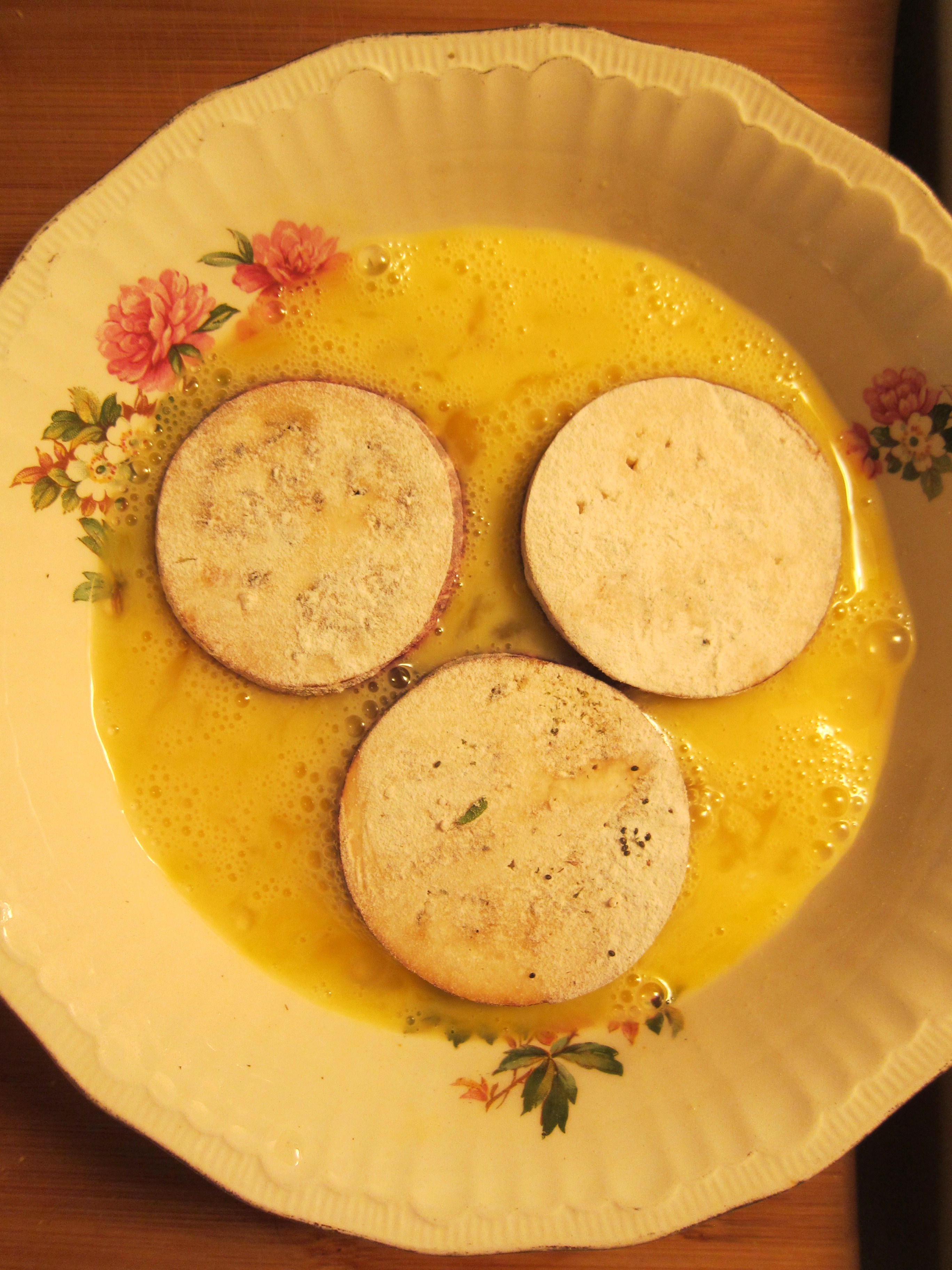
Preheat oven to 375° F. Prepare your breading station: beaten eggs in a shallow bowl, breadcrumbs on a plate and panko on a plate. Dredge eggplant slices in the flour, then the egg, then the breadcrumbs.

Arrange them separately on an oiled baking sheet. Drizzle additional olive oil over them. Place them in the oven and cook for 15-20 minutes, turning once halfway through the cooking time.

On a plate (or on top of salad, spinach, polenta), layer baked eggplant slices, tomato sauce and grated parmesan until you reach a stack size that pleases you. Finish with a light grating of parmesan.

Share this:

  • Tweet
  • Share on Tumblr
Like Loading...

Blueberries – a proper farewell

25 Saturday Aug 2012

Posted by julia chews the fat in Sweet Tooth, Vegetarian

≈ 2 Comments

That nip in the air, the earlier sunsets, the back-to-school gear that’s begun to monopolize the store shelves…there’s no point in sugar-coating it, kiddos: summer is almost finito.

The end of August marks a transition; it’s a seasonal no-man’s land that makes us feel a little uneasy about letting go of summer. You know the feeling: when you’re in a store at this time of year and see a crestfallen kid whose mother is stocking the cart with quad notebooks and pencils, both of them still wearing flip flops. You have that moment of empathy – that moment of wanting to say, “I know, buddy. It feels too early.”

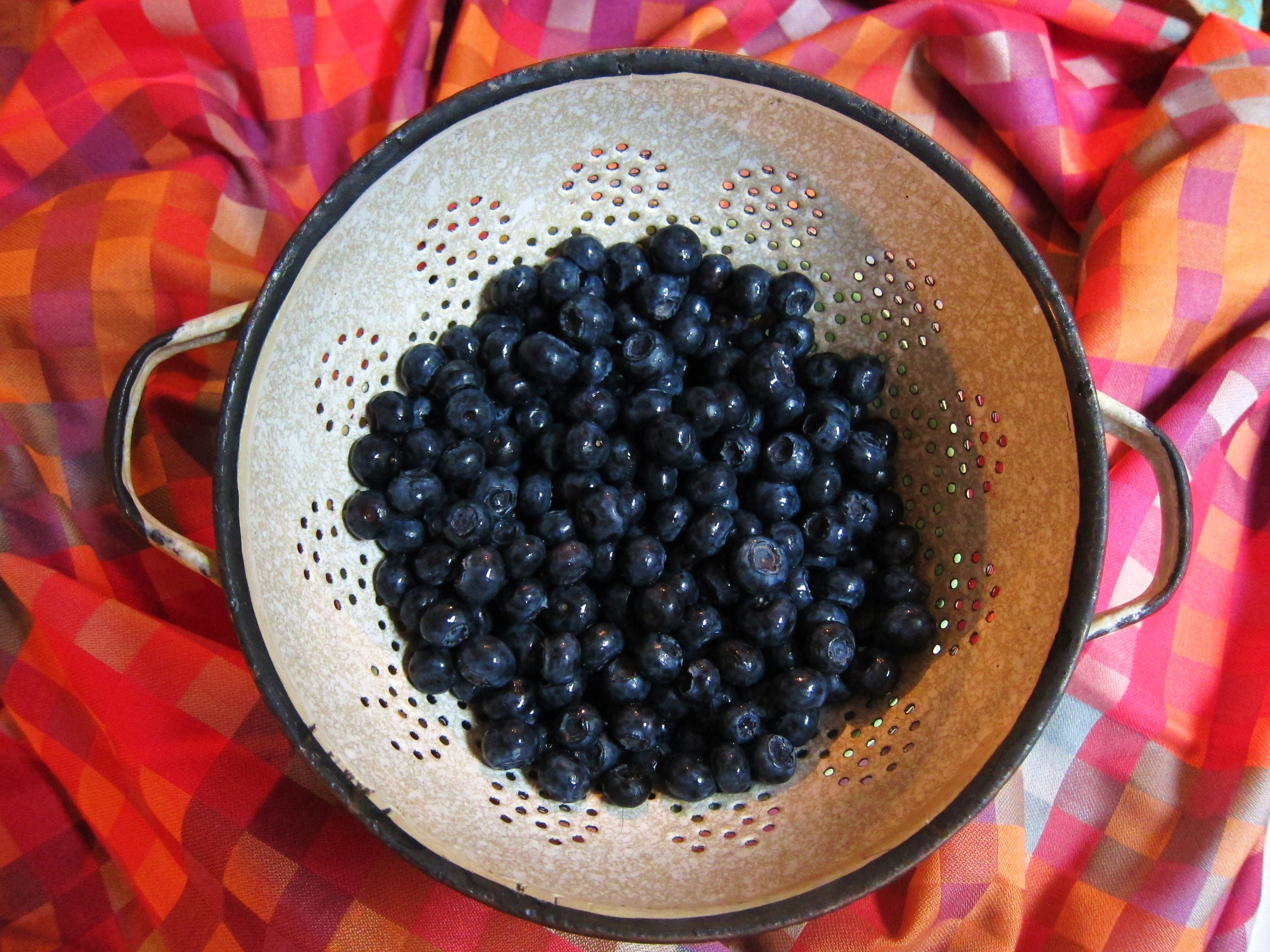
Times like these require us to seize what we have, while we have it. This may translate into a final few evenings at the beer garden; or a couple more weekends out at the lake. In the realm of summer foodstuffs still available in northern latitudes, it means one last fling with blueberries.

—–

I secured a hefty batch of some of the last Quebec blueberries two weekends ago, the same weekend that I was invited to a friend’s for a last-minute dinner. The recipe below is the result of those lovely circumstances coming together. This cobbler was put together in about the same time it took me to shower, put on some clothes and dash out the door. It arrived at the dinner table still warm from the oven with a deep perfume of summer – one that will hopefully linger on just a little while longer.

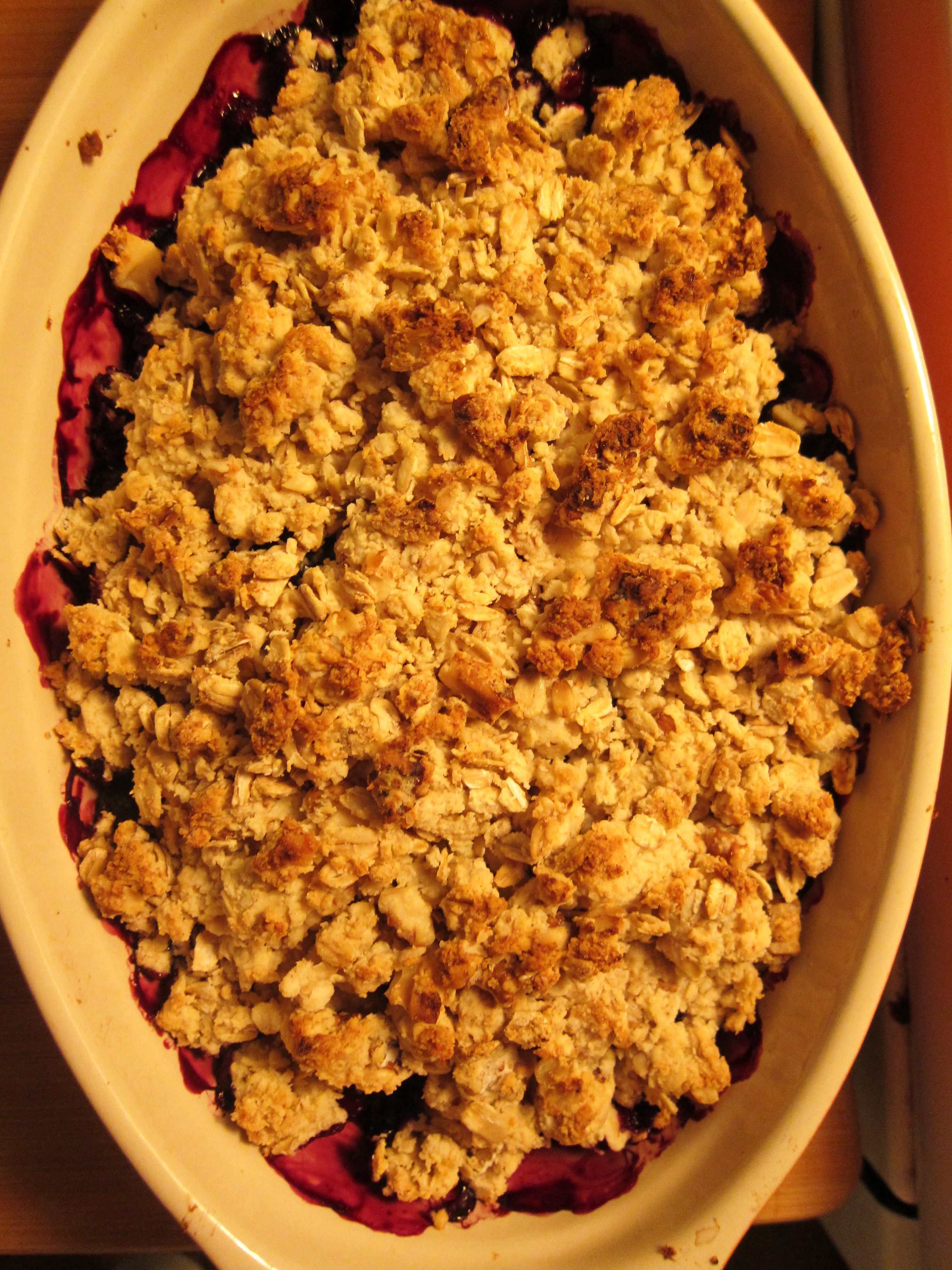
Bueberry Cobbler (adapted from Bon Appetit) – serves 6

  • 1 cup flour
  • ½ cup rolled oats
  • ¼ cup walnuts
  • 1/3 cup plus 2 Tbsp natural cane sugar (or brown sugar)
  • 1 ½  tsp baking powder
  • ½  tsp salt
  • 6 Tbsp. chilled, unsalted butter, cut into 1/2” pieces
  • ½ plain Greek yogurt (full-fat)
  • 6 cups blueberries
  • 2 Tbsp. lemon juice
  • 1 Tbsp. lemon zest

Directions

Preheat oven to 375 F. In a large bowl, whisk flour, oats, walnuts, baking powder, salt and 2 Tbsp sugar. Add butter, using your fingers and combine with flour mixture to make pea-size clumps. Gently mix in yogurt. Knead until biscuit-like dough forms, being careful not to over-mix (which will toughen the dough).

In a separate bowl, combine remaining 1/3 cup sugar, berries, juice and zest. Toss to coat. Pour into a baking dish. Tear biscuit topping into rough pieces and scatter over berries.

*Note: Technically, a cobbler has spaces between the topping pieces, but somehow mine just sort of melded together while it baked – it doesn’t effect the taste, but aesthetically, it ended up looking more like a crisp and less like a cobbler. For a more “authentic” look, just use less bits of topping and make sure there are spaces so that that the berries can pop through.

Bake until juices and thick and bubbling and topping is cooked through and golden brown (35-45 minutes).

Share this:

  • Tweet
  • Share on Tumblr
Like Loading...

Poach this egg

16 Thursday Aug 2012

Posted by julia chews the fat in Breakfast & Brunch, Vegetarian

≈ 9 Comments

Up until a few short years ago, my interest in poached eggs hovered between mild to non-existant. Growing up, there were two variations of eggs on rotation in our household – scrambled and omelette – and the idea of a jiggly or, lord forbid, runny yolk was something my kid sensitivities couldn’t quite handle. I expected my egg yolks to be cooked practically into oblivion, always mixed with the whites (no hard-boiled here) and doused with a generous squeeze of Heinz ketchup.

Things are very different now. If I were able to hop into a time machine, I would tell my kid-self that a) runny yolks are great; b) ketchup should be reserved for hot-dogs; and c) The Barenaked Ladies are not the coolest band on Earth (except, maybe, when they did that cover of Bruce Cockburn’s “Lovers in a Dangerous Time“. For that one my adult-self will make a valid exception).

With eggs, the game-changing moment happened shortly after the end of a five-year relationship, when I started to dine on my own again. The specifics are a bit fuzzy, but I remember it being brunch, on a weekend, at this place. I don’t think there was anything particularly special about these eggs – they were served on English muffin, with Mornay sauce (maybe some spinach, à la Florentine?) – but for some reason that was the moment I understood why people were into poached eggs. It was the first time I was able to appreciate their rich and oozy centres, that splash of bright yellow that flows in unruly swirls all over the plate, before being mopped up with a wedge of bread.

It’s strange how that happens – when something that used to send shivers down your spine suddenly becomes good. I hesitate to admit it, but I suspect that part of this shift in taste was a happy by-product of a larger effort to etch out out a new side of myself post-split. It goes without saying that eating a poached egg is not an earth-shattering, epic, Gloria Steinem-esque affirmation of independence. But at the time, it felt like a small gesture, a nudge towards new things. He hated poached eggs, so we never ate them at home, and I had pretty much given up on them at some point between the time my musical preferences gravitated from Paula Abdul to Steven Page.

Post-split felt like the perfect time to give poached eggs another go.

Since that pivotal moment, I’ve eaten my way through many plates of Benedict and Florentine – out at brunch, or over at friends’ houses. But until this past weekend, I’d never been able to make a decent one myself. The water wouldn’t be hot enough. Or it would be too hot. Or I would attempt the vortex method, watching passively, with mouth agape, as each egg got sucked into the water tornado, only to swiftly fall apart into a holy mess of stringy egg whites.

That is, until I listened to the Spilled Milk podcast on poached eggs last week.

The hosts of Spilled Milk – Molly Wizenberg and Matthew Amster-Burton – have easily become the Paula Abdul and Steven Page of my adult life. I look forward to listening to their podcasts the same way I used to look forward to slipping “Forever Your Girl” or “Gordon” into my Walkman. Spilled Milk makes me giggle in public, by myself, in the company of strangers. Once I tried so hard to told back laughter I snorted latte out my nose on a metro car full of people. I am willing to put my dignity on the line to listen to them discuss the merits of sour candy and the perils of eating rhubarb.

This nerd crush runs deep, people.

The episode on poached eggs addressed their apprehensions of the poaching process. Hearing them confess their struggles not only made me feel less ashamed of my ineptitude, but also assuaged my fears of making another batch of egg-streaked vinegar-water. Emboldened, I went digging for a recipe on Molly’s site Orangette and came across one for “Turkish Poached Eggs with Yogurt and Spicy Sage Butter”.

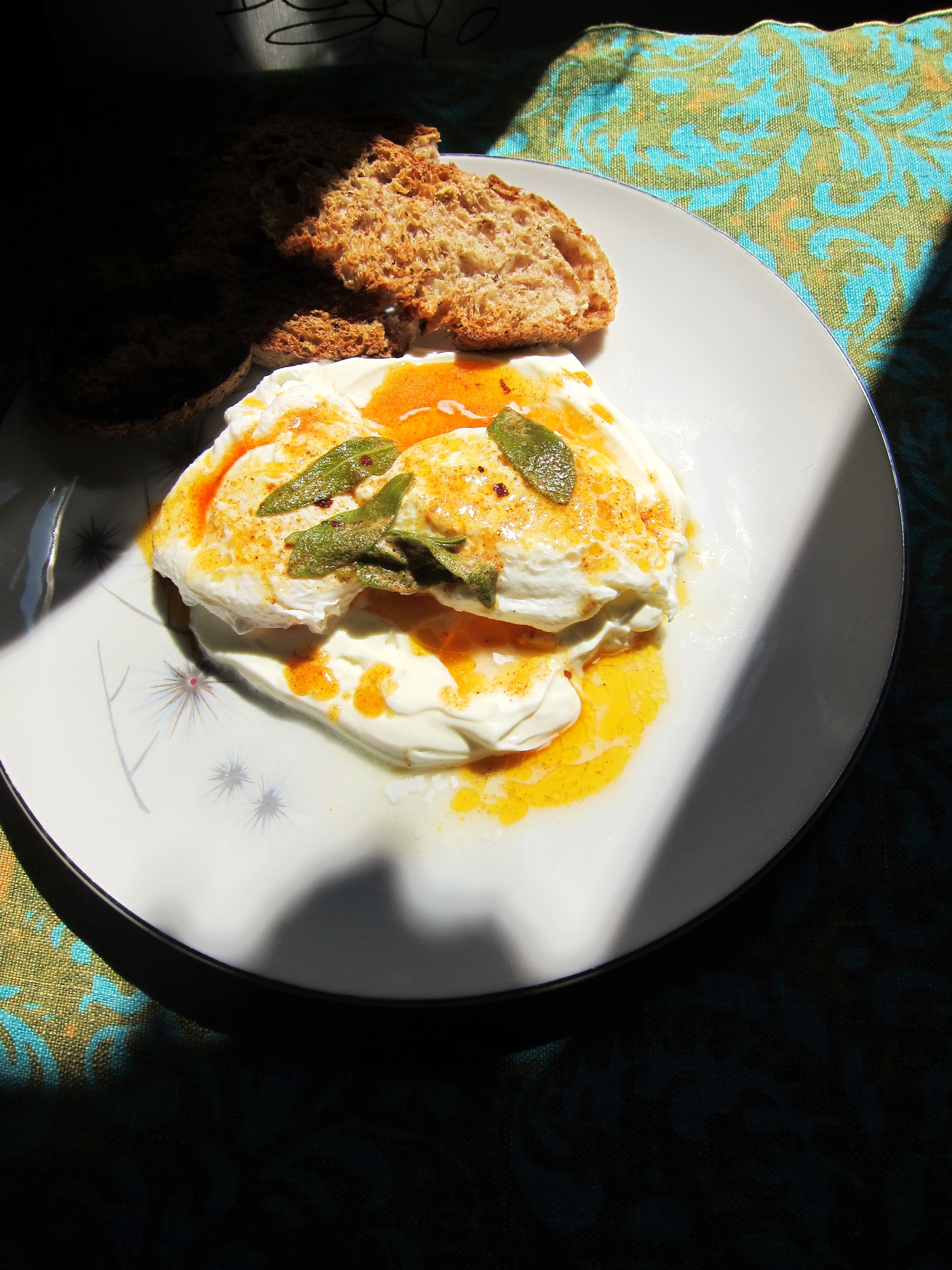
What you get is a couple of pillowy poached eggs on a layer of garlicky yogurt, drizzled with a toasty sage-paprika butter. Everything about this was right. Everything.

Please poach this egg.

Turkish Poached Eggs with Yogurt and Spicy Sage Butter (serves 2) – from Orangette

½ cup plain Greek yogurt (full-fat)
½ garlic clove, crushed in a mortar and pestle (or with a garlic press)
⅛ cup (¼ stick) butter
6 fresh sage leaves
¼ tsp sweet paprika
¼ tsp dried crushed red pepper
Salt
1 tbsp white vinegar
4 eggs*
Bread for serving

*The fresher the egg, the better. If in doubt, try the sink/float test: if an egg submerged in water sinks, it is very fresh; if it floats, it’s generally not. I award you double-extra nerd points if you were just about to get up and test all the eggs in your fridge.

Directions

Blend the yogurt and crushed garlic in a small bowl; season with salt. Divide the mixture between four plates, dropping a dollop in the centre of the plate and spreading it out with the back of a spoon to form a large, thin circle.

Melt the butter in a small, heavy saucepan over medium heat. Add the sage, paprika, and red pepper, and stir just until the butter sizzles. Be careful not to let the butter burn or get too coloured. Remove it from the heat, and season to taste with salt.

Fill a large skillet about two-thirds full with water, to a depth of about 2 inches. Add about a tablespoon of white vinegar, and bring it to a slow simmer over medium-high heat. Once you see several little bubbles along the bottom of the pan and the surface of the water is gently bubbling (not a rolling boil), your water is ready. While you wait for the water to heat up, prepare a medium bowl with warm water and set it aside.

Crack an egg into a heatproof cup or ramekin. Holding the cup upright, lower the base into the water, and then, slowly and gently, twist your wrist to turn the egg out into the water. Allow the first egg to settle a bit before adding a second one. Depending on the size of your skillet, you can poach 2-3 eggs at a time. Given that this recipe includes 4 eggs, I did it in 2 batches.

Cook each egg for 2-3 minutes total, until the white is opaque. Lift each egg out with a slotted spoon. Slide the egg into the bowl of warm water that you have set aside to keep them warm while you finish up the other eggs, make toast, etc.

When you are ready to serve, remove the eggs from the water with the slotted spoon, gently shake off any water, and place two eggs atop the yogurt on each of the four plates. Spoon the paprika-butter over the eggs and yogurt. Serve with bread, toasted or plain.

Share this:

  • Tweet
  • Share on Tumblr
Like Loading...

Summer grilled cheese

25 Wednesday Jul 2012

Posted by julia chews the fat in Cooking Solo, Lunch & Dinner, Vegetarian

≈ 4 Comments

The heat waves of the last couple of weeks have put me in a bit of a cooking coma. The last thing I’ve wanted to do in the 40°C heat of an apartment without air-conditioning is boil water or broil meat. So, my diet over the past while has consisted mostly of salads. It goes something like this: arugula, walnuts, goat’s cheese; mâche, pumpkin seeds, goat’s cheese; arugula, walnuts, cucumber, goat’s cheese. You get the picture. Snore.

It’s true that salads don’t need to be this monotonous. They really don’t. But being creative in the kitchen sometimes requires certain conditions. And humid heat is not amongst them. When you’re reclining on your couch in front of a rotating fan, in your bathing suit, in the dark, your mind is not usually dreaming up inspiring salad recipes. Rather, it ponders inanities such as, “How long will it take to fill the bathtub with ice cubes?” or “What are my chances of breaking into the city pool without getting arrested?”
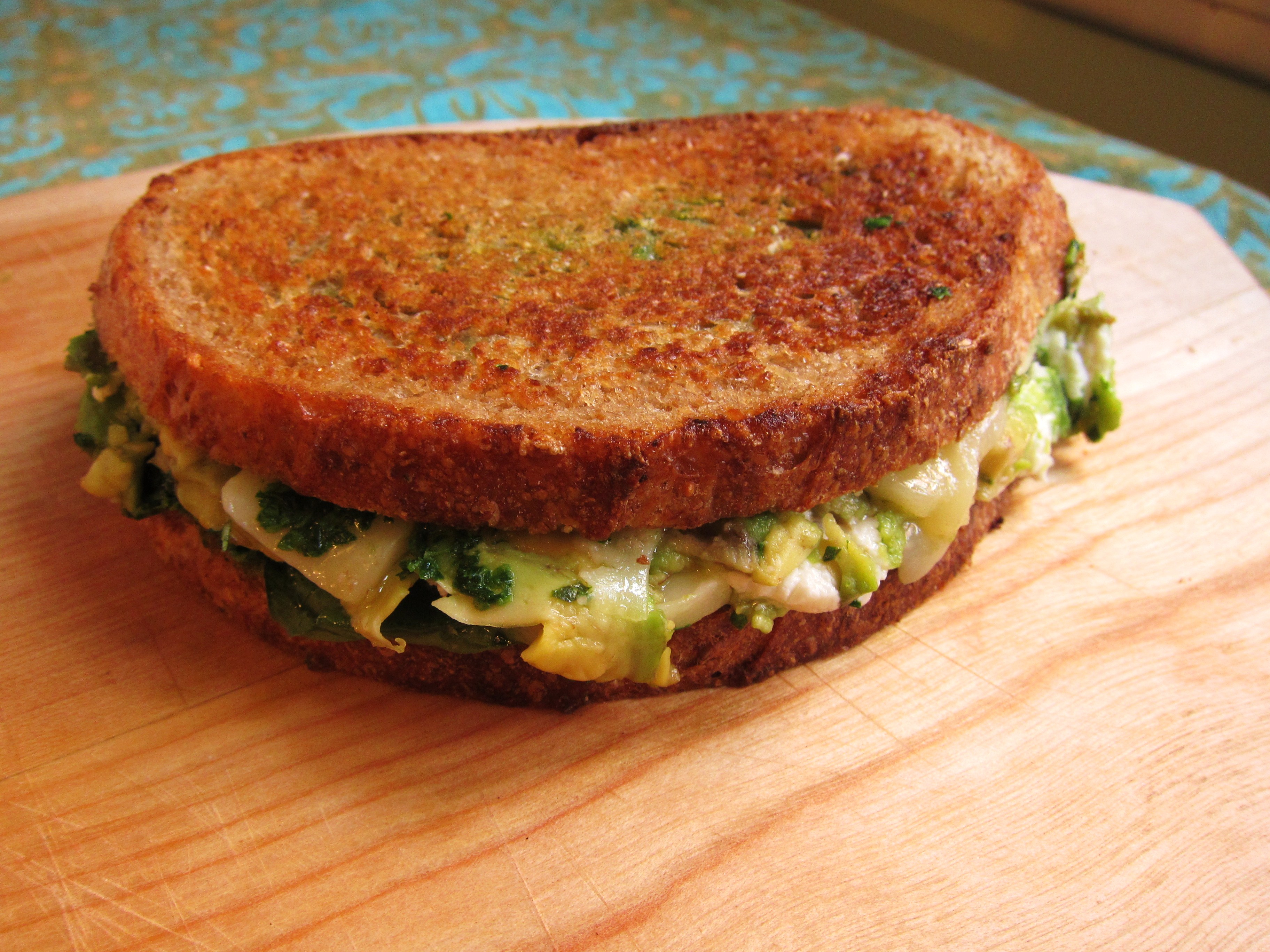
As the weather seems to have dipped into cooler territory – at least for the next few days – I’ve gravitated toward things with a bit more substance. And nothing says “substance” like a good ol’ sloppy grilled cheese, particularly one that is bursting at the sides with not one, but two types of fromage. The following is my antidote to the light and breezy summertime salad. Because, let’s face it – salads are wonderful, but every once and a while it’s nice to cradle something hot and gooey in one’s hands.

And this, dear readers, is that something.

Summer Grilled Cheese

makes 1 sandwich

Ingredients

2 slices wholegrain or sourdough bread
2 tbsp Herb Pesto (see recipe below)
2 slices aged cheddar
2 tablespoons goat’s cheese, crumbled
1/2 avocado, sliced (or mashed)
a few leaves of baby spinach
olive oil
butter

Directions

Spread about 1 tablespoon of the Herb Pesto (see recipe below) onto each slice of bread. On one slice of bread, layer: 1 slice of cheddar, avocado, goat cheese, spinach, second slice of cheddar. Top with second slice of bread and press together gently.

Heat approx. 1 tsp. olive oil in a frying pan with a small knob of butter over medium heat. When butter is melted, place the sandwich in the pan and cook until golden brown. Press down on the sandwich lightly, then flip it over and cook the other side until it is golden brown.*

(*I can’t believe I just told you how to make a grilled cheese. You’ve probably been making them since you were old enough to man the stove.)

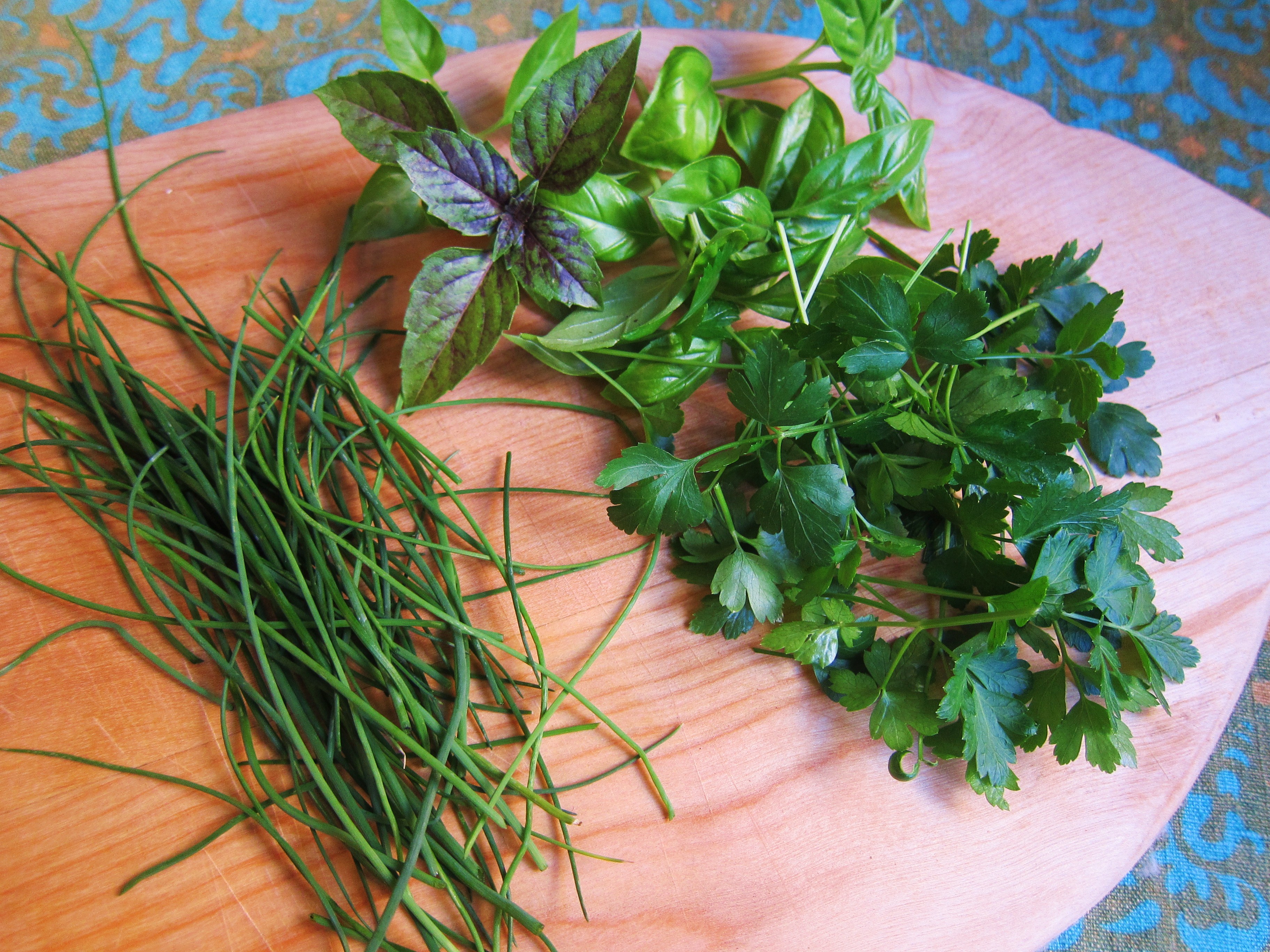
Herb Pesto

1 clove garlic, smashed
1-2 anchovy fillets (packed in oil) – omit for vegetarian option
handful of spinach
handful of fresh Italian parsley
handful of fresh basil
handful of chopped chives
juice of 1/2 a lemon
1/4 cup olive oil
salt and pepper to taste

Directions

Pulse garlic and anchovy in food processor until chopped. With the food processor running, add lemon juice, parsley, spinach and chives. Slowly drizzle in olive oil until it reaches the consistency of a pesto. Add more oil if you feel it needs it. Season with salt and pepper.

Share this:

  • Tweet
  • Share on Tumblr
Like Loading...
← Older posts
Newer posts →

Facebook

Facebook

Instagram

No Instagram images were found.

Recent Posts

  • Layers and Rows
  • Finding Buoyancy
  • February
  • Wednesday
  • Cross My Heart, Miso

Archives

  • May 2017
  • April 2017
  • February 2017
  • December 2016
  • November 2016
  • September 2016
  • August 2016
  • July 2016
  • June 2016
  • May 2016
  • April 2016
  • March 2016
  • February 2016
  • January 2016
  • December 2015
  • November 2015
  • October 2015
  • September 2015
  • August 2015
  • July 2015
  • June 2015
  • May 2015
  • April 2015
  • March 2015
  • February 2015
  • January 2015
  • December 2014
  • November 2014
  • October 2014
  • September 2014
  • August 2014
  • July 2014
  • June 2014
  • May 2014
  • April 2014
  • March 2014
  • February 2014
  • January 2014
  • December 2013
  • October 2013
  • September 2013
  • August 2013
  • July 2013
  • June 2013
  • May 2013
  • April 2013
  • March 2013
  • February 2013
  • January 2013
  • December 2012
  • November 2012
  • October 2012
  • September 2012
  • August 2012
  • July 2012
  • June 2012
  • May 2012
  • April 2012
  • March 2012
  • February 2012

Categories

  • Beverage
  • Breakfast & Brunch
  • Condiments
  • Cooking For Your Peeps
  • Cooking Solo
  • Cooking with Nonna
  • Food Away From Home
  • Food Writing
  • Holidays
  • Intro
  • Lunch & Dinner
  • Snacking
  • Soups
  • Sweet Tooth
  • The Basics
  • Vegetarian

Enter your email address to follow this blog and receive notifications of new posts by email.

Join 82 other subscribers

Blog at WordPress.com.

  • Subscribe Subscribed
    • julia chews the fat
    • Join 82 other subscribers
    • Already have a WordPress.com account? Log in now.
    • julia chews the fat
    • Subscribe Subscribed
    • Sign up
    • Log in
    • Report this content
    • View site in Reader
    • Manage subscriptions
    • Collapse this bar
 

Loading Comments...
 

    %d